
Title: The Official Movie Novelization: Return To Silent Hill
Author: John Passarella
Publisher: Titan Books, 20th Century Studios
Release Date: September 30, 2025
Price: US / CA $18.99 (USD), UK / World £9.99
This review contains light spoilers related to character motivations, psychological themes, and narrative elements inspired by Silent Hill 2.
Returning to the Fog: Why Silent Hill Still Matters
There are horror franchises that entertain, and there are horror mythologies that endure. Silent Hill has always belonged to the latter category.
Unlike traditional horror properties that rely primarily on spectacle, gore, or escalating threats, Silent Hill is rooted in psychological excavation. Its monsters are metaphors. Its setting is a moral crucible. Its horror is intimate rather than explosive. So when Return to Silent Hill: The Official Movie Novelization was announced, the central question wasn’t whether the story could translate to prose — it was whether prose could enhance something already so dependent on atmosphere and ambiguity.
The result is not merely a retelling. It is a psychological expansion.
This novelization understands that Silent Hill is not frightening because of what chases you — it is frightening because of what you are forced to confront.
James Sunderland: From Avatar to Autopsy
In its original incarnation, James Sunderland functions partly as an emotional conduit for the player or viewer. His guilt is implied, layered beneath environmental symbolism and fragmented memory. The novelization removes the safety of distance.
We are placed inside his mind.
Early in the novel, when James stands overlooking Toluca Lake with Mary’s letter in hand, the internal narration reframes the moment entirely. Instead of focusing solely on confusion or disbelief, the prose lingers on hesitation. James questions whether returning is an act of love or self-punishment. He notices the weight of the paper in his hands. He rereads certain lines as if trying to reinterpret their tone. These subtle expansions deepen the emotional stakes immediately.
Later, when James encounters Maria, the internal conflict becomes sharper and more uncomfortable. The novel explicitly highlights the cognitive dissonance in his thinking. He notes similarities to Mary but internally corrects himself. He knows she isn’t the same — yet he allows himself to project familiarity onto her. That act of projection becomes one of the novel’s most powerful recurring motifs.
The horror is not that Maria resembles Mary. The horror is that James needs her to.
By placing us within his rationalizations, the novel removes ambiguity surrounding his denial. It transforms subtext into emotional anatomy.
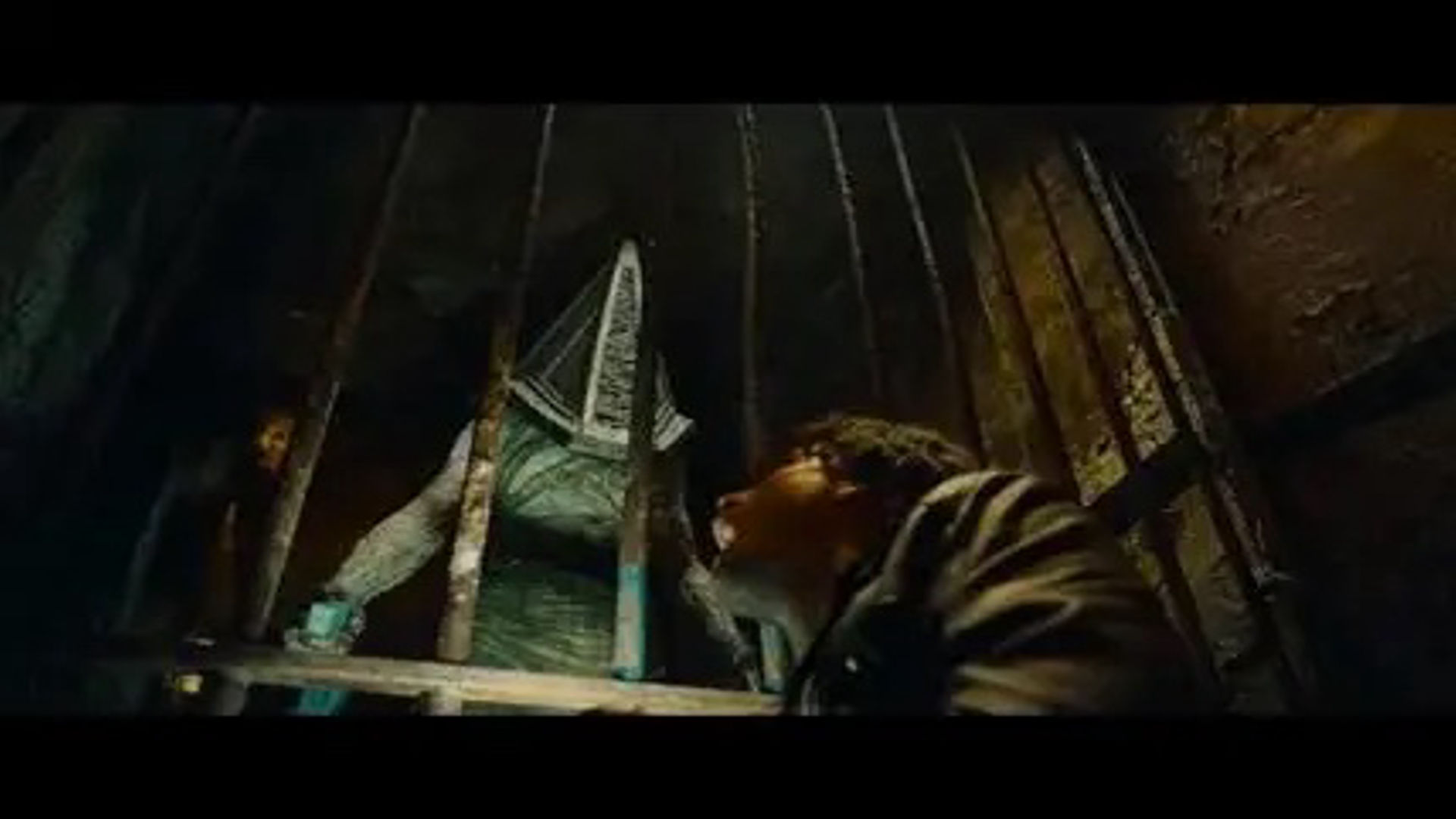
Pyramid Head: Terror as Consequence
One of the most delicate aspects of adapting Silent Hill into prose is handling its iconic imagery without over-explaining it. Pyramid Head, in particular, risks losing power if interpreted too directly.
Fortunately, the novelization demonstrates restraint.
When Pyramid Head first appears, the emphasis is not on grotesque detail. Instead, the narration centers on recognition. James doesn’t perceive the creature as a random anomaly; he experiences a strange, instinctual familiarity. The metallic scraping of the blade against concrete is described not just as sound, but as something that reverberates inside him.
Importantly, the novel does not deliver heavy-handed exposition explaining Pyramid Head’s symbolic purpose. Rather, it reinforces his presence as inevitable. Each appearance feels less like a surprise and more like a reckoning.
In prose, Pyramid Head becomes less a monster and more a manifestation of narrative gravity.
He is not stalking James.
He is arriving.
The Architecture of Guilt: The Town as Active Force
In visual media, Silent Hill’s transformation into the Otherworld is conveyed through rust, decay, industrial textures, and sirens. The novelization enhances this through sensory immersion.
When transitions occur, the prose emphasizes distortion over spectacle. The air thickens. The smell of iron becomes oppressive. Walls seem to pulse with heat. The pacing slows deliberately, forcing readers to sit in the discomfort of spatial disorientation.
One particularly effective sequence involves James navigating a hospital corridor where the lighting flickers irregularly. Instead of escalating immediately into violence, the tension builds through confusion. Doors appear misplaced. Hallways seem longer than memory suggests. Sounds echo incorrectly. The novel captures a key psychological principle: fear intensifies when perception cannot be trusted.
By focusing on perception rather than shock, the novel strengthens what has always defined Silent Hill — the erosion of certainty.
The town does not simply trap James.
It rearranges itself to mirror him.
Memory as Weapon
A major strength of this adaptation lies in how it handles Mary’s presence. Rather than existing solely as motivation, she becomes a recurring emotional force.
Flashbacks are interwoven sparingly but effectively. Hospital visits are recalled not in melodramatic bursts, but in fragments — unfinished conversations, small resentments, moments of exhaustion masked as patience. These recollections humanize both James and Mary. Their relationship is not romanticized; it is complicated.
This complexity is essential.
Without it, the story risks becoming abstract. With it, the horror becomes devastatingly personal.
When the narrative edges closer to revelation, the emotional groundwork laid through these memories amplifies the impact. The truth is not shocking because it is sudden. It is crushing because it has been building quietly, page by page.
Pacing and Purpose
The novel’s pacing is deliberate — sometimes almost meditative. Action sequences exist, but they are not the driving force. Instead, the story prioritizes psychological tension and emotional unraveling.
Some readers may find this slower progression challenging, particularly those expecting high-intensity horror. However, this restraint feels faithful to the essence of Silent Hill. The franchise has never thrived on adrenaline alone. It thrives on inevitability.
The quiet moments matter here. The pauses between encounters matter.
The time spent inside James’s thoughts matters. Because this is not a survival story.
It is a story about acknowledgment.
Why This Novelization Works
Novelizations often struggle because they either cling too closely to their source material or attempt to overcompensate with unnecessary additions. Return to Silent Hill avoids both pitfalls.
It remains faithful to the emotional architecture of the original narrative while expanding its psychological clarity. It respects ambiguity where needed and deepens introspection where possible.
Most importantly, it understands that Silent Hill is not horror in the traditional sense.
It is grief processed through a nightmare.
Final Score (Five out of Five Stars)
Return to Silent Hill: The Official Movie Novelization earns its perfect score not because it is flawless, but because it fulfills its purpose with precision.
It expands character psychology. It enhances atmosphere through sensory prose. It deepens emotional stakes. It respects the legacy of Silent Hill while making the experience more intimate.
For longtime fans, this novel offers a new lens through which to revisit a haunting story. For newcomers, it provides an emotionally layered introduction to one of horror’s most enduring narratives.
It does not rely on nostalgia.
It relies on truth.
And in horror, truth is the most unsettling thing of all.
Featured Image: IGN
Boss Rush Podcast – A Podcast about Video Games

The Boss Rush Podcast is the flagship show of Boss Rush Media and The Boss Rush Network. Each week, hosts Corey Dirrig, LeRon Dawkins, Stephanie Klimov, and Pat Klein, as well as their friends, fellow creators, developers, and industry veterans, share their gaming experiences. They discuss what they’ve been playing, explore rotating segments, debate the Boss Rush Banter topic of the week, answer community write-ins, and more. Patreon subscribers at any tier enjoy exclusive access to the Boss Rush Podcast Patreon Show twice a month along with other perks and extras.
Follow and Connect with Boss Rush Podcast on Social Media
X/Twitter + Bluesky + Instagram + Threads + YouTube
Listen to Boss Rush Podcast on Podcast Services
Apple Podcasts + Spotify + Goodpods + Amazon + More Links
Thank you for supporting Boss Rush Podcast and the Boss Rush Network
Thank you for watching or listening to The Boss Rush Podcast. If you’re watching this episode on YouTube, hit the Subscribe button, Like the video, and hit the notification bell so you don’t miss an episode! If you’re listening on Apple Podcasts or Spotify, consider leaving us a rating and a review as it helps with discoverability and growth. Support Boss Rush on Patreon for exclusive content, early access and audio versions of shows, become a Patreon Producer, and more. Visit our website for all of our content including reviews, news, daily Boss Rush Banter discussion topics, listicles, features, and more. However you support us, it means so much to us. Thank you for your continued support of the Boss Rush Podcast and the Boss Rush Network.

Leave a Reply