
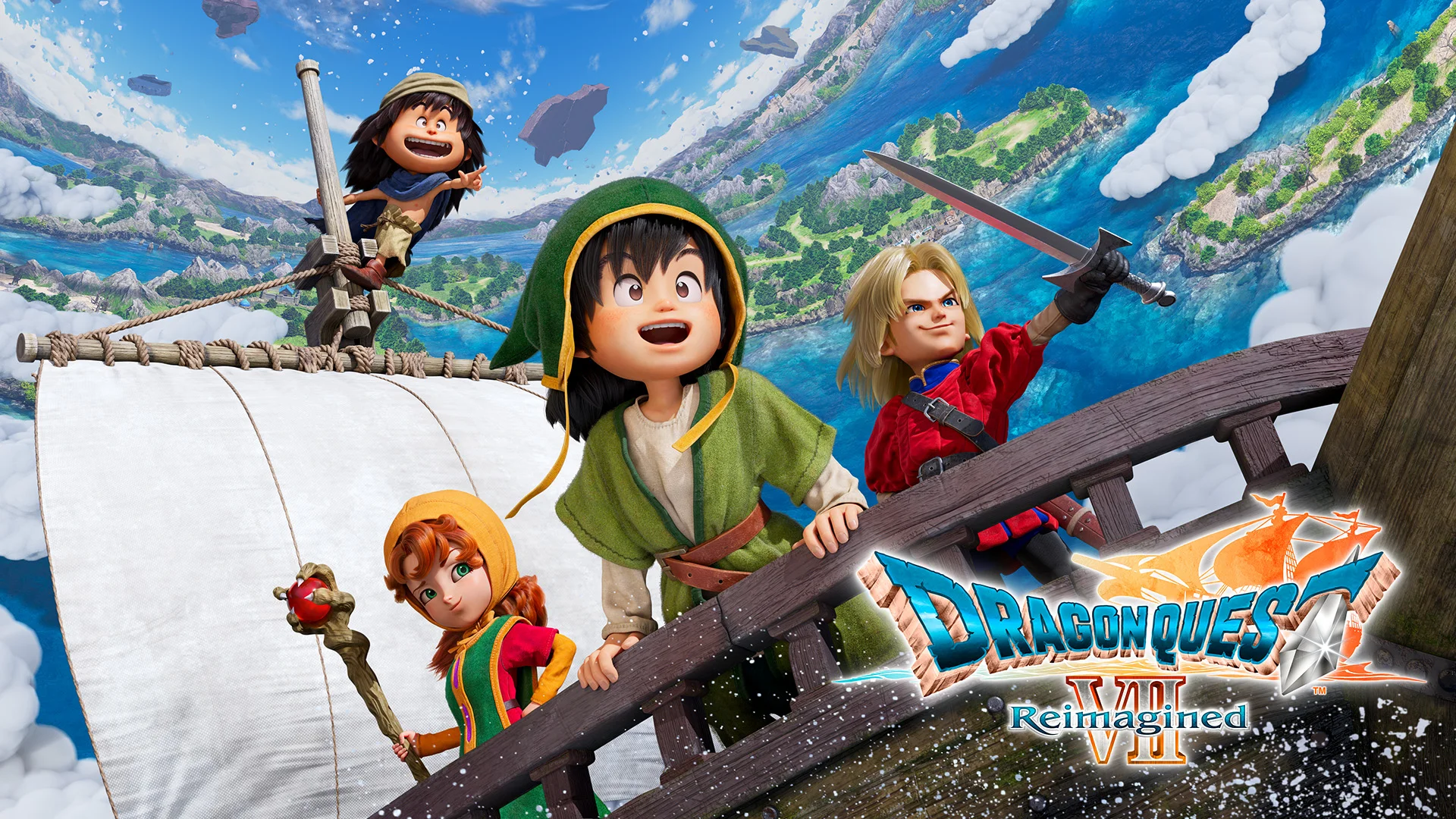
Following a brief work-related hiatus from video games, it has been an absolute pleasure getting back into the hobby and digging into some new releases within the past several days. In particular, I have found myself absorbed within Dragon Quest VII Reimagined, a remake of one of my favorite JRPGs, 2000’s Dragon Quest VII for the PlayStation 1. Perhaps largely due to my nostalgia for the original, the opening dozen hours have been incredibly immersive as I experience refined retellings of the charming vignettes that got me interested in the larger Dragon Quest series in the first place.
Without making a fully conscious decision to do so, I quickly found myself projecting my own feelings of excitement and curiosity onto the game’s blank slate protagonist; the excitement stemming from the joy of revisiting a world that I hold so close to my heart and the curiosity coming from my desire to see how exactly Square Enix has decided to “reimagine” Dragon Quest VII, a behemoth of a JRPG, into a more streamlined and accessible experience. Upon realizing this, I made a decision to lean even further into immersing myself as much as possible into the role of our adventure-craving protagonist. My method of doing so? By committing to only indirectly controlling my non-protagonist party members via the Tactics system.

Essentially a series staple at this point, the Tactics system within Dragon Quest VII Reimagined allows you to assign a general strategy to each of your party members who will then automatically select and take actions during combat as they see fit, with options such as “Show No Mercy” which has the character prioritize only their strongest moves, “Fight Wisely” which is a balanced approach between offensive and defensive skills, and “Prioritize Healing” which naturally has the character focus entirely on keeping your party member’s health topped off. There is also, of course, the “Follow Orders” option, which allows the player to select and choose every action taken by each character during combat encounters; this is likely the setting that a majority of players will use for ever single one of their party members as it provides the most direct control. While I have also primarily used the “Follow Orders” option in previous Dragon Quest entries, I decided to approach combat a bit differently this time for the sake of grander immersion. In particular, I have opted to control the protagonist, onto which I am projecting myself, directly while choosing to only indirectly control each of the companion characters. In doing so, I have found myself feeling much more invested and closer to the action; as though I am the one carving down monsters alongside my independent companions rather than being an omnipotent being who looks down upon and meticulously controls the action from afar.

Outside of the benefit of increased immersion, having a majority of your party performing actions independently also greatly increases the speed of combat encounters. Dragon Quest games have long been criticized for containing a high volume of encounters and while I personally find that combat-centric approach to be a part of the series’ appeal, I would recommend that anyone who is finding themselves getting a bit burnt out on the combat to try utilizing the Tactics system as it can noticeably speed up the pacing of each encounter, saving countless minutes throughout the course of a playthrough. While I can understand there may be a degree of hesitation for some caused by a fear of not making the optimal decision at every opportunity, Dragon Quest as a series is generally on the more forgiving side and you often do not need to be playing perfectly in order to progress. I have been playing VII Reimagined with the difficulty cranked up and have yet to run into any issues with this method of play; but if I do eventually hit a roadblock, the option to directly control party members for only that specific troublesome encounter is always an available option.
What do you think? Are you willing to forego direct control of your party member’s actions for the sake of grander immersion? Do you simply want to be pushing more buttons and making more decisions during each encounter? Please share your thoughts with us on our Boss Rush Facebook Group or our Boss Rush Discord.
Featured Image Source: Square Enix

Leave a Reply