
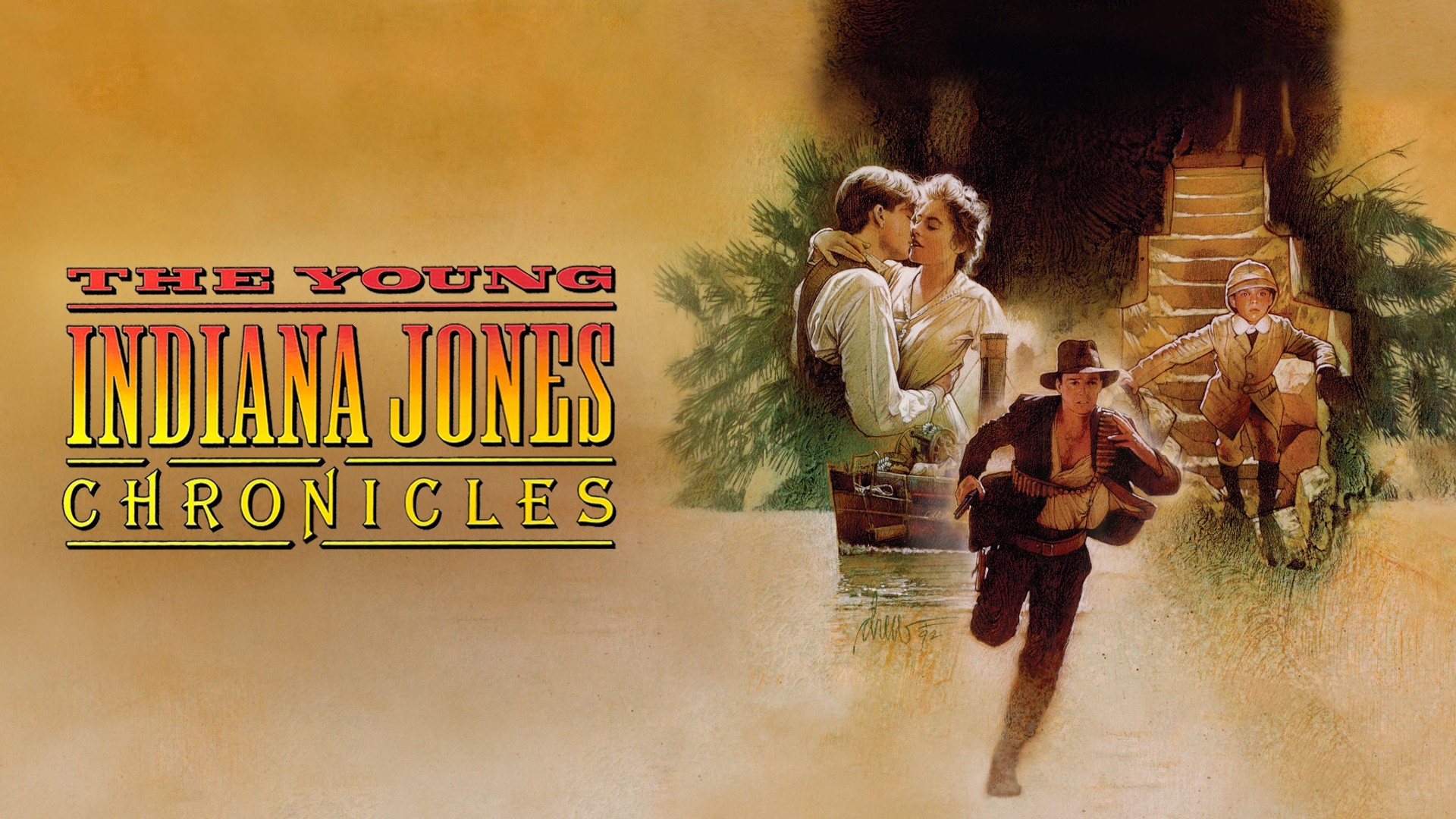
You may be thinking to yourself: what is The Young Indiana Jones Chronicles? The Young Indiana Jones Chronicles is a TV series from the 1990s created by George Lucas that follows a young Indiana Jones’ adventures before he becomes the swashbuckling hero we know and love in the Harrison Ford films.
Why am I talking about a 30 year old series that is largely unknown and dimly remembered? It’s because, regardless of its current popularity, The Young Indiana Jones Chronicles is a wonderful work of art that deserves more recognition for its innovative storytelling and impressive practical effects. Second, the extreme revisions and changes forced upon it have created a domino effect of wider filmmaking issues and manipulation that can’t be ignored.
I discovered the show very recently through fellow Boss Rush Network writer and friend, James Bojaciuk, and have been watching it in my spare time to see what it was like. I’m loving it so far, and the thing is, The Young Indiana Jones Chronicles doesn’t deserve to fade into obscurity. It is a fantastic show featuring incredible attention to detail in its historical accuracy, a grounded story and realistic characters, and nearly all practical effects, making it an extremely unique and fun viewing experience.
Here’s the rub: The version of the show that originally aired, and that I watched, isn’t available. I resorted to watching it on YouTube in order to see it as it originally aired with the episodes and bookends intact before they were re-edited and cut to ribbons by George Lucas. Lucas’s obsessive and controlling revisionist history has hurt the original Star Wars trilogy, but what he has done to The Young Indiana Jones Chronicles just might be the worst, most harmful example of all.

Movies and shows are time capsules of filmmaking techniques and storytelling
When a movie or show is created and shown to audiences, it serves as a sort of “time capsule” of the period it was produced in. From the transition from silent films to talkies, to black and white to color films, we have an incredibly comprehensive and expansive historical archive of not only how movies were made in the past, but how they evolved and continue to evolve through filmmaking innovations and advancements in technology. These time capsules show progression and modernization through significant milestones that changed the industry forever. It is important to remember these time capsules for what they are and what they represent: forward momentum and meaningful advancement.
As Walt Disney once said, “We keep moving forward, opening new doors, and doing new things, because we’re curious and curiosity keeps leading us down new paths.” It’s part of why his passion projects, and joy for innovation and change, manifested in the Disney parks so readily. Importantly, he understood that movie productions are finite and once a movie is released, they can’t go back and be changed, a fact that was reflected in the re-release of his films.
Disney was known for rereleasing movies on TV and in theaters without any alterations whatsoever (remember the old days when the films were kept in a “vault” and would be released for a limited amount of time?). This was a rare thing for the time period, a stark contrast to the original King Kong’s re-edits for theaters that actually led to some of the original footage of the film being outright lost.
Just one example of some of the best films of all time to be re-released and unaltered includes Mary Poppins, a beloved and timeless story that spans generations. The film earned an Academy Award and dramatically changed the film industry forever through its innovative use of a “yellow screen” a technology that would go on to be reused in future films such as The Birds and Pete’s Dragon. In addition, rereleasing it in its original, unaltered state enables new audiences and future generations to view and appreciate the film in its original form. If the film was altered, its innovations and impact on the film industry would be lost to future generations. Would it be as inspiring to future filmmakers if it was altered after the fact?

There are new movies to make and projects to work on. It’s part of why it’s so important that filmmakers and storytellers get to make the movie or show they want to make without studio or executive interference. Even in our current film society of constant reboots and remakes, the final product does matter. Because when a film or show is released, it is no longer just the creator’s project and vision.
Much like a book, the consumer actively engages with the film. They form their own opinions based on their perceptions and experiences. It’s why people all have their own interpretations and perspectives about films and television series. It becomes a transaction between the filmmaker and the audience. Filmmakers deserve to have the vision for their story remain intact, a time capsule of their passion, commitment, and hard work. Conversely, audiences have the right to engage with and consume the product as they see fit.
On March 3, 1988, George Lucas testified to Congress alongside filmmakers such as Steven Spielberg, James Stewart, and so on, about the importance of film preservation. Lucas was quoted saying:
“The destruction of our film heritage, which is the focus of concern today, is only the tip of the iceberg. American law does not protect our painters, sculptors, recording artists, authors, or filmmakers from having their lifework distorted, and their reputation ruined. If something is not done now to clearly state the moral rights of artists, current and future technologies will alter, mutilate, and destroy for future generations the subtle human truths and highest human feeling that talented individuals within our society have created.”
“In the future it will become even easier for old negatives to become lost and be ‘replaced’ by new altered negatives. This would be a great loss to our society. Our cultural history must not be allowed to be rewritten.”
What is so perplexing about these quotes is that they are mere years away from the time that he began doing the very thing he swore should not happen: making irrevocable alterations to his works. He eerily predicted the types of changes that could be made, such as:
“Tomorrow, more advanced technology will be able to replace actors with ‘fresher faces,’ or alter dialogue and change the movement of the actor’s lips to match. It will soon be possible to create a new ‘original’ negative with whatever changes or alterations the copyright holder of the moment desires.”
Yet he is caught employing these exact methods in the Star Wars edits, such as replacing Sebastian Shaw’s portrayal of Anakin’s Force ghost with Hayden Christensen in the 2004 DVD Special Edition of Return of the Jedi.

This is a stark contrast to what happened with Steven Spielberg and his changes to the classic film E.T. Spielberg himself admitted that he regretted the edits he made to the film, most notably, the removal of guns:
“That was a mistake. I never should have done that. ‘E.T.’ is a product of its era. No film should be revised based on the lenses we now are, either voluntarily, or being forced to peer through.”
So what happened with George Lucas, and how does this apply to The Young Indiana Jones Chronicles? It has become abundantly clear that somewhere along the way, Lucas lost sight of the importance of preserving the original creations of his films and TV series, and he got away with it. His blatant manipulation of the original Star Wars trilogy and The Young Indiana Jones Chronicles is dangerous, and the implications are wildly problematic for the film industry as a whole.
Background on The Young Indiana Jones Chronicles’ production and changes
For those who may not know, The Young Indiana Jones Chronicles aired from 1992-1996 and starred Corey Carrier, Sean Patrick Flanery, and George Hall as the child, teen/young adult, and elderly portrayals of Indiana Jones, respectively. Some episodes may jump around in time, featuring both Carrier and Flanery, while others may just feature one version of Indy.
George Hall’s elderly Indiana Jones bookends every episode, wearing an eye patch and recounting his adventures to whoever will listen. It’s a framing device that contextualizes his tales and adds a “lesson learned” to each one. Is it a bit on the nose? Maybe, but the actor performs his role well, and it is befitting of the character that he would share his adventures with others. But there’s more to it than that. His scenes highlight the way senior citizens are regularly ignored and seen as disposable. In many episodes, his stories are often ignored by those around him, and it’s an insightful comment on how the real elderly and senior characters are often seen as silly afterthoughts.
In the VHS and DVD releases of the show, renamed as The Adventures of Young Indiana Jones, George Lucas did a complete overhaul of the show’s structure. The original series features mostly hour-long stories, but was re-edited into a series of feature-length films. This ruins the pacing of the show significantly, and it also means completely unconnected episodes are stitched together because they happen to occur around the same time in Indy’s life.
The original series was intentionally filmed and aired out of order, which kept the audience in suspense about the fate of characters such as Vicky and Remy. But the re-edits abandon this fascinating and unique narrative structure in favor of a chronology that doesn’t actually work when held up to any kind of scrutiny. It means that now all of Carrier’s episodes are frontloaded, while Flanery’s are backloaded to the later episodes.
And where is George Hall’s Indy, you may ask? Completely missing. All of his scenes bookending each episode are cut. It’s ironic, then, that the version of the character whose stories were already seen as disposable and a waste of time in-universe is removed from the show entirely.

It is a huge problem for multiple reasons.
First, the opening episode no longer functions. The feature-length premiere Young Indiana Jones and the Curse of the Jackal features Indy as both a young boy and a teenager investigating an artifact, first in Egypt and then later in Mexico. By having these investigations jump back and forth between his youth and teen years in the same episode, it establishes his connection to the artifact clearly, captures the spirit of the films, and resolves the search in a satisfying way. But because Lucas re-edited the show so it’s presented chronologically, the resolution with teen Indy is no longer in the same episode; now it’s just thrown into a later episode, an awkward epilogue to a much lighter episode about Indy helping find a stolen experimental car. It is a disjointed, utter mess. The two halves of the episode no longer have the elderly Indy tying the events together, educating children with examples from his own life.
Without Hall’s Indy, there is no more context for the stories that are being told. In episode 2, “London, May 1916,” teen Indy meets a headstrong and passionate suffragette named Vicky. Through their vast knowledge and proficiency speaking several languages, they are presented as equals who mutually care for and respect each other. The chemistry between the actors and characters leads to a completely believable romance that is bound to end in tragedy now that Indy has enlisted into World War I and could be summoned for duty any day. Ultimately, this whirlwind romance ends in a bittersweet tragedy.
The bookend with George Hall’s Indy, however, provides a silver lining. Indy and Vicky do reunite in their old age, showing that their romance and bond transcended time. It’s an incredibly beautiful scene. But because Indy’s reunion with Vicky is mercilessly cut in the VHS and DVD rereleases, this silver lining is gone and the episode rings especially hollow. Changes like this actively hurt the story and the characters, and simultaneously waste the audience’s time. Why watch the tender, heartwarming romance between teen Indy and Vicky, when it won’t matter and his efforts to find her again ultimately fail?
How these changes harm intended and future audiences
Not only has George Lucas dramatically changed the flow and intent of the show, but he’s created a situation where the original show isn’t accessible on physical media, and wouldn’t be at all if not for the dedicated efforts of fans.
The show people watched air on television is essentially gone, and no longer preserved except through off-air recordings. The official releases are a bastardized version that makes the show far less enjoyable and at times, incoherent. Its restoration on YouTube, while invaluable to me as I experience it for the first time, is flimsy. Preservation of the show relies on Disney not issuing a cease and desist, on the account remaining active, on YouTube continuing to exist, and, failing all of that, on other fans to download the restored episodes and keep circulating them. If any point in the chain fails, the show essentially ceases to exist again.
Now, I would really like to share The Young Indiana Jones Chronicles with my mom. We are both collectors of physical media, and I think there is a real chance that she would enjoy it and we would both be excited to own this show. But because of how badly and shoddily edited subsequent releases on DVD have been, this simply isn’t an option. Even if we were interested, the DVDs are out of print and the second set—collecting most of the series’ high points—is only available for outrageous sums of money.
George Lucas said that he created The Young Indiana Jones Chronicles to be educational, with the goal that it could be shown to students in classrooms through the use of a popular character IP. This is clever, and the show’s commitment to historical accuracy is remarkable and aligns with this goal well.
But if that was the case, then why would he change the structural integrity of each episode from 45-minutes, a showtime that could feasibly be screened in a classroom with time for comments and discussion with the teacher, to nearly two hours? As they are now, these feature-length episodes can’t reasonably be shown in a classroom, reducing their potential educational value. So what was the point of it all, then?
How this impacts the film industry at large
We continue to see changes and revisionist history to movies and shows in today’s film industry. Perhaps most recently, Spider-Man: Across the Spider-Verse and the paper-thin justification of the changes between its theatrical run and physical film release, comes to mind. Not only was the timeline and crunch environment for these artists extremely abusive and overwhelming, but it also led to international artists being held hostage on the project through their visas. This goes beyond the art being harmed, but to the artists themselves, and their quality of life and work conditions being negatively impacted.

In the era of streaming, networks can now arbitrarily remove episodes and shows without consulting the creator. For example, Netflix’s removal of Community’s “Advanced Dungeons & Dragons” episode, citing it as controversial for its portrayal of blackface (despite the episode itself actively condemning it), is a prime example of this issue. Networks have a deeply disturbing amount of unchecked power to actively change and manipulate a show or movie’s presentation based on their own selfish agendas, and not in service of preserving a visual medium, both the good and the bad.
Disney Plus is no stranger to these insidious tactics, and once again, The Young Indiana Jones Chronicles suffers for it. On May 31st, 2023, Disney added the show to the streaming platform alongside the Indiana Jones films as a collection, perhaps in celebration of the Dial of Destiny‘s release just a couple of months later. Due to how badly the show was re-edited and cobbled together, this obviously isn’t the ideal way to experience it, but it meant the series was intact on the streaming platform. Perhaps the show could find a new audience and vitality through streaming. As of now, the show is completely gone from the platform. Streaming platforms like Disney Plus quietly delete movies and shows without a trace. They hope no one will notice, but we do, and it’s a concerning trend.
Numerous movies and series such as A Walk to Remember, Bodies Bodies Bodies, Great News, Gordita Chronicles, and many others have been unceremoniously removed from streaming platforms in an attempt to save on costs and residuals. This is perhaps even more troubling than removing random episodes. If entire movies and shows can be deleted from a digital library because the platform decides it is too expensive to keep hosting it, how is the movie or show preserved? As we have moved away from physical releases, movies and shows are becoming completely unavailable and likely destroyed by being removed from streaming at an alarming rate.
So what’s to stop someone from taking a hatchet to their movie the way George Lucas has? What’s to stop streaming services from deciding to remove movies or specific episodes if they don’t want to pay the residuals? What’s to stop more and more directors and filmmakers from getting stuck in the past in a never ending loop of revisions and changes that make their art completely unrecognizable?
After all, James Cameron has been doing precisely this with his 4K rereleases of Aliens and True Lies, rendering them completely unrecognizable through the use of generative AI (an equally troubling problem for another day). But it reiterates that, unchecked, these changes and rereleases will continue to plague the film industry and manipulate beloved movies and television series. Something has to change.
There need to be laws in place to protect the integrity of movies and shows as they are originally created. If these creators wish to delve into dramatic re-edits and alternate scenes, it should not impact the original. Present your episode re-edits or altered scenes as an additional alternative, and most importantly, optional, feature. If you feel there is something controversial in your movie or show that may not sit well with modern audiences, include a disclaimer at the beginning.
But keep the original version intact for people to discuss amongst themselves and be entertained by. Give fans the option to watch and appreciate the version of your story they wish. Because the alternative is losing valuable works of art that could be enjoyed for many generations to come, and that is unacceptable.
Featured Image: Lucasfilm (via Disney)
Boss Rush Podcast – A Podcast about Video Games

The Boss Rush Podcast is the flagship show of Boss Rush Media and The Boss Rush Network. Each week, hosts Corey Dirrig, LeRon Dawkins, Stephanie Klimov, and Pat Klein, as well as their friends, fellow creators, developers, and industry veterans, share their gaming experiences. They discuss what they’ve been playing, explore rotating segments, debate the Boss Rush Banter topic of the week, answer community write-ins, and more. Patreon subscribers at any tier enjoy exclusive access to the Boss Rush Podcast Patreon Show twice a month along with other perks and extras.
Follow and Connect with Boss Rush Podcast on Social Media
X/Twitter + Bluesky + Instagram + Threads + YouTube
Listen to Boss Rush Podcast on Podcast Services
Apple Podcasts + Spotify + Goodpods + Amazon + More Links
Thank you for supporting Boss Rush Podcast and the Boss Rush Network
Thank you for watching or listening to The Boss Rush Podcast. If you’re watching this episode on YouTube, hit the Subscribe button, Like the video, and hit the notification bell so you don’t miss an episode! If you’re listening on Apple Podcasts or Spotify, consider leaving us a rating and a review as it helps with discoverability and growth. Support Boss Rush on Patreon for exclusive content, early access and audio versions of shows, become a Patreon Producer, and more. Visit our website for all of our content including reviews, news, daily Boss Rush Banter discussion topics, listicles, features, and more. However you support us, it means so much to us. Thank you for your continued support of the Boss Rush Podcast and the Boss Rush Network.

Leave a Reply