
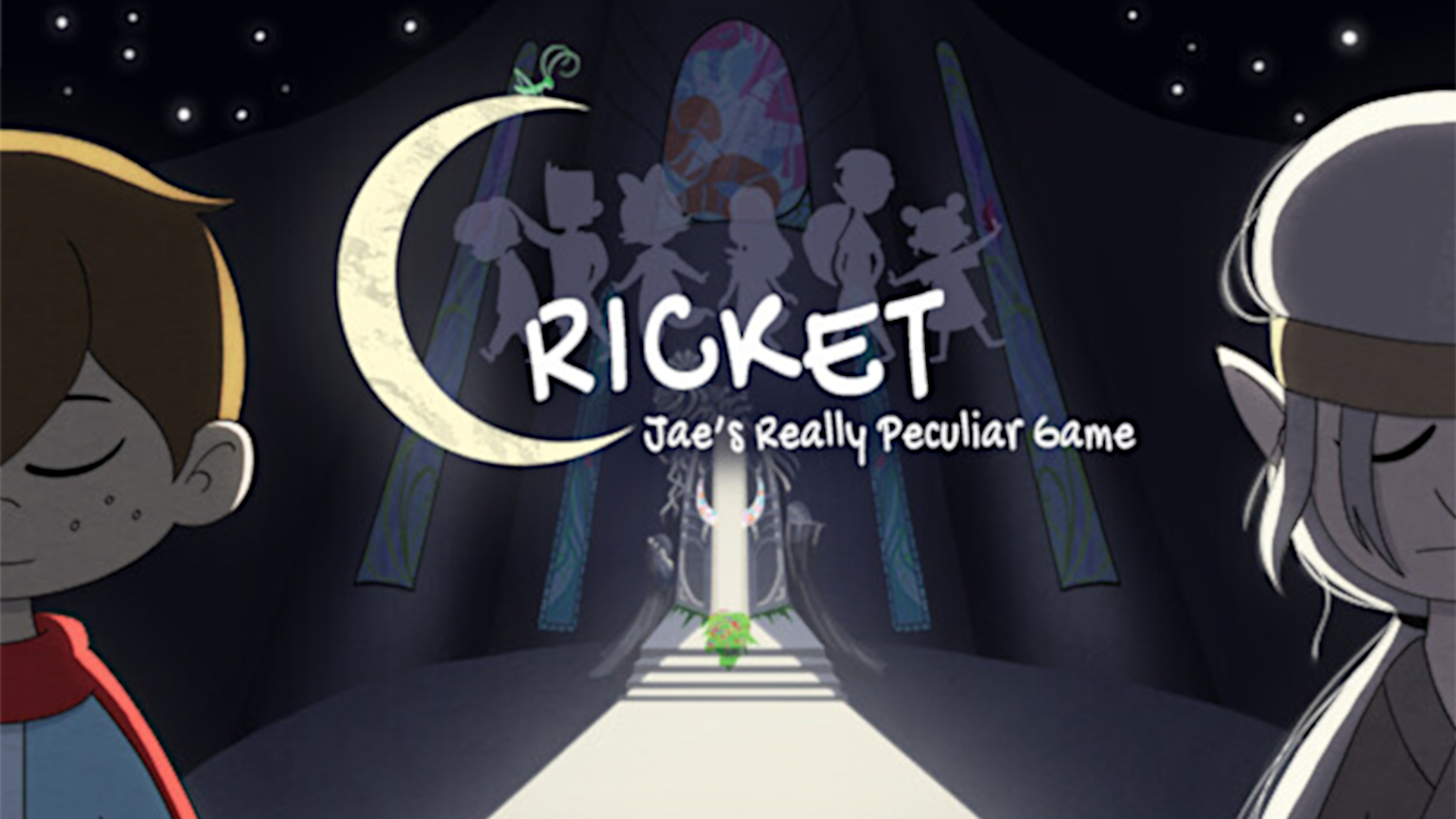
Developer: Studio Kumiho
Publisher: FP Studios, Inc.
Release Date: September 19th 2024
Platforms: PC (Steam), Nintendo Switch, PlayStation 4|5, Xbox Series X|S
Reviewed on: Windows through Steam
Price: $24.99
Cricket: Jae’s Really Peculiar Adventure is a touching exploration of grief, sadness, and the struggle to become whole after devastation. Cricket: JRPG tells a stirring story that is equal parts heartbreaking and uplifting, deftly weaving through a number of heavy topics with sincerity, while keeping the mood light with near-nonstop humour that does not impede on the game’s emotionality. Cricket: JRPG is as likely to make you laugh as it is to cry, and one never gets in the way of the other.
It conveys this through a gameplay system that pays constant homage to the JRPGs it is titled after, though it is much more Paper Mario and Mother than Final Fantasy or Dragon Quest. The turn-based combat has reflexive interactivity as in Paper Mario, and it remains engaging through the entire game. The primary flaw with Cricket: JRPG comes from its faithfulness to elder JRPG design philosophy, as it adopts elements of the genre’s past that many modern JRPGs have left behind, such as complicated (perhaps obtuse) level design, frustrating encounter placement and rates, and restrictions on the ability to save.
Alongside an underwritten ending, these elements prevent Cricket: JRPG from becoming the masterpiece it certainly could be in my book. But it remains a wonderful game, telling a compelling story dealing with highly complex emotions. It is a love letter to the genre, yet it maintains its own identity. Cricket: JRPG is an easy recommendation for anybody who enjoys quirky JRPGs or story-based indie games.
Presentation
Visuals
Cricket: JRPG is a visually pleasant game. The art is bright and colourful, and above all, vibrant. Even in the more somber areas with dark pallets, there is a vibrancy in the tones chosen, as well as clever use of contrasting colours. It ensures the game is a pleasure to look at.
The visual style is simple. I’d be lying if I claimed that Cricket: JRPG’s art style blew my socks off, the way the art style of a title like Hades or even Undertale absolutely did. But there is strength to be found in simplicity. Character expressions are allowed to excel with such a style, Jae’s haunting sadness as an example. The simplicity is also often a boon when it comes to the readability and navigability of the menu and battle system. It is simple, but is a thoroughly pleasant artstyle.
The character designs in Cricket: JRPG are a strong point. Every member of the cast is entirely distinct in both appearance and style, and the character designs compliment the personalities of the characters very well. For example, Jae is a shy and timid boy who can showcase great bravery when pushed, and this is perfectly visually communicated. His pale skin and sunken eyes convey this timidity, while the superhero cape he wears represents this latent courage. This degree of thoughtfulness is applied to every playable character, and the majority of side characters.

The designs for the enemies are also mostly fantastic. Each area contains its own set of enemies which are lovingly and uniquely designed, though along a gradient of quality. Certain enemies feel a little blobby, like they lack the distinctiveness that makes designs like the Mob Sharks feel so special. However these under-designed enemies are in the minority, the vast majority have unique and compelling designs.
What really steals the show in Cricket: JRPG is the animation. It is almost breathtakingly fluid. The first boss battle is against a muscle-flexing giant plant monster, and as he flexed his massive plant muscles and rotated between bodybuilder poses, the smoothness with which he did so left me in awe. I felt similar the first time I saw Studio MDHR’s Cuphead in action, and I think a comparison between the two is both a huge credit to Cricket: JRPG, and an apt comparison. While there is no doubt the big spectacled boss fights have extra attention put into them, I even find joy in the fluidity of the victory poses after a successful battle, or the little charge animation when dashing. The animation is fantastic, and this is an area where the simplistic visuals excel as they really allow you to focus on the fluidity of animation.

The only drawback visually is certain elements of the UI. For the most part it is great and easy to parse. Some of the characters have a unique font displayed by the UI when taking their turn during a battle. This is a lovely touch, but some of the fonts can be somewhat difficult to read. I have a reading disability, and the constant changing in font made it difficult to stay comfortable reading the menu. I wish there was an option to disable the font. Additionally, certain fonts cause the text to overlap (or even exceed) the text box. This was especially noticeable with Twila’s font.

Audio
The soundtrack for Cricket: JRPG, credited to Shane Mesa, Tomoya Tomita, and Dani Person, is wonderful. The deft maneuvering between tones of humour and sadness is aided through the music, which sets the mood for both occasions. The tone is often expected to change quickly, such as when Jae is humorously fighting off armed otaku at an anime convention one moment, and very suddenly has to deal with an instance of extreme, overwhelming, and quite serious pressure from another character the very next.
The soundtrack doesn’t skip a beat as it jumps from the goofy sounds of a lighthearted anime convention, to auditorily conveying the horrific anxious dread Jae is facing for that brief instance. Then the moment of peril is over, and there is an easy fade back to the uplifting song from prior. This type of transition between a light-hearted and serious mood is constantly performed across the runtime of Cricket: JRPG, and there isn’t a single instance that I found the tonal shift to be inconsistent or poorly done. They did a fantastic job with these transitions.
The tracks themselves are excellent. There is a lot of variety on display with the music, from melancholic notes as we explore a character’s memories of suffering bullying, to soft jazz as we battle the Shark Mafia. It all shares a quality of exuberance. Even the pieces accompanying the emotionally devastating scenes maintain a high energy. None of this music feels lifeless or listless, and no track is simply there to satisfy a quota.
The weakest aspect of the audio experience are the sound effects, many of which sound a bit generic and like they were plucked from an asset pack. None of it is egregious, except for the vocal samples that occasionally play out in replacement of voice acting. The samples themselves are fine, it is the timing that is suspect. I think they are manually placed, which makes some of the placement all the more baffling. For example, I’m not too sure Jae visiting his mom’s grave is the appropriate time for Zack to yell “WHAZZAP!” This sort of clash between the voice clips and the mood happened throughout the entire game. While the humour never conflicts with the serious moments, these voice clips often do.
Overall, Cricket: JRPG is a delight to listen to. The soundtrack is high quality and the songs are consistently entertaining and catchy. The soundtrack does a remarkable job of navigating the thin line walked between humour and darkness, and I never felt like the tonal sound shift was jarring. Admittedly the sound effects feel a bit canned at times, and the vocal clip placement needs another pass, but this is a minor critique in my overall positive feelings.
Narrative
As a self-professed homage to JRPGs, a notoriously story-dense genre, it will be unsurprising that Cricket: JRPG does itself have a dense and thorough narrative. A pretty good narrative, at that! Cricket is the nickname given to our protagonist, Jae, by his recently deceased mother. The story follows Jae as he seeks out the land of Yimmelia on the moon, where it is said he can be granted a wish to bring his mother back. Along the way Jae will encounter a number of other interesting and well-fleshed-out kids who are dealing with trauma of their own, all of whom could make use of a free wish.
Their journey will take them through some absolutely ridiculous and genuinely funny scenarios, like foiling a plot by militarized flowers to give all humans allergies, or doing battle with the notorious Shark Gang. It is delightfully silly. However at its core, Cricket: JRPG is about broken kids working through their trauma together, and that trauma often takes center stage in some seriously depressing moments.
The darkness never comes close to reaching the depths of something like Yumei Nikki or the Lisa games, and in some aspects I wish the game would have gone a little further, but there are nevertheless some real gut punches that you may wish to avoid if you are in the mood for something cheerful. That being said, I think the story of Cricket: JRPG is well worth experiencing. Just make sure you are in a place to engage with some dark subject matter.
Concept
Cricket: JRPG takes place in a world that is distinctly not our world, magic and monsters are very real here, but so is death and suffering. Our protagonist Jae, having recently lost his mother, is rotting away in his room stricken with grief. While he is content to waste away, his best friend Zack is determined to force him out of bed. The two of them endeavour to collect some flowers for Jae’s mom’s grave, only to find that the flower shop has been ransacked and the bouquets stolen. They are tasked to find the thief.
They discover the bouquet was stolen by a sentient flower, part of a militant flower army, feeding bouquets to a massive flower in the hopes it will spread pollen all across the world. The goal? To give all humans allergies. Jae and Zack must defeat this evil flower faction to save their town from, uh, slight discomfort. It is a hilariously flawed plan and Jae and Zack identify it as so. After beating a devilishly handsome gym-bro flower titan, and defeating the evil flower army, they return to the grave of Jae’s mother and pay their respects, as Jae reflects on life without her.
This probably reads like a whiplash of emotions. At the height of absurdity one moment and the crushing low of sadness the next, and that is exactly correct. The entire story is like this. An absurd quest broken up with deeply sad moments of crisis and character development. This is the crux of Cricket: JRPG. As wild as it sounds, it works.

Shortly after defeating the flower army, Jae and Zack meet Symphony, a wise-cracking girl who tells them about her quest to reach Yimmelia, the fabled land on the moon. It is said that any who reach Yimmelia, are granted a wish. While Jae casts off the notion as a child’s fairytale at first, his grief-stricken mind is willing to do anything to bring his mom back, so he agrees to accompany Symphony.
They begin their journey to the city of Flame, where Symphony claims there is a rocket bound for the moon. The children will explore a number of areas as they find their way to Flambe, solving local problems as they go. The cast will grow, as they meet more children with their own sets of problems. First the fiery and dominant Acacia, followed by the reserved and cool Twila, and lastly the troubled genius Charlie. Each of them have their own reasons for wanting to reach Yimmelia, and make a wish.
The concept for the story is fantastic. These are children dealing with some heavily traumatic problems, and there is nothing that symbolizes how children process difficult life circumstances quite as much as the juvenile splendor of going on a quest. One that is rewarded with a wish that can fix everything. It allows each child to have their own compelling reason for wanting to reach Yimmelia, nobody feels like they are simply tagging along.
However the execution is a bit more of a mixed bag. I did enjoy the story, but felt like there was an entire layer of depth missing. The story feels truncated. The ending felt extremely rushed, there was almost no falling action to be had. No reflection on how the climax of the story may impact how these characters felt about their individual problems. It felt like there was a “true ending” that gave more of a resolution I had somehow missed the requirements for. Like an entire act of the story is missing.
Characters
The plot of Cricket: JRPG is good, but where the writing shines the brightest is in how well-written the six children that make up the main cast are. They are diverse in every conceivable way, be it personality, background, or attitude. However the tie that binds them is that each has some trauma or issue that a wish from Yimmelia could solve.
Jae is our protagonist, and has clammed up into a reserved and meek shell of himself after the death of his mom, but he is a good-natured boy who deeply cares about others, and is brave when it matters. His best friend Zack is a rough-and-tumble boxer who will do anything to protect and support Jae, but suffers from a crippling need to prove himself. Symphony is a quick-witted and rambunctious girl who masks her insecurity with humour, but she doesn’t always know when to drop a joke. Acacia is fierce and intensely driven, something sorely lacking from the rest of the party, but she can also be cruel, and push around the other kids. Twila is bi-racial, half human half Dimi, who is still figuring out her relationship with the separate halves of her identity. Charlie is a child genius with parents who never seem to notice their talent.
I am hesitant to thoroughly explain the backstory of anybody except Jae as I feel they are best discovered organically, but I will say that while not every character has a story as gut-wrenchingly sad as Jae’s, every child is damaged in some way. From child neglect to a haunting fear of rejection, each child is suffering their own personal hell.

Where the personal element of Cricket: JRPG is at its best, is when the flaws of these characters begin to intersect. This is not a party that clicks immediately. Jae clumsily makes assumptions about Twila based on Dimi stereotypes, and has to learn from it. Symphony frequently crosses boundaries with her humour. This is not a static party, none of these are flat characters, these relationships significantly change over the course of the game. The character development is admirable… For the most part.
A point of exhaustion I’ve felt in regards to RPGs over the past few decades, especially western-developed ones, is the seeming lack of interaction or relationships between the members of the party. Every character has a thoroughly developed relationship with the main character, but they often feel like strangers to one-another. I particularly noticed this during my playthrough of Baldur’s Gate 3, where aside from some token conversations while exploring the overworld, your party has very little to do with one another. To the point that if you speak to one party member while controlling another, they will refuse to talk to you until you resume control of the main character. It hardly feels like a “party” when there is no party dynamic to speak of.
All of that to say that Cricket: JRPG absolutely nails the party dynamic. These kids talk a lot, and much of it is independent of Jae. If I were to take any two party members, I would be able to explain their unique dynamic and use lines of conversation to justify it. Symphony loves to tease Zack. Twila wants to know more about her Dimi heritage and Charlie is happy to provide with their historical knowledge. Acacia’s seriousness constantly butts up against Symphony’s relentless humour. It goes on from there, every possible character combination is given attention at least once. I really appreciate that this genuinely felt like an actual party of characters with bonds and problems.
The character writing does stumble in one area, and that is with Acacia. She is intensely cruel to other members of the party, especially Jae. These scenes are gut-wrenching. Audio and visual effects are used to put you into Jae’s mind during Acacia’s torment, and I thoroughly sympathized with him. From a presentational point of view, these scenes are incredibly effective at conveying Jae’s fear.
The problem is that I quickly grew to hate Acacia. The way she interacted with the other characters by preying on their insecurities felt vile, and very soon I lost the respect I had for the assertive direction she brought to the party. This isn’t an inherent flaw, it is not a bad thing to have an unlikeable character. The lead character for the 2005 JRPG Tales of the Abyss is Luke von Fabre who is a spoiled, entitled rich kid who is utterly insufferable. However he is a beloved protagonist because his life experience causes him to significantly change, and end the story as somebody worthy of respect. This is not Acacia.
It also is not a bad thing to have a character who is unlikeable and never changes, but the story spends a not-insignificant time trying to, if not redeem Acacia, draw sympathy towards her. It just… doesn’t work for me. The harm she committed is too significant for the lackluster apologism the story provides, and the conclusion to her story feels unguided. It is like the developers themselves were not entirely sure what to do with Acacia. I think there was an attempt at nuance here, but it falls flat for me. It simply feels like the developers wanted to have their cake and eat it too. For Acacia to be strictly cruel, and for the player to feel sympathy for her. It simply did not work for me.

However this is merely a misstep in an otherwise remarkable series of character interactions. These characters are marvelously fleshed out, and the character writing here is an absolute joy.
Humour
Another point of excellence for Cricket: JRPG is the game’s use of humour. There is an irreverence that is very clearly inspired by the likes of Mother, but I think it is more specifically similar to Mother’s descendants such as Undertale. There is a lot of internet-age humour. From references to modern memes, to jokes about anime body pillows, it is very much the type of humour that may age badly, but thrives in the current landscape.
There is a good dose of more antiquated internet humour as well, such as references to fedora-tipping “nice guys,” or the ill-fated Tumblr fan convention Dashcon and the sad ball pit. I particularly enjoyed the cosplaying enemies at the anime convention who attacked via glomping.
Much like Undertale, it also makes frequent use of anti-humour and unexpected jokes. For example at the anime convention, there are a number of merch booths you can enter and talk to the merchant, who will generally have a joke or reference to make. However one merchant will disparage you for treating them as nothing more than a joke dispenser, and a few others chastise you for entering the vendor-only portion of their merch booth. Which, of course, makes sense. But the humour comes from how nonchalant personal space and property is treated in most JRPGs. The writing is full of these sorts of jokes pointing fun at the genre itself.
It is a very funny game, and I want to give praise one last time to how well Cricket: JRPG handles being both a comedy and a story about trauma. It is so common for these types of games to be too scared of sincerity to let the emotional moments breathe, but Studio Kumiho knows exactly when to carry a joke, and when to let it die. There are even impressive moments where the game fluctuates rapidly between serious emotion and humour, and does so without one ever overriding the other. It is an impressive nuance the script deserves serious credit for.
Sensitive Elements
Cricket: JRPG delves into some pretty sensitive territory. It deals with themes of death and grief, parental abandonment and neglect, racism and general discrimination, the effects of war, and more. For the most part, it does so with an appropriate sense of tact and respect.
The degree of success in exploring these topics ranges. I lost my own parent within the last year, and I was hoping to see my own feelings reflected in Jae’s journey. Jae’s loss has the focus at the beginning, and a little bit at the end, but it is mostly pushed to the side as the rest of the cast joins with their own problems to navigate. I wish Jae’s sense of grief was explored a little more. There is a lot of ground to cover and this is a short game, so I understand, but I feel as though perhaps Studio Kumiho bit off a bit more than they could chew with the sheer variety of topics they chose to tackle.
I do think the writing occasionally lacks subtlety when dealing with certain themes. The exploration of Twila’s biraciality in particular is pretty on the nose, as the people around her are relentlessly, comically racist to her, whereas Charlie’s nonbinary identity is immediately accepted and never questioned. The world of Cricket: JRPG seems to be one in which transphobia is utterly nonexistent and racism is overwhelmingly present. I enjoyed the inclusion of Twila’s story, and racism is a perennially important topic to explore within art, but I think a bit more nuance would have been valued.
Nothing here is bad though, to be clear. Cricket: JRPG handles its sensitive elements with tact. I just think there was room for nuance, and perhaps another step to be taken in the exploration of these topics.

Gameplay
Cricket: JRPG adheres to its name, you are in for a true JRPG experience. It adheres closer to something like Undertale than Final Fantasy. There is no world map, just a series of linked areas that can be backtracked to if desired, though thankfully there is very little required backtracking. Each new area has its own self-enclosed problem that also advances the plot forward, usually capping off with some sort of boss battle or climactic encounter. The gameplay is split between traversing the overworld and battling in combat.
Combat
Cricket: JRPG has turn-based combat with Paper Mario-esque timing-based attacks, mixed with its own unique flair via the tide bar, a mechanic that allows you to influence the flow of battle. The result is a combat system that is fun, engaging, and feels highly original, which is as high praise as one can give a JRPG. The ramification however is that combat is rather involved. Meaning that every battle requires your full attention, and this becomes a pain when dealing with superfluous fights. Overall, the combat in Cricket: JRPG is a real pleasure.
Each party member will choose an action, either to solo attack, use a team-attack, use an item, perform party alterations mid-battle, or attempt to flee. Fleeing is basically useless. Escape rates seem to be extremely low, I tried to flee from a good number of unimportant battles and experienced four successful escapes across the entire game. I am open to the idea that this was simply bad luck, but I wrote the option off after a while.

A solo attack allows the character to perform a standard attack for zero DP (essentially mana), or a special attack that costs DP equivalent to the strength of the attack. For example, Jae can perform a basic attack smacking the enemy with his rake, or he can perform the more powerful “Moxie Thrust” for 3 DP. Every character has an entirely unique moveset that grows as they level up.
There are no classes, but the characters do loosely fall into roles. Jae is the support, providing healing and resurrection to his allies. Twila is the magic user who can target enemies in the back row, whereas Zack is the heavy hitter, and Charlie can throw grenades that apply status effects. Every role is covered. However every character is functional enough on their own and party composition isn’t really something to worry about, you can simply use your favorite characters.
Team attacks spend the action of both characters involved, and it is good fun discovering the unique attacks for every character combination. The downside is that in many cases, the attacks are a bit underwhelming. Certain options are very good, and many of them offer useful utility that makes them still worth using, such as applying status effects or attacking entire rows or columns of enemies. But I definitely noticed that many of them seemed to deal less damage overall than if the characters were to attack separately.
Execution of the actions sees a reflex-based minigame play out. As in Paper Mario, if you hit a button right before your attack lands or you are hit, it will increase the effectiveness of the attack or reduce the incoming damage. There is a prompt to guide this, with a circle passing by a target much like the notes in Guitar Hero.
Additionally there are actually two buttons that can be hit. The first button, “A” on an Xbox controller, increases outgoing or reduces incoming damage by a regular amount. Hitting “B” will alter the damage or effectiveness by a significantly higher amount, but will require much more precise timing.
This system is great. I think the sensitivity is a bit too high, even with the standard button I often felt like I was failing the prompt in a position basically identical to a previous success, but overall the concept of a reflex system works as well here as in Paper Mario. It adds a great deal to the enjoyment of the experience, and as a result, combat is something I never really got tired of.

What sets Cricket: JRPG entirely apart from its peers however, is in the refreshingly original Tide Bar, which can be found along the bottom of the screen in combat. This bar can be filled by both the player and the enemy by dealing and taking damage, and is utilized by the enemy to deal devastating attacks. The player can also use it to enhance their attacks, but it is a finite resource. It can also be used to slow down time, which is an immensely useful ability in a game with reflex-based combat.
The ability to slow the prompts down to make nailing the timing easier is an ingenious idea. It also lends to some excellent and enjoyable resource management, as you need to weigh out spending your tide meter on increasing your attacks, slowing time for the reflex prompts on your own attacks, and slowing time to nail the defense prompts. It adds a layer of depth I really enjoyed.
Overall the combat system in Cricket: JRPG is wonderful. So many JRPGs have somewhat forgettable combat systems, I always appreciate one that attempts to stand out, and I appreciate one that succeeds even more.
Overworld
Much like the non-traditional JRPGs it is inspired by, such as Mother and Paper Mario, Cricket: JRPG will have you exploring sewers and warehouses as opposed to verdant fields and dragon lairs. The journey will see Jae and company depart from their small town, venturing through a series of increasingly complex environments as they make their way to the city of Flambe, where a rocket is said to take them to the moon. This will include locations such as a trailer park, the frequently mentioned anime convention (which is a real highlight), shark-infested sewers, and a ton more. There is real diversity in location, I never got bored, and no single area stood out as a weak point.
The areas are lovingly designed. You can tell that a lot of time was spent on each location. They are packed full of totally optional areas with plenty of NPCs to talk to and hidden items to find. Going off the beaten path will almost always reward you with an item or funny NPC joke. I really enjoyed simply wandering around and taking in these beautiful and entertaining environments entirely before moving on.

Navigation & Encounter Rates
There are a number of areas that are labyrinthine, large, and confusingly laid out, but there is no map to help you. There are two areas in particular that stood out to me, the early game forest and the late-game boxing arena. The first acted as a genuine maze whereas the latter was quite cryptically laid out. In the case of the forest I was reduced to mindlessly wandering until I found a way through, and with the arena I was walking along walls to figure out where entrances and exits were. It reminded me of aimlessly wandering around Darm Tower in Ys I with no idea where I’m meant to go, except with no walkthrough to guide me.
Exacerbating this issue is the second major problem, and that is enemy encounter rates. Cricket: JRPG has no random encounters, and this is something it proudly states in its marketing. Instead, as in Paper Mario, the enemies appear on the overworld, and charge towards you if they see you. Making contact initiates turn-based combat. It is a great system in Paper Mario, Tales of Symphonia, and every other title it is included in. It is hard to say it is better in Cricket: JRPG.
This is because enemy placement and respawn speed is set to such an intense degree that it is hardly different from random encounters. If you defeat an enemy, they will reappear moments later, and there is always an enemy placed at a navigational chokepoint or important area. Additionally enemies are fast, outrunning Jae at standard speed and keeping up with his run.
What this means is that when you are in an area that includes any level of backtracking, you will be fighting that enemy every single time you need to go through that corridor or intersection. This is not such a big deal in the early game, but later on when enemies become too tanky for encounters to last anywhere less than three rounds, it becomes agony.
I remember one specific moment that exemplifies this. It was during the rock concert level, when Jae and company are trying to navigate the crowd to reach the performers. This manifests as a clever navigational puzzle, where you are needing to power up generators, elevators, and speakers in order to advance through the crowd, but with only two power sources at a time, meaning only two of the three features could be active. This meant a lot of running back and forth to grab power sources from unneeded features, to transfer to needed ones.
I thought this puzzle was awesome. I really enjoyed the idea of it, but in practice it was absolutely miserable because of the enemy placement. There is an enemy in every path between power sources, sometimes two, and you’ll generally be running through a a few paths for each segment of the puzzle. Meaning that you’ll be running past a large amount of enemies, in narrow corridors, and the potential to be caught is quite high.
At least in traditional JRPGs these areas are usually filled with trash mobs, but the timing-based combat of Cricket: JRPG means you can’t simply button mash through these fights. And guess what? When you reach the end and grab the power source, and turn around to head back, all of the enemies have respawned.
It was miserable.

Paper Mario solved this problem by having relaxed enemy respawn rates, wide open corridors that made it easier to bypass enemies without triggering a fight, and the ability to simply delete enemies from the overworld once you were the right level above them and had the proper badge. But Cricket: JRPG seems specifically designed to make enemies as likely to be encountered as possible, even in areas with a lot of backtracking, which is odd for a game that uses a lack of random encounters as an advertising feature. It isn’t the “random” part of the encounters that we dislike, it is when we are forced into superfluous fights, and Cricket: JRPG forces you into plenty of them.
I’ve seen that this is a common complaint, and one the developer seems to have acknowledged. Hopefully it will be fixed in a future update. But for my playthrough, which is all I can base this review on, it was a genuinely frustrating experience.
Limited Save Locations
The last point of significant criticism is the save system. Jae can save his progress by calling his sister Violet on payphones that dot the horizon, but the problem is that these payphones are relatively scant. There is generally only one per area, and some areas are missing one entirely (or at least I couldn’t find them,) which means backtracking to a previous area when it is time to save.
This can be quite time consuming, considering how large the areas often are. It also meant it was harder to sit down and play Cricket: JRPG. I could only really play it when I knew I had the time to play from one payphone to the next. I can appreciate the idea, but I think there needs to be approximately double the number of payphones there currently are.
The Portable Experience
I would like to say that Cricket: JRPG is the perfect Steam Deck or Nintendo Switch game, and it comes close. This sort of game feels like what the Steam Deck or Switch was meant for. The clean visuals make it easy to see even on a smaller screen, it plays great with button controls, and RPGs naturally lend themselves to a “pick up and put down” nature.
However the lack of save states makes it really hard to recommend playing on a Steam Deck or Switch. You can suspend the game between play sessions of course, but I simply did not enjoy having my device commandeered by the game because I was still a half hour’s playtime away from the next save state.
Additionally I wonder if the broken UI I often encountered was the result of the Steam Deck’s smaller resolution. If the developers can fix the save state issue and address any resolution problems, I would heartily recommend Cricket: JRPG as an excellent choice for the Steam Deck. As it stands currently, I cannot in good faith recommend it.
Final Score
Cricket: Jae’s Really Peculiar Adventure is a really good game, but it is a flawed one, flawed enough to prevent me from considering it great. The flaws are not great in number, but they have an impact that is felt through the entire experience.
There are small issues I can overlook like UI problems, and that certain themes are not explored with much subtlety. However the problem comes with the fundamental issues.
While the writing is good, the plot is underdeveloped and the ending feels half-finished. Most of the kids are expertly written, but Acacia is unbearable and never improves. In terms of gameplay, an adherence to antiquated JRPG principles dampens the experience. Area layouts are often confusing and complicated, with no map to provide guidance, and extreme enemy encounter rates makes finding your way through these areas more of a drag.
However, Cricket: JRPG is also often wonderful. It has some real highlights. The art is pretty, and the animation is genuinely jaw-dropping. Every new team attack or boss fight is a new chance to enjoy some amazingly fluid animation, and that never got old. The music is utterly fantastic, and a compelling reason to come back to the game. The combat system is refreshing and original, and I appreciated taking the Paper Mario-esque reflex system and further developing it. The Tide Bar is a perfect coupling with the reflex-based combat, and added a delightful layer of resource management to the combat. The writing is touching and Jae’s journey is a joy to experience. It never ceased to impress me how skillfully the game managed to navigate traumatic ideas while remaining very funny. There is a lot to like about Cricket: JRPG.
So while I do have a lot of problems with Cricket: JRPG, I thoroughly enjoyed my time with it. The flaws are overcome by the sheer charm of these delightful characters, and the strength of some excellent comedic sense. I absolutely recommend it to anybody looking for a game that is heartfelt and funny, with extremely good writing and some creative gameplay ideas. But those flaws do exist, and to me, they were substantial. So go into Cricket: JRPG knowing that you may struggle with certain aspects.
Even better, most of the negatives I have mentioned can be addressed through patches and it seems as though some of them are already on the docket. I would love to revisit the game after these changes, and see if it improves my experience from “really good” to “great.” As it stands currently, Cricket: Jae’s Really Peculiar Adventure is simply really good, and that in itself is a wonderful thing.
Disclosure: Boss Rush Network received a review code for the Steam version of Cricket: Jae’s Really Peculiar Game. Neither Studio Kumiho nor PM Studios, Inc. made any stipulations upon this review, nor did they or any representatives read it prior to publication.
Featured Image: Studio Kumiho
Boss Rush Podcast – A Podcast about Video Games

The Boss Rush Podcast – A Podcast about Video Games – is the flagship show of the Boss Rush Network and Boss Rush Media. Each week, hosts Corey Dirrig and LeRon Dawkins are joined by friends, fellow creators, indie developers, and industry veterans to discuss the latest in the world of video games, including news, rumors, new releases, and what they’ve been playing. They also answer listener questions, debate important industry topics and Boss Rush Banter discussion points, and feature a rotating weekly segment. New episodes post every Monday.
Follow and Connect with Boss Rush Podcast on Social Media
X/Twitter + Bluesky + Instagram + Threads + YouTube
Listen to Boss Rush Podcast on Podcast Services
Apple Podcasts + Spotify + Goodpods + Amazon + More Links
Thank you for supporting Boss Rush Podcast and the Boss Rush Network
Thank you for watching or listening to The Boss Rush Podcast. If you’re watching this episode on YouTube, hit the Subscribe button, Like the video, and hit the notification bell so you don’t miss an episode! If you’re listening on Apple Podcasts or Spotify, consider leaving us a rating and a review as it helps with discoverability and growth. Support Boss Rush on Patreon for exclusive content, early access and audio versions of shows, become a Patreon Producer, and more. Visit our website for all of our content including reviews, news, daily Boss Rush Banter discussion topics, listicles, features, and more. However you support us, it means so much to us. Thank you for your continued support of the Boss Rush Podcast and the Boss Rush Network.


Leave a Reply