
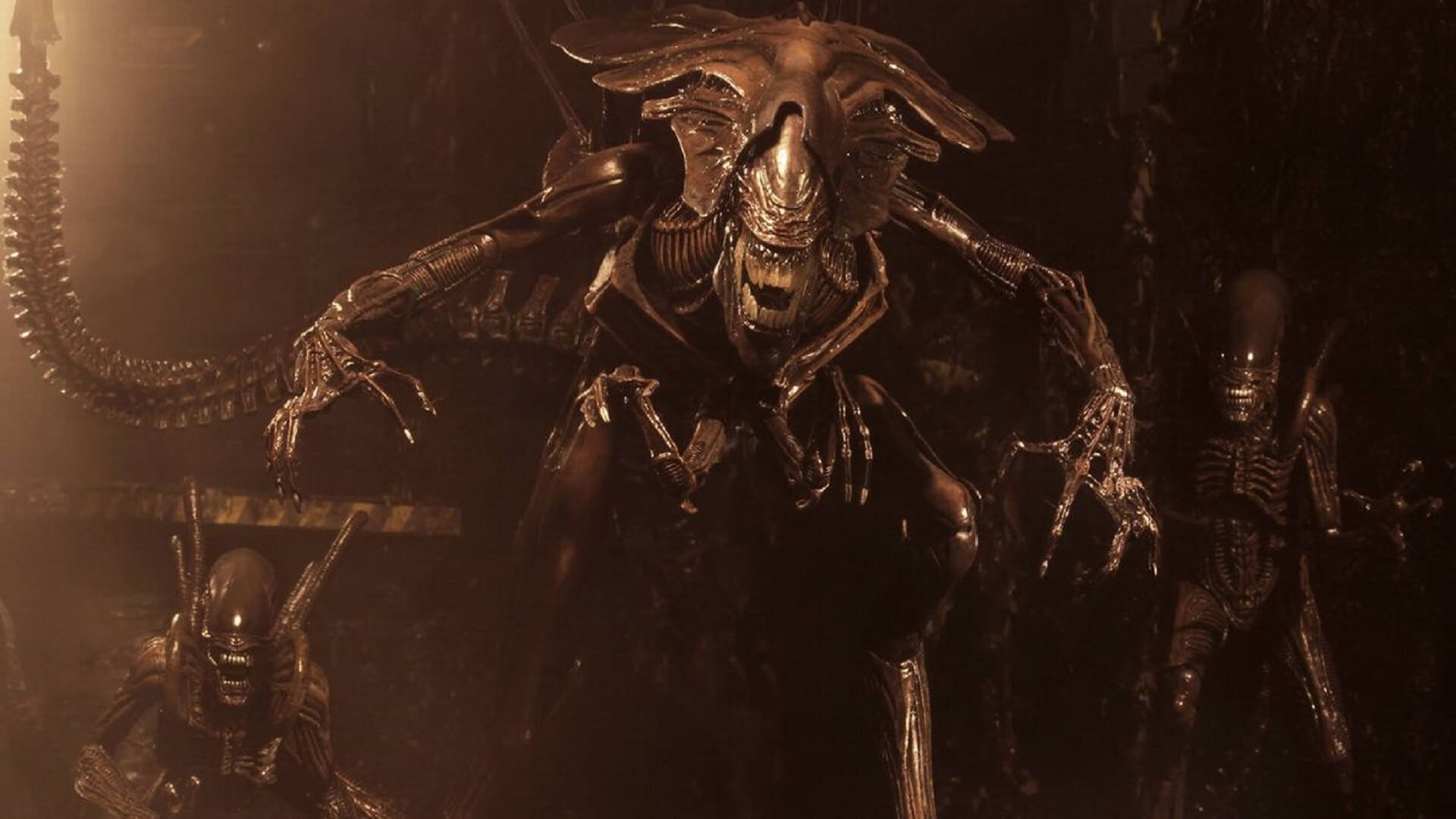
Alien Resurrection is the controversial fourth installment of the Alien franchise. Alien Resurrection is also an incredibly ambitious first person shooter for the PlayStation, released in 2000 – released years after the film due to developmental hell. The game is the first shooter of its kind to use the right thumb stick for targeting.
Developed by Argonaut Games, it pushes the PlayStation’s performance to the limits. In more ways than Sony knew or condoned.
Alien Resurrection contains a secret code that allows unmodified PlayStations to play any compatible disc, including homemade burned CD-Rs. This news was broken by the YouTube channel Modern Vintage Gamer, who interviewed one of the original developers, Martin Piper.
What happened? How does it work? Why does this matter now, nearly 20 years after the PlayStation was discontinued?
What happened?
Argonaut Games was a studio dedicated to pushing hardware and software to its limit. The were responsible for the Super FX chip that brought true 3D to the Super Nintendo. Croc introduced right stick camera control. As stated, Alien Resurrection was the first FPS to feature aiming via the right stick.
But during developmental hell, the game was potentially slated for a multi-disc format and the team experimented with seamless disc-swapping. This was ultimately scrapped, but the code never left the game. It was only buried under layers of cheat codes, where Sony never knew it existed. If they did, they never would have allowed it to appear in the game, because seamless disc-swapping allows the PlayStation to run games without copy protection.
How does it work?
This method of disc-swapping does not allow the PlayStation to reset. Because it remains powered on, the initial copy protection check against Alien Resurrection remains in effect. The console’s memory is not cleared, and the system is told to stop spinning the disc. During this time, Alien Resurrection deploys a new executable that allows the next disc inserted to start.
There is only one minor roadblock to this functionality. The disk eject sensor needs to be blocked and held down, otherwise the PlayStation’s copy protection will activate. This can, however, be harmlessly achieved with cardboard.
From that point, you are free to play any compatible disc, including burned DVD-R backup discs containing PlayStation games.
Why does it matter?
A university had a library of old theatre projectors and films from the silent era through the 1980s. They would regularly invite the public to watch these films in a historical auditorium.
Watching a live orchestra perform alongside a silent film is a fundamentally different experience than watching it with a recorded soundtrack. Watching an old print on a camera of the same vintage, hearing the mechanisms bring the silver screen to life, is a nakedly analogue experience. You are watching a film thanks to an intricate mechanism, clearly a thing of beauty in its own right.
Film restoration and home media is vital. But historians must be aware that watching a 4K blu-ray at home is a wholly different experience than watching the film on a projector of the time, or with the intended orchestra accompaniment, as part of a block of different material, or simply at the theatre itself.
All of the myriad ways video games are preserved is vital. But for archivists and historians, the original hardware is an essential touchstone. How else can you know what people of the time experienced? How else can you capture the historical moment, and understand precisely what someone decades or generations before felt? Playing it in the way it was intended to be played is necessary historical context.
This code will be invaluable to archivists. The university I mentioned had a relatively small library of films. Imagine if they could simply produce a temporary print, identical to the historical original in every way, and run it through the invaluable historical projector with no modifications or variation.
As the PlayStation and its games become ever more expensive, and then ever more rare, this allows future historians to play any game on the system without modifying or risking damaging any of the items involved.
Statistically, very few video games have been in any sense preserved. The more points of failure a piece of art has, the more copies that proliferate, the greater chance that it will live on. Art’s survival is a numbers game.
And this greatly increases the chance of the PlayStation and its entire library surviving far into the future.
Source: Modern Vintage Gamer
Featured Image: 20th Century Studios
The Boss Rush Podcast: The Flagship Podcast of Boss Rush Media and the Boss Rush Network

The Boss Rush Podcast – The Boss Rush Podcast is the flagship podcast of Boss Rush Media and the Boss Rush Network. Each week, Corey, Stephanie, LeRon, and their friends from around the internet come together with other creators, developers, and industry veterans to talk about games they’ve been playing, discuss video game and entertainment based topics, and answer questions solicited on social media and the community Discord.
New episodes of the Boss Rush Podcast release every Monday morning on YouTube and all major podcast applications like Apple Podcasts and Spotify. Patreon supporters gain one week early access.
Listen on your favorite podcast application or watch on YouTube!
Anchor | Apple Podcasts | Spotify | Google | Twitch | Overcast | Pocket Casts | Stitcher | Amazon Music
Follow The Boss Rush Podcast on Social Media:
Twitter | Discord | Instagram | Twitch | YouTube | Facebook Group | Facebook

Leave a Reply