
Since its earliest days, the Final Fantasy series has always been focused on innovation. Whether it’s pushing the limits of early 3D graphics or making tweaks to party composition, the franchise has continued to reinvent itself in new and interesting ways for nearly 40 years.
One of the most prominent innovations in Final Fantasy is the Active Time Battle system, or ATB for short. Introduced in Final Fantasy IV, this system allowed players to react more quickly to enemy actions and introduced more tactical considerations – do I let my White Mage cast a buff now or hold off until the enemy’s next attack in case someone needs healing?

The ATB system would go on to be a series staple for the next 10 years, but around the mid-2000s, Square Enix started injecting more real-time elements into its battle systems. This period brought us more experimental titles like the beloved action-platformer Kingdom Hearts, and the not-so-beloved Final Fantasy XIII.
These experimental titles had great potential, but they also had plenty of flaws. Kingdom Hearts gave the player complete freedom to move and attack during battles, but the clunky battle menu turned the game into little more than a button masher. Final Fantasy XIII encouraged aggressive play with its stagger system, but severely limited the player’s agency by allowing direct control of only one party member.
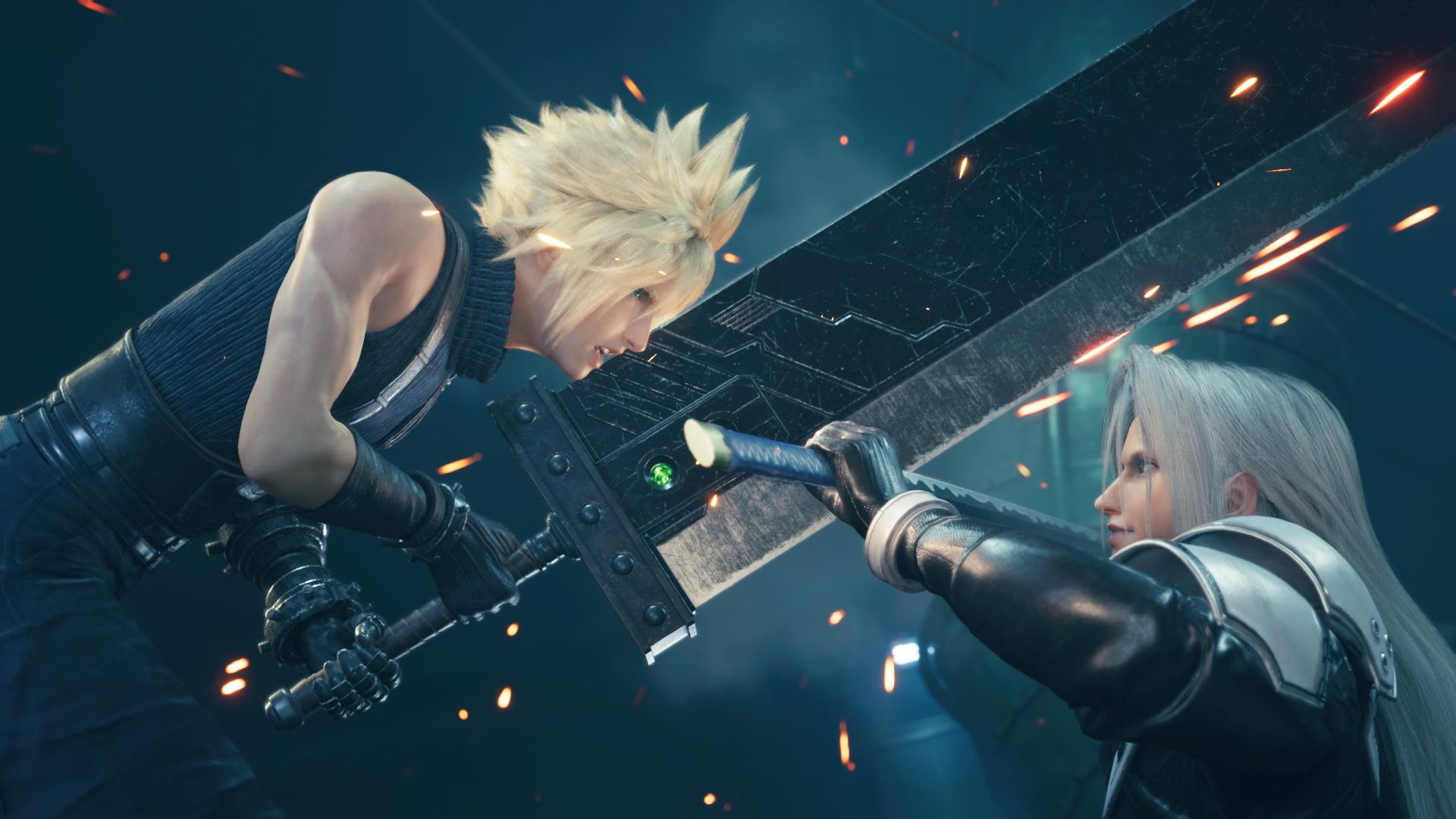
The developers at Square Enix spent years trying to find a way to let players make interesting and complicated tactical decisions without sacrificing the flow of combat. In 2020, they finally cracked it with Final Fantasy VII Remake.
This game saw the return of the ATB system, but tweaked to work in tandem with the real-time aspects of its combat. Basic actions like attacking and dodging are free actions that the player can do at any time. These fill your ATB gauge, which can then be spent to perform heavy-hitting moves like special attacks and magic. Opening the battle menu to choose your move puts the game into Tactical Mode, slowing time to a crawl in a dazzling reimagining of the Wait Mode seen in earlier titles that used ATB.
Like in Final Fantasy XIII, the player can only directly control one character at a time, but crucially, you can switch characters at any time. AI-controlled characters only perform basic attacks, so you don’t have to worry about them wasting precious ATB charges on pointless or redundant actions.
The stagger system also makes a comeback, but it has now been built to encourage thoughtful, strategic play instead of mindless, relentless attacking. Almost every enemy has a specific condition that makes it significantly easier to stagger them, which turns most encounters into small puzzles as the player tries to find the best way to fulfill these conditions.

The cherry on top of this delicious combat sundae is the character variety. Having a party of characters with different strengths and weaknesses is a tradition nearly as old as RPGs, but oftentimes this is represented in completely abstract terms, like how high a character’s HP goes or what flavor of magic is available in their battle menu. In Final Fantasy VII Remake, these differences are incredibly tactile. Fighting as Cloud feels meaningfully different than fighting as Barret or Tifa. They move differently, attack differently, take hits differently.
With all these different parts of Final Fantasy VII Remake’s combat working together, Square Enix was finally able to bring out the full potential of its earlier experiments and achieve one of the greatest action/turn-based hybrid systems of all time.
What do you think? Do you miss the old turn-based battles? Or maybe you prefer a fully real-time action game like Final Fantasy XVI? Head on over to our Discord and join the conversation!
Featured Image: Square Enix (via RPGSite)
Boss Rush Podcast – A Podcast about Video Games

The Boss Rush Podcast is the flagship show of Boss Rush Media and The Boss Rush Network. Each week, hosts Corey Dirrig, LeRon Dawkins, Stephanie Klimov, and Pat Klein, as well as their friends, fellow creators, developers, and industry veterans, share their gaming experiences. They discuss what they’ve been playing, explore rotating segments, debate the Boss Rush Banter topic of the week, answer community write-ins, and more. Patreon subscribers at any tier enjoy exclusive access to the Boss Rush Podcast Patreon Show twice a month along with other perks and extras.
Follow and Connect with Boss Rush Podcast on Social Media
X/Twitter + Bluesky + Instagram + Threads + YouTube
Listen to Boss Rush Podcast on Podcast Services
Apple Podcasts + Spotify + Goodpods + Amazon + More Links
Thank you for supporting Boss Rush Podcast and the Boss Rush Network
Thank you for watching or listening to The Boss Rush Podcast. If you’re watching this episode on YouTube, hit the Subscribe button, Like the video, and hit the notification bell so you don’t miss an episode! If you’re listening on Apple Podcasts or Spotify, consider leaving us a rating and a review as it helps with discoverability and growth. Support Boss Rush on Patreon for exclusive content, early access and audio versions of shows, become a Patreon Producer, and more. Visit our website for all of our content including reviews, news, daily Boss Rush Banter discussion topics, listicles, features, and more. However you support us, it means so much to us. Thank you for your continued support of the Boss Rush Podcast and the Boss Rush Network.

Leave a Reply