
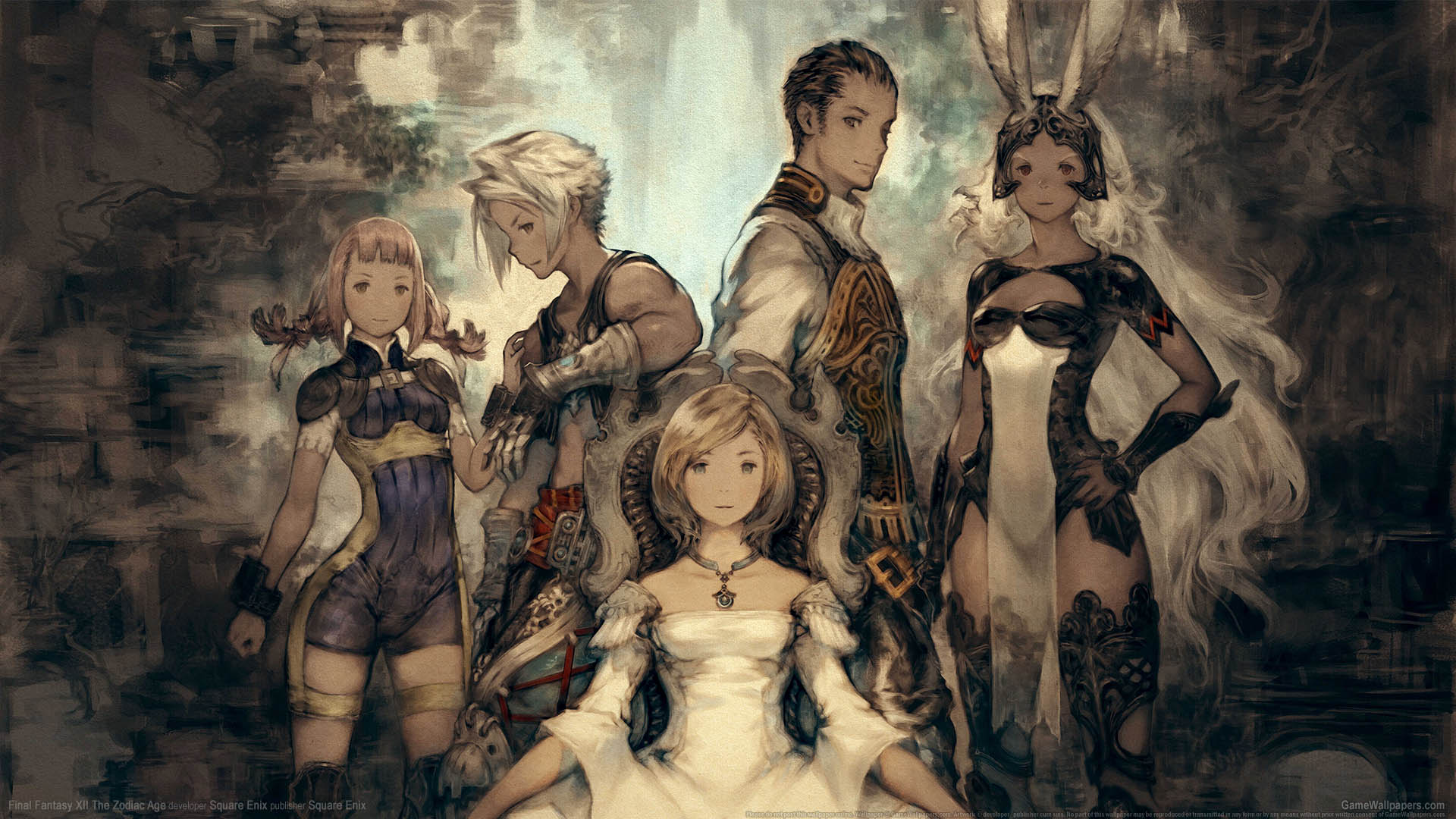
It’s no secret that when it comes to the RPG genre, few series can claim to have been nearly as influential as Final Fantasy. With each mainline entry sporting an entirely fresh and unique identity, Final Fantasy is known for continuously reinventing itself and carving a path forward for other genre contemporaries to follow. While not each of these reinventions have always been entirely successful, the ideas on display are always interesting to observe and dig into at the very least.
Perhaps my favorite combat system to ever emerge from Final Fantasy is Final Fantasy XII‘s gambit system. For those who are unaware, the combat in Final Fantasy XII operates in real-time and the gambit system serves as a means of controlling each of your party members without needing to manually enter and select commands. This works through a sort of programing language adjacent if-then statement, where you set a specific parameter and priority level and then assign a related action. For example, your healer should likely have a gambit instructing them to cast a healing spell on any ally who’s health falls below a certain threshold. As keeping your party members alive is generally one of the most important considerations in an RPG, you would naturally want this command be set at a high priority, meaning the healer will always prioritize this action when the appropriate conditions are met over any actions set at a lower priority.

Early on in Final Fantasy XII‘s runtime, these gambits may seem exceedingly simple and unexciting; however, as you progress past the opening hours of the game, the underlying job system will start ramping up, providing dozens upon dozens of skills to manage and assign between each of your six party members. It is at this point where the game feels as though it has started in earnest, and if you’re anything like me you’ll find yourself gladly spending far too much time intricately programming your party members to fulfill their given roles with the least amount of direct intervention, which can always be done via manual commands in combat, as possible. The rush of excitement as you watch each of your party members perform their roles exactly as you had envisioned is endlessly satisfying and, in my opinion, far more RPGs deserve to be built around a similar combat system.
A fantastic example of how this combat system can be adapted and improved upon can be found in Vanillaware’s 2024 Strategy RPG, Unicorn Overlord. Easily one of my favorite releases from last year, Unicorn Overlord leans even harder into the delicate programming and customization of your units. While Final Fantasy XII allows for manual intervention during combat, Unicorn Overlord does not, meaning that the outcome of any encounter is determined before the battle has even begun. The actions of your units during combat are determined through a very familiar tactics screen, where you manage your units and assign each a list of if-then statements. Unicorn Overlord‘s level of depth feels greatly enhanced compared to Final Fantasy XII, primarily because you can now set two conditions for an action to be taken, rather than only one. In addition, there are now both active abilities and passive abilities to manage and program to your liking, each of which are vital to success. This allows you to be incredibly specific and methodical when crafting your units, of which you will have dozens to play with.

That’s not to say that Unicorn Overlord is entirely a better game, but it is an exciting showcase of how the gambit system introduced in Final Fantasy XII can be built and improved upon. I can only hope we see more RPGs take a similar approach to their combat in the future as I find the satisfaction achieved through the theorycrafting and programming of the perfect independently functioning party near unparalleled.
What do you think about Final Fantasy XII‘s gambit system? Have you played Unicorn Overlord? How deep in the weeds did you get programming your units in each of these games? Please share your thoughts with us on our Boss Rush Facebook Group or our Boss Rush Discord.
Boss Rush Podcast – A Podcast about Video Games

The Boss Rush Podcast is the flagship show of Boss Rush Media and The Boss Rush Network. Each week, hosts Corey Dirrig, LeRon Dawkins, Stephanie Klimov, and Pat Klein, as well as their friends, fellow creators, developers, and industry veterans, share their gaming experiences. They discuss what they’ve been playing, explore rotating segments, debate the Boss Rush Banter topic of the week, answer community write-ins, and more. Patreon subscribers at any tier enjoy exclusive access to the Boss Rush Podcast Patreon Show twice a month along with other perks and extras.
Follow and Connect with Boss Rush Podcast on Social Media
X/Twitter + Bluesky + Instagram + Threads + YouTube
Listen to Boss Rush Podcast on Podcast Services
Apple Podcasts + Spotify + Goodpods + Amazon + More Links
Thank you for supporting Boss Rush Podcast and the Boss Rush Network
Thank you for watching or listening to The Boss Rush Podcast. If you’re watching this episode on YouTube, hit the Subscribe button, Like the video, and hit the notification bell so you don’t miss an episode! If you’re listening on Apple Podcasts or Spotify, consider leaving us a rating and a review as it helps with discoverability and growth. Support Boss Rush on Patreon for exclusive content, early access and audio versions of shows, become a Patreon Producer, and more. Visit our website for all of our content including reviews, news, daily Boss Rush Banter discussion topics, listicles, features, and more. However you support us, it means so much to us. Thank you for your continued support of the Boss Rush Podcast and the Boss Rush Network.
Featured Image: Square Enix


Leave a Reply to erichagmannCancel reply