
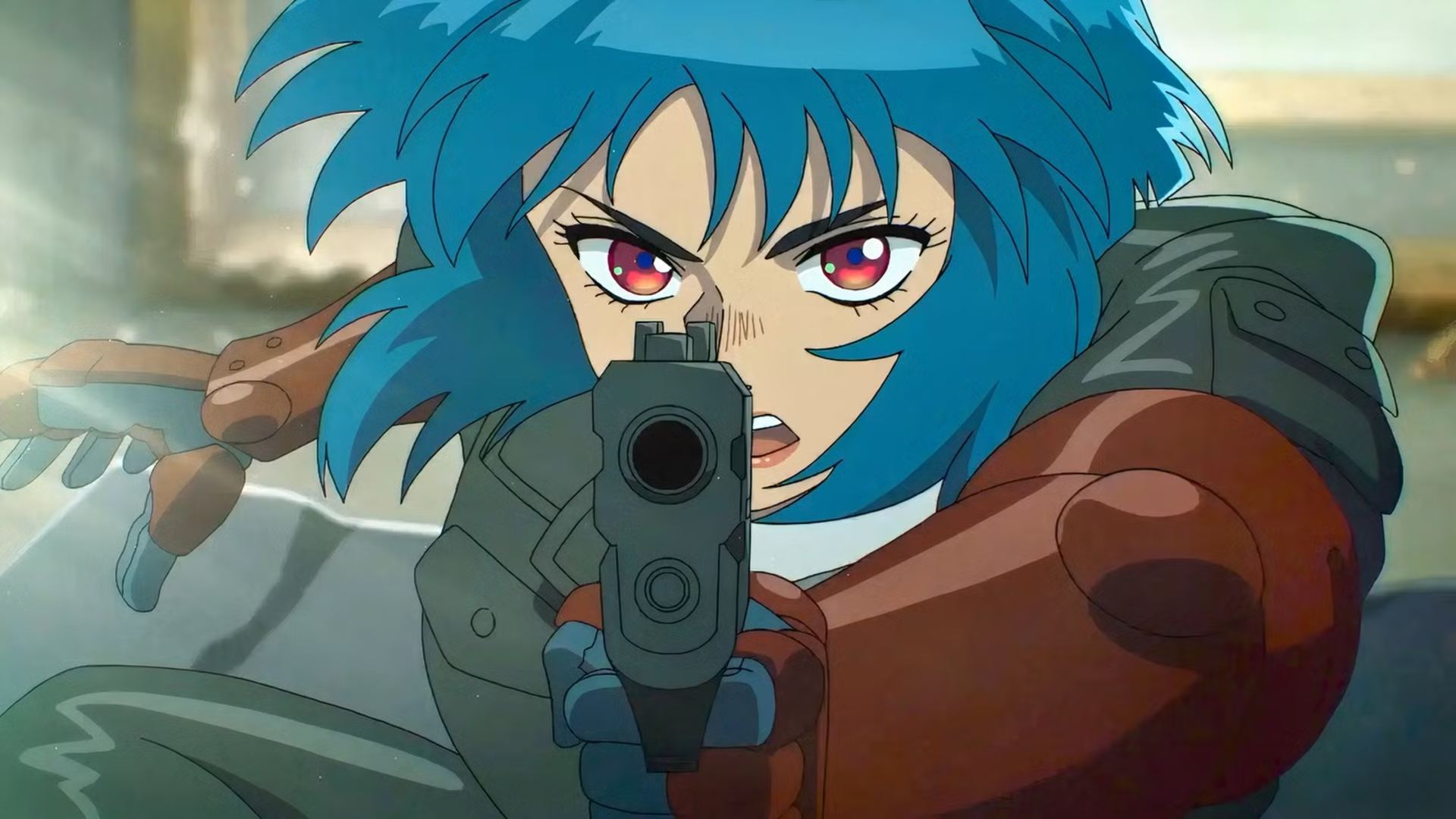
Title: Ghost in the Shell
Publisher: Science Saru
Release Date: July 7, 2026-September 8, 2026
Summary
I waited for the season to end before writing this review since so many modern series start well and then tend to fall off. I am a massive fan of the cyberpunk genre. Having seen every rendition of Ghost in the Shell and read most of the manga, I was thrilled when this new series dropped. It was a delight to watch. The art was a breath of fresh air, the plot was consistent and focused, and the characters were intriguing throughout. If a series can make you laugh and think at the same time, it’s doing something right.

Analysis
Art
It is a stereotype that all anime looks the same, and honestly, I can’t blame anyone for saying that. Forms of art develop a style over time, and anime is no exception. As the medium has grown to meet demand, a lot of series have settled into a familiar, almost cookie-cutter visual style. When I look at a hundred different series over ten years and feel like a large percentage can fit into the same visual description, I think that’s a problem.
Ghost in the Shell avoids that trap by sticking closer to the source material’s 90s aesthetic while using modern animation techniques. The result is something that feels distinctly different from much of the anime being produced today. Science SARU gave us a series with a soul. In the modern age, it sticks out and leaves the viewer feeling satisfied rather than safe.
While I was in art school, I always tried to emulate the sketchy quality of 90s anime, much to my teachers’ disapproval. Not because it’s objectively better—it’s not. Art is far too subjective for that—but because that style has always felt warmer and more personal to me. Adding brighter, more saturated colors to that aesthetic makes every scene and character pop. Are there issues? Absolutely. Some people think it feels dated, which is fair. They were aiming for a 90s anime style, and they succeeded. That critique doesn’t really land for me because the dated appearance is a conscious choice, and the series commits to it.
I have several personal nitpicks, but most of them boil down to the series needing more detail work. Don’t get me wrong: it looks great most of the time. Occasionally, though, I found myself wondering whether an outfit or piece of body armor was supposed to be plastic or whether a leather jacket was actually made of leather. The same issue existed in the original manga, but the point still stands.

Story
The story of Ghost in the Shell asks a classic question: What is a soul—or a “ghost,” in this case? It’s a philosophical debate that has remained at the heart of the franchise since the beginning, and with the advancement of AI, it has only become more poignant. In many ways, the question feels even more relevant today than it did when the original manga was published.
No spoilers, but the ten-episode series covers roughly the same core material as the original 1995 film. The 2026 series takes us from the founding of Section 9 to the “capture” of the Puppet Master, with a few side missions along the way. Honestly, it’s dense. Some elements are simplified compared to the manga, but having roughly twice the runtime of the 1995 film gives the series more room for world-building. The pacing of the original movie is part of what made it work so well, but this series takes advantage of its longer runtime by allowing the team to conduct investigations, catch secondary villains, and expand the world around the main story.
You can see the consequences of that in the characters. Not everyone gets enough time to shine, and some feel flat compared to Stand Alone Complex. But if we’re being honest, Motoko is and always was a chaos gremlin, and that’s great. Sure, she’s smart, but she talks back, breaks the rules, and generally refuses to act like some untouchable being. That makes her much more entertaining to watch.

What’s Different?
Ghost in the Shell (2026) is a more faithful of an adaptation than the others. A lot of the other iterations of the series have leaned toward a more sober tone than the original source material. This one mixes lighthearted moments with the somber tone that makes the franchise so interesting.
Motoko isn’t an untouchable goddess or an infallible genius. Sure, she’s smart and capable, but she makes mistakes and nearly dies more than once. In the manga, she even almost takes a bribe until Aramaki slaps her hand away. It’s done for laughs, but it works as a real example of her character. Motoko sets the tone for the team, and the rest of Section 9 follows.
Even the Fuchikomas occasionally show expressions with mouths they don’t actually have, which I initially found strange. The original used the same personification so it works as a throwback. The characters in general feel more organic and exaggerated. Aramaki looks almost like a chimp rather than simply an old detective. Motoko is expressive, reckless, and occasionally ridiculous. The series isn’t afraid to let these characters actually be characters.
Final Score (4 Out of 5 Stars)
I raved about it, so why only 4 stars? Well, I can’t do 4.25 for one, but let’s be honest, this is the 5th time we are seeing this series. It’s great in a lot of respects; however, it doesn’t break the mold. The art is fantastic sure, but it’s based on the manga and original 90’s style animation, great quality, and nice to see. The story isn’t more of the same for the series, however it’s also not unique. It’s a fantastic series that remains faithful to the original source material, major kudos. It’s the 5th entry into its own multiverse so it’s no Cyberpunk: Edgerunners or Cowboy Bebop, but it’s still one of the best anime this year for me.
Boss Rush Podcast – A Podcast about Video Games

The Boss Rush Podcast – A Podcast about Video Games – is the flagship show of the Boss Rush Network and Boss Rush Media. Each week, hosts Corey Dirrig and LeRon Dawkins are joined by friends, fellow creators, indie developers, and industry veterans to discuss the latest in the world of video games, including news, rumors, new releases, and what they’ve been playing. They also answer listener questions, debate important industry topics and Boss Rush Banter discussion points, and feature a rotating weekly segment. New episodes post every Monday.
Follow and Connect with Boss Rush Podcast on Social Media
X/Twitter + Bluesky + Instagram + Threads + YouTube
Listen to Boss Rush Podcast on Podcast Services
Apple Podcasts + Spotify + Goodpods + Amazon + More Links
Thank you for supporting Boss Rush Podcast and the Boss Rush Network
Thank you for watching or listening to The Boss Rush Podcast. If you’re watching this episode on YouTube, hit the Subscribe button, Like the video, and hit the notification bell so you don’t miss an episode! If you’re listening on Apple Podcasts or Spotify, consider leaving us a rating and a review as it helps with discoverability and growth. Support Boss Rush on Patreon for exclusive content, early access and audio versions of shows, become a Patreon Producer, and more. Visit our website for all of our content including reviews, news, daily Boss Rush Banter discussion topics, listicles, features, and more. However you support us, it means so much to us. Thank you for your continued support of the Boss Rush Podcast and the Boss Rush Network.
Featured Image: Science SARU via Amazon

Leave a Reply