
Title: Ixion
Developer: Bulwark Studios
Publisher: Kasedo Games
Release Date: Dec. 7, 2022 (PC)
Platforms: Windows (reviewed), Linux
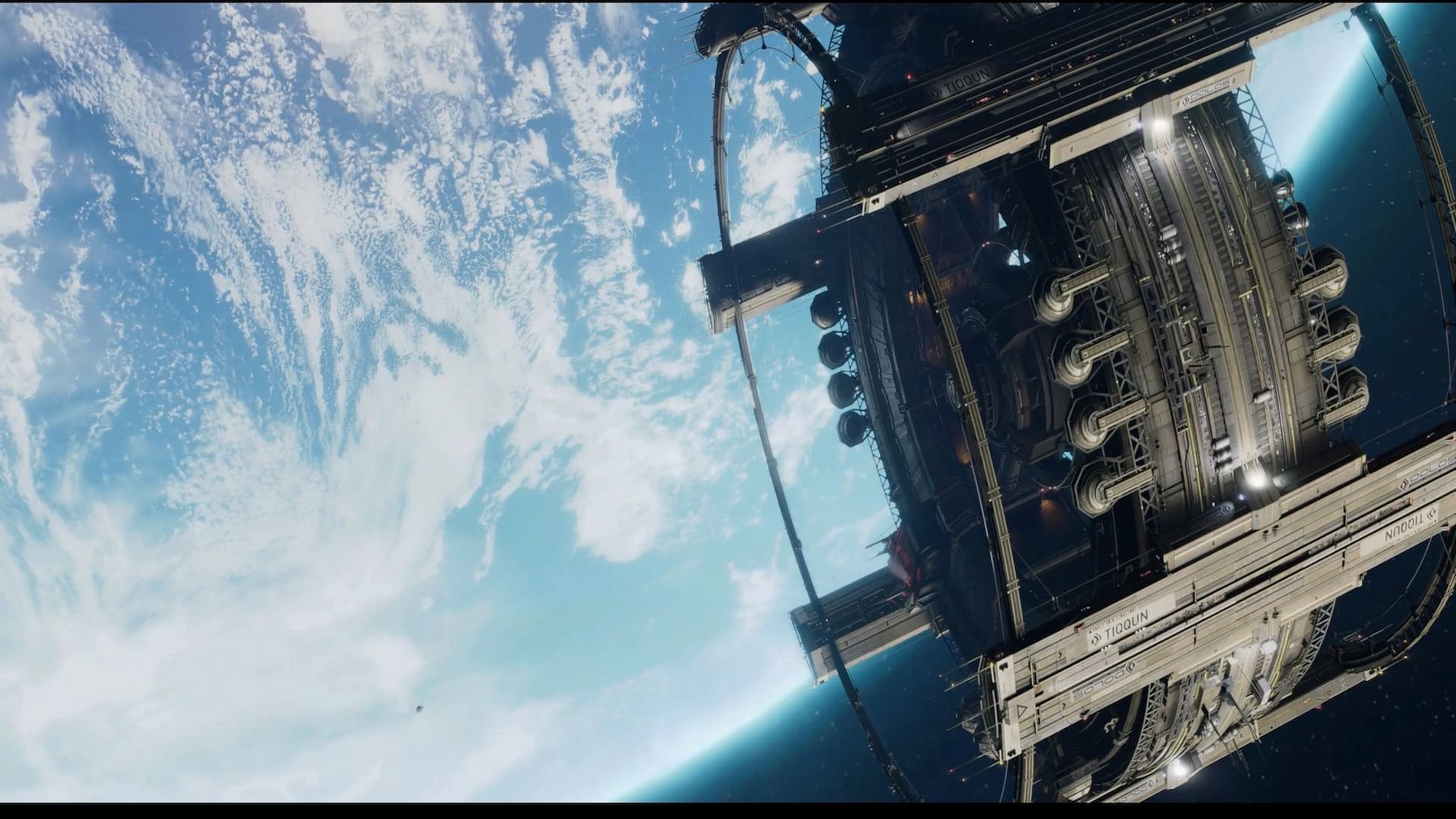
Ixion, a “narrative city builder” from Bulwark Studios, is about things going wrong in the lethal void of space. “Things going wrong” is something of a grand tradition in narrative city builders, from breakout title Frostpunk‘s Victorian child-laboring sawdust-eating dystopiana to Against the Storm‘s weird fantasy mid-apocalypse pioneering. It’s a difficult genre to stand out from, but Ixion does it with style. Its theme of humanity’s remnants desperately scrounging and surviving against the lonely and ethereal void of space is unified with its impressively vast visuals (just check out that featured image), cramped used-future aesthetic, and simple-to-grasp yet difficult to master gameplay.
While random difficulty spikes and some absolutely brutal random events might scare away those looking for a more relaxed experience, Ixion is a gorgeous, bold, and surprisingly technical game perfect for those in the sweet spot between more relaxed city-building and the hardcore supply chaining stockpile-’em-ups. If narrowly avoiding death in space is your kind of thing, Ixion is definitely worth your time.
Synopsis

Vanir Dolos, head of the DOLOS Initiative, has seen the coming collapse of Earth. He and Earth’s best and brightest created the Tiqqun, a massive rotating colony ship with an experimental hyperdrive that will find a new home for humanity somewhere among the stars. You, as the administrator for the Tiqqun, will ensure the cycle-to-cycle operation of the ship— making sure the next best hope for humanity is fed, supplied, and kept happy as they make the perilous journey to their new home. When a freak hyperdrive accident leaves you stranded with no support and no way back, you and the Tiqqun’s crew must scramble to keep yourselves alive and maintain a delicate emotional balance. Alone, damaged, and far from home, you and the remnants of humanity race against time to solve a bizarre mystery, battle rogue AIs, and hopefully find yourselves a new home.
Atmosphere

If there’s one thing Ixion gets absolutely right, it’s the vastness of space. Your field of view is restricted to a small area of play for most of the game, maneuvering buildings within the cramped anthill you clear out and then populate. Despite being the size of a small moon, the Tiqqun is a warren of maze-like paths you built to clear supply stockpiles and dotted with low-lit structures that already look like they’re in the process of breaking down. Each new sector is another dark warren to fill full of grungy diesel-punk factories and apartment buildings, trams shuffling between each one. It contrasts well with the wide-open dark spaces of the solar system, a constantly moving field of stars and planets with the infinite void laid out in between. As you speed up and slow down the game clock, the planets also rotate, the trajectories gently pulsing. It’s lonely, but it’s gorgeous.

“Lonely but gorgeous” is also the tone of the game for the most part. While you do interact with the humans you’re managing, a lot of those interactions are in general, treating the humans as a large collective rather than individuals. The only NPCs who speak to you directly are, by and large, a group of AIs with their own hidden agendas and designs on your colony. It’s just you, your human ant farm, and the infinite void. Even the soundtrack reinforces this, a mix of organ and minimalist ambient electronics best described as “stellar gothic” and reminiscent of the infinite melancholy and mystery of games like Endless Space 2. It all reinforces the feeling that the game is you against the gradually malfunctioning system and the harsh atmosphere of space. No one is going to save you, you just have to hope through luck and skill to survive.
Gameplay

Ixion requires every bit of that luck and skill. The game plays out the same way most survival/narrative city builders do: You place buildings and connect them with roads, setting up supply chains, and hopefully upgrading to more efficient buildings. You carefully manage your ant farm of tiny humans, making sure they’re all fed, housed, and happy. While doing this, you manage supply chains for higher-quality resources and buildings, mine for raw materials, and keep the Tiqqun’s hull from disintegrating. Once you’re out of the tutorial, this gameplay loop gives way to a desperate scramble for resources across each solar system as you mine and probe the solar system around you, hoping to squeak by just enough to get the coveted navigation data for your hyperdrive and make it to the next chapter.

Ixion also forces you to consider not just the narrative choices, but the individual choices you make while building — do you probe to find exploration points and hope for a quicker end to the chapter, or spend that time farming more resources so more of your crew survives? When everything is imperative, how do you plan for the long term? What happens when trial and error might mean death upon an error? Answering these questions means slow, delicate play with a rather significant amount of save-scumming, but you end up analyzing every choice, every minute placement, every action. After all, building that stockpile might lock you off to something that needs the space, or upgrading those inefficient insect farms to something more resource-heavy might lead to food shortages further down the line. Stop repairing the hull and you might bring yourself closer to death, but it’ll give you enough building materials to stop the housing crisis, famine, and impending riots due to needs not being met.

It sounds panic-inducing and dense, but it isn’t. Buildings are easy to place and demolish. Systems are introduced gradually, each one adding to the juggling act that is managing the Tiqqun. Usually, you get a request (the game’s side quest system) to expand things, or one of the easy-to-read and mouse-over alerts pops up. The hardest thing to do in Ixion is transfer supplies and population, because both options are hidden behind menus a click away from the main interface. The three main problems are raw materials (which are mined from the surrounding solar system and refined in the Tiqqun), hull integrity (which gets lower with each chapter as well as gradually depleting throughout the stage), and power, which the solar panels built on the outside of your ship limit. This doesn’t stop Ixion from being difficult — all these things put stress on the systems inside your ship — but it does make it easier to find out what’s causing the immediate problem
The Downside

Ixion‘s issue is when played at regular difficulty, you slam into these challenges at high speed like a brick wall. The game’s less cruel and buggy than it was on release, but it still has some odd quirks. My time with the game saw the hull integrity yo-yo back and forth at high speeds, jumping from positive to negative every time resources were expended. Transferring resources and people between sectors sometimes takes much longer than expected, requiring an inefficient strategy of building multiple loading docks and EVA docks to maintain more than one sector.

This wouldn’t be as big an issue if it weren’t for the game’s pace. In a bid to emphasize scale, the “normal” speed is practically glacial. Speeding this up means that the game’s deliberate and delicate resource management and plate-spinning quickly spirals out of control as problems that would have been addressed slowly now steamroll you all at once. The random events double down on that cruelty, with accidents happening even when the sectors are happy and healthy. There were moments where everything read green and things would just break or people would just die, leading to loss of trust and resources through absolutely no fault of the player or their actions. It’s this dependence on luck as well as skill that makes Ixion especially difficult, and difficult to recommend considering how arbitrary it can destroy your ability to adapt.
In Conclusion

If the worst things about Ixion are easily fixed with a difficulty slider (they are), then they’re worth pointing out but aren’t enough to sink a game. It’s a beautiful, bold mess of a game that perfectly blends its theme of desperate survival in space with gameplay that foregrounds things going wrong as you try to maintain them. While the random cruelty might scare off those looking for a more relaxing city-building experience, those looking for an epic survival city builder will find more than enough for them here. Ixion might not be for everyone, but if things going wrong in space is your jam, it’s at least worth giving a look.
Final Score (4 out of 5 stars)
While Ixion throws hard curveballs and seemingly random difficulty spikes your way, it’s still a gorgeous, well-made survival/city builder/adventure hybrid that teases its mechanics out over the course of several chapters. It might not be everyone’s thing, but if it sounds like your thing, it is definitely your thing.
Featured image: Kasedo Games and Bulwark Studios
The Boss Rush Podcast – Mondays at 7AM ET

The Boss Rush Podcast – The Boss Rush Podcast is the flagship podcast of Boss Rush Media and the Boss Rush Network. Each week, Corey, Stephanie, LeRon, and their friends from around the internet come together with other creators, developers, and industry veterans to talk about games they’ve been playing, discuss video game and entertainment based topics, and answer questions solicited on social media and the community Discord.
New episodes of the Boss Rush Podcast release every Monday morning on YouTube and all major podcast applications like Apple Podcasts and Spotify. Patreon supporters gain one week early access.
Listen on your favorite podcast application or watch on YouTube!
Anchor | Apple Podcasts | Spotify | Google | Twitch | Overcast | Pocket Casts | Stitcher | Amazon Music
Follow The Boss Rush Podcast on Social Media:
Twitter | Discord | Instagram | Twitch | YouTube | Facebook Group | Facebook





Leave a Reply