
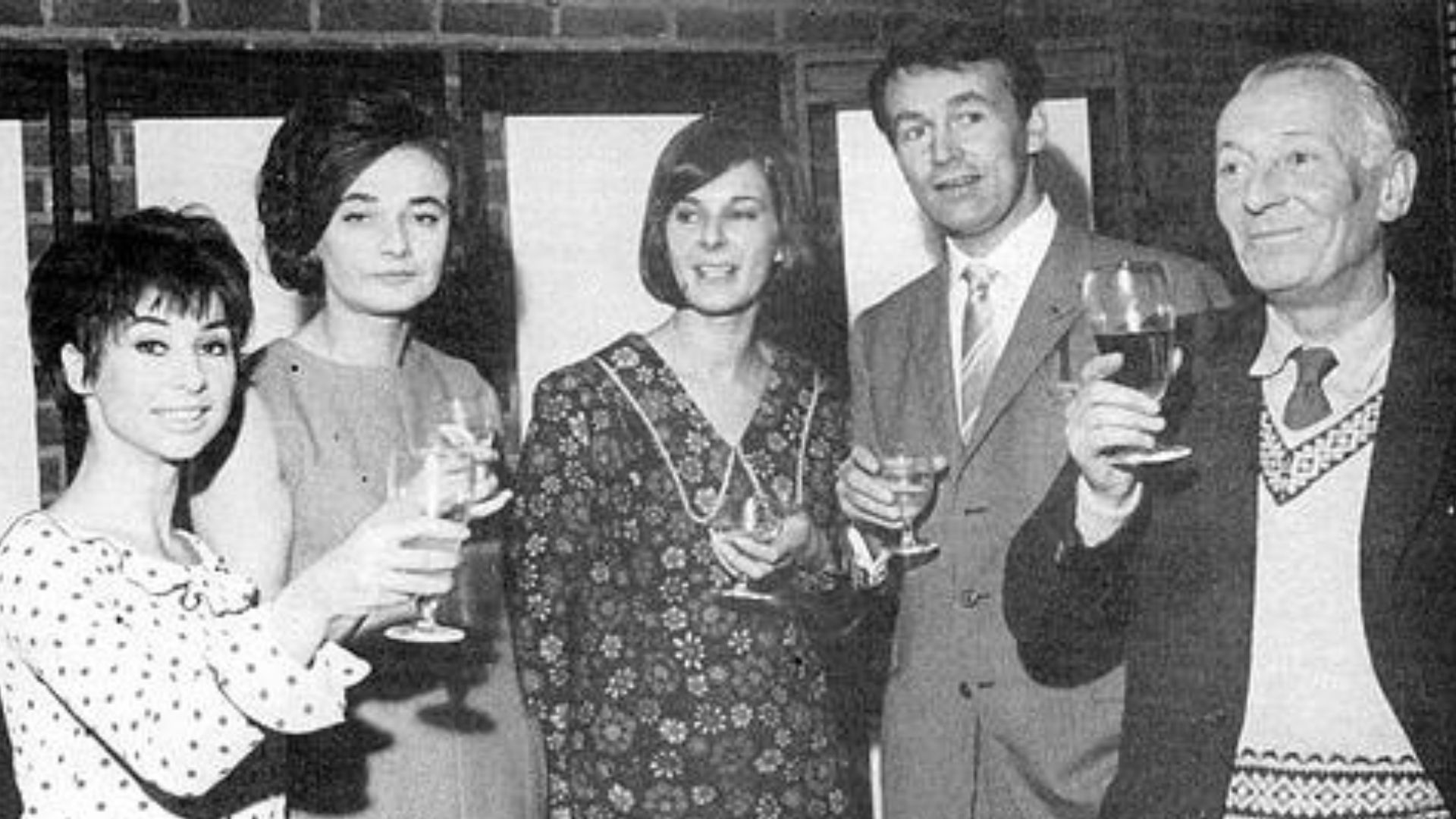
When I say that, people may think of Carol Ann Ford who played Susan Foreman, the Doctor’s granddaughter. Other people might think of Jacqueline Hill, who played Barbara Wright. After all, Barbara was the first character to appear on the screen in Doctor Who.
But there was a woman who was there before them, and as we celebrate the 60th anniversary of Doctor Who, I wanted to take some time and celebrate the woman who brought Doctor Who to life.
Her name was Verity Lambert.
Alongside Sydney Newman, she helped create the show. . She was the BBC’s first female television producer (and also the youngest to ever have the role at the time). Lambert was one of the first women to hold a major role on a television show. Her role was the equivalent of Exectutive Producer or Showrunner.
She was responsible for casting William Hartnell as the First Doctor. Lambert also cast other key actors in that era.
Verity Lambert was also responsible for bringing the Daleks on the show – and fighting for them. But I’ll let her tell that story in her own words.
Donald B. Wilson absolutely hated the first Dalek story. The BBC had committed to do the show for a year. But, at the same time, there were various cut-off points, and a feeling that it wouldn’t last that long, especially after the first serial, which wasn’t an ideal one. After that, we had a bit of a problem, because Marco Polo was our next historical story, but John Lucarotti hadn’t finished writing it. The only serial we had that was finished was The Daleks, which David Whitaker had commissioned from Terry Nation. We thought it was great, but Donald called us in and said it was absolutely appalling and we weren’t to do it. We said there was a problem, because we didn’t have another serial ready, so he said that we should put it on, but that would be the end of Doctor Who (1963). He told David to write a two-parter so they could finish after 13 episodes. We were flabbergasted, because we genuinely thought The Daleks was a good serial. And, when we put it on, it absolutely took over. Donald, to give him his due, called us in and said that we clearly knew a good deal more about this than he did, and he wasn’t going to interfere any more.
Verity Lambert
Verity Lambert stayed with Doctor Who for two years before departing the show in 1965, having produced 87 episodes. During those two years, she laid the foundation that would help the show to still exist 60 years later.
But that was only the first of her contributions to British film and television. Including Doctor Who, Verity Lambert produced 57 television shows and movies. She even started her own production company, Cinema Verity.
Her best known credits post Doctor Who include: A Cry in the Dark, Shoulder to Shoulder, Love Soup, and May to December. She also produced Jonathan Creek, Alan Bleadale’s G.B.H to Minder, Widows and The Naked Civil Servant starring John Hurt.
She also produced a John Cleese comedy, Clockwise.
W. Somerset Maugham won her a BAFTA award in 1970 for Best Drama Series.
In 2002, she was awarded an Order of the British Empire Medal (O.B.E.) for her service to film and television. She was the first Doctor Who producer to receive the honor. According to United Kingdom Cabinet’s website, the Officer of the Order of the British Empire award is someone who is “distinguished regional or county-wide role in any field, through achievement or service to the community including notable practitioners known nationally.”
Verity Lambert died on November 22, 2007, the day before the 44th anniversary of the first episode of Doctor Who. She was due to receive a Lifetime Achievement Award the following month at the Women in Film and Television Awards. She was given the honor posthumously.
The next episode of Doctor Who to air, “Voyage of the Damned,” included a dedication to Lambert.
Across four decades, Verity Lambert produced television shows that have become classics in the United Kingdom. She helped pave the way for women to work in producing roles in television and movies.
And it all started with a grandfather, his granddaughter, a junkyard, and their blue box.
Sources:
Image: BBC
One V. One: Creator and Developer Interview Series for Boss Rush Network

One V. One: The Creator Interview Series – One V. One is the Boss Rush Network’s interview series dedicated to learning about a creator or independent developer, their career, and their content aimed at being a smaller, more personal discussion. This series is also intended to spotlight lesser known creators and developers who offer something interesting and unique in our community and hopefully help grow theirs as well.
New episodes will release periodically as a part of Boss Rush Plus, the supplemental content release for the Boss Rush Podcast. Patrons of Boss Rush Media will receive the audio versions of these interviews one week before the video versions appear on YouTube and the website.
Follow The Boss Rush Network on Social Media:
Twitter | Discord | Instagram | Twitch | YouTube | Facebook Group | Facebook


Leave a Reply