
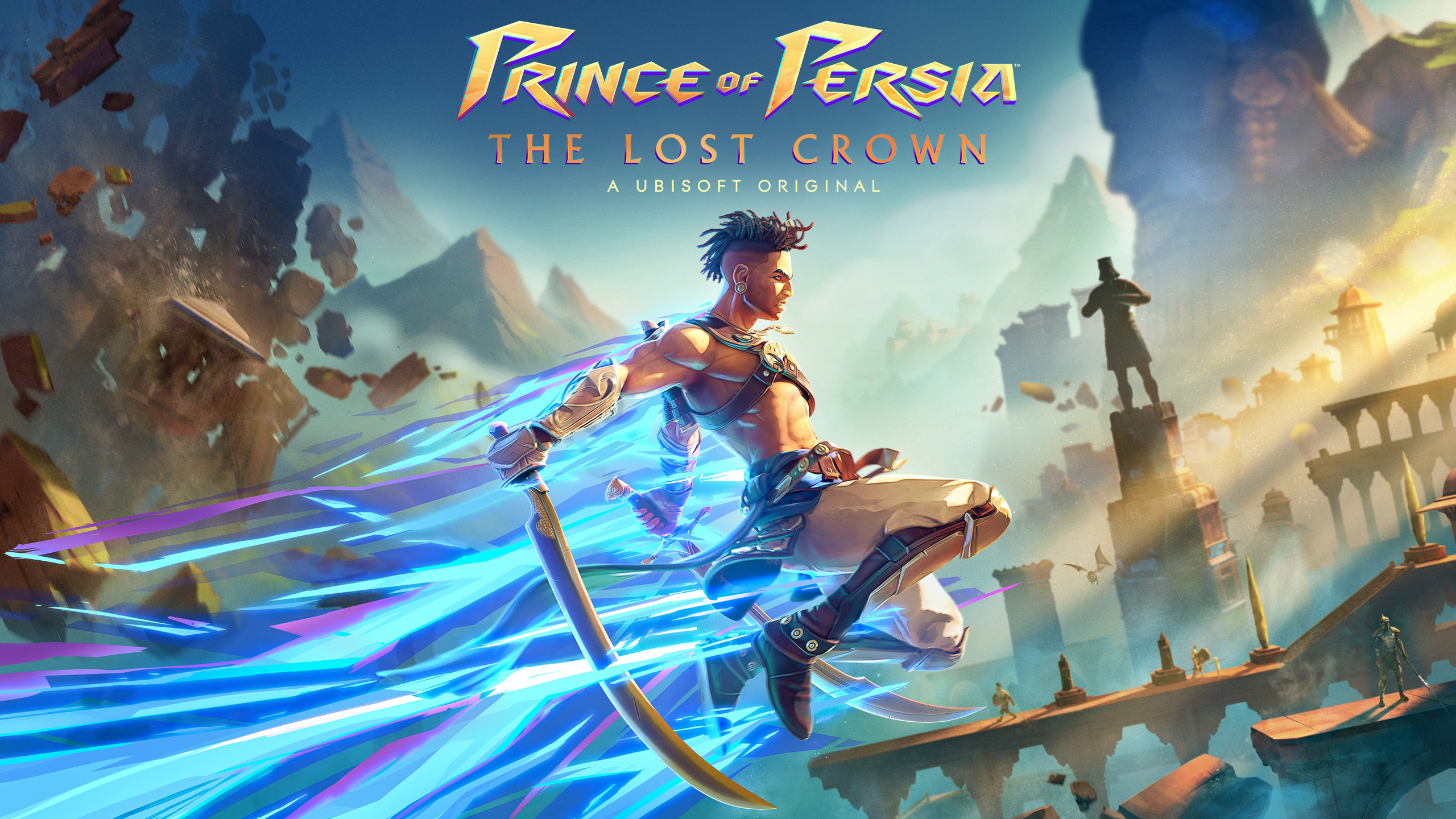
Developer: Ubisoft Montpellier
Publisher: Ubisoft
Release Date: January 18, 2024
Platforms: All major consoles. Ubisoft Connect exclusive on PC
Reviewed on: PlayStation 5
Price: $39.99 USD
It’s hard to believe that the metroidvania has surfed a “new” wave of popularity going all the way back to the late 00’s. Arguably, XBox Arcade ushered it in with Shadow Complex in 2009. Not that the venerable genre had gone anywhere. In fact, I think the tenets of the metroidvania are tantamount to video games as a whole. Two traits in particular are its nectar: 1) Gated progression that teases you with visibly unreachable areas from the start and 2) Character upgrades based on new abilities, rather than number leveling or grinding.
Prince of Persia: The Lost Crown does these two things perfectly. And because the design of its core features is so complete, all other gameplay factors follow suit beautifully. Trust me, if you’re still on the fence and coming to the game late, you can stop reading this review and pick it up. It’s one of the easiest recommendations I’ve made this console generation. Unless, of course, you rightly object to a forced Ubisoft Connect account. More on that later.
Plot Synopsis
As with the best of the genre, The Lost Crown sets the table with an intriguing, but minimal story. More importantly, what little plot structure exists is tied tightly to how the game works, rather than as an excuse for cutscenes between levels. You play as Sargon, one of the “Immortal” guardians of the Persian throne. After years of drought and hardship, your general kidnaps the titular prince, threatening to offer him up to the god of Mount Qaf in hopes of easing life on Earth. Sargon’s loyalties are tested as the motivations of his queen and his commanding officer tug him in different directions.
Upon reaching Mount Qaf you and your troop discover the city of the Simurgh, where their god literally resides, has been gripped in a time curse. Everyone who enters is doomed to experience the flow of time in a unique way: Frozen, slowed to a crawl, or split into multiple timelines. As Sargon, the player must unravel the curse using time-based skills gifted by the Simurgh.

Gameplay
I’m not exaggerating to say that Prince of Persia is a perfect metroidvania. These games live and die by their combat and traversal. The Lost Crown thrilled me with both. This game and Metroid: Dread exist on the same plane of presentation and difficulty. While challenging, The Lost Crown has the ability to energize you as you lose out to new, powerful enemies or seemingly impossible platform sections. These are games that expect you to improve. New abilities and unlocks give you more to work with, rather than simply make you more powerful.
Sargon moves, jumps, and attacks with a precision normally only found in hyper platformers like Super Meatboy or Hollow Knight. As you gain new skills, you can extend the length, height, and hang time of your jumps. As a nod to the time-altering tradition of the series, one key ability has you placing a sort of timestamp of yourself on-screen that allows you to rewind to that spot with a single button press. This move created many memorable “Oh, snap!” moments for me when I realized how it helped solve a room or platforming section.
Crucially, Prince of Persia distinguishes itself by using the traditional metroidvania upgrades as advances in combat as well. Each traversal bonus unlocks a new way to approach Sargon’s fighting abilities. Arial combat, teleportation between foes, and combo extensions all grow naturally out of new moves that are, in other games, simply used to get you past that previously locked door or unreachable ledge.
As dictated by the genre, combat and platforming sections dance around each other, but The Lost Crown does a great job weaving them together, as well. Boss fights expect you to use your moves to maneuver in their arenas. Jumping challenges will include choosing whether to engage or avoid enemies in your path – either of which can be done stylishly. This game gives you fun tools and lets you approach its challenges intuitively. Making for great thrills at each one met and conquered.
There are platforming rooms in The Lost Crown that had me trying dozens of times, with each failed attempt almost as fun as the one that finally clicked.

Presentation
The Lost Crown exudes style. As a cool touch, I played through using the setting-appropriate Farsi language for the voice cast. Visually, it takes queues from surf and skate culture and blends it perfectly with the sword and sandal look you’d expect from a desert epic.
As mentioned above, platform-heavy games expect a lot of player dexterity. And The Lost Crown is one that also assumes you will improve as you play. This isn’t always fair to gamers who struggle with motor skills or pain. And while it does offer basic difficulty accommodations, the platforming areas only offer one break: Turning them off. I don’t know exactly how it would work, but it would be nice if there was a step between playing the default or simply telling the game you need to skip those challenges. Even just adding a handful more fast-travel points could help.
Another annoyance with the game comes from its map screen, an important part of any metroidvania. But first I have to explain what its map does well. It fills in nicely with every entrance found, height reached, and secret door opened. A helpful character will sell you portions of the map that lightly fill in new areas, letting you know where you might not have found on your own. And it gives you a nice kit of icons to place. The best icon uses a screenshot you take of a room that then gets pinned to the map, allowing you to visually remind yourself what you’ll be coming back to later.
While those are generous, The Lost Crown‘s map is simply too big to stop there. If you are a trophy hunter or completionist, Prince of Persia may disappoint you by stopping short of helping you track your various collections. Four key collectibles (and how many of them you’ve found) are shown in the map, but only three of them are tied to trophies. One very important item, the Azure Damascus Ingot, is needed for weapon upgrades. There are exactly enough them in-game to max out your bow and swords. With no automatic checklist, you’re left realizing, probably too late, that you should have been marking the map with a dedicated icon as you found them or be doomed to a lot of fruitless backtracking. The same is true of the game’s health upgrades. While minor, patching these in the future would further refine an otherwise consistent excellence.
Lastly, before scoring the game, I need to give a caveat that almost completely ruins one of the best games I’ve played in years. You cannot play Prince of Persia: The Lost Crown without activating a user account with Ubisoft Connect. A disgusting practice that is becoming all to common. This is the first time I’ve experienced it on a single-player game I fully purchased. These digital handshakes add to the growing sense that we no longer own the games we buy and drive the wedge between fans and creators deeper. If you can accept those terms, you’re in for a treat. If you can’t, I applaud your stance. In my case, it knocks a whole star off its grade. A compromise that barely edged out giving it no score at all.
Final Score
Prince of Persia: The Lost Crown is one of the best metroidvanias ever made. Fun, energizing, and stylish, it thrills the player with every challenge, rather than grinding them down or trolling them with difficulty spikes. It’s well-paced with regular and generous upgrades that, instead of just making you more powerful, give you better ways to play. Unfortunately, if you’re not willing to sign up for a corporate tracking account, the game is effectively unavailable to you.

The Boss Rush Podcast – The Boss Rush Podcast is the flagship podcast of Boss Rush Media and the Boss Rush Network. Each week, Corey, Stephanie, LeRon, and their friends from around the internet come together with other creators, developers, and industry veterans to talk about games they’ve been playing, discuss video game and entertainment based topics, and answer questions solicited on social media and the community Discord.
New episodes of The Boss Rush Podcast release every Monday morning on YouTube and all major podcast applications like Apple Podcasts and Spotify. Patreon supporters gain one week early access.
Listen on your favorite podcast application or watch on YouTube!
Anchor | Apple Podcasts | Spotify | Google | Twitch | Overcast | Pocket Casts | Stitcher | Amazon Music
Follow The Boss Rush Podcast on Social Media: Twitter | Discord | Instagram | Twitch | YouTube | Facebook Group


Leave a Reply to Boss Rush Banter: Do NOT Use “Restart from Last Check Point” in Final Fantasy VII Rebirth – The Boss Rush NetworkCancel reply