
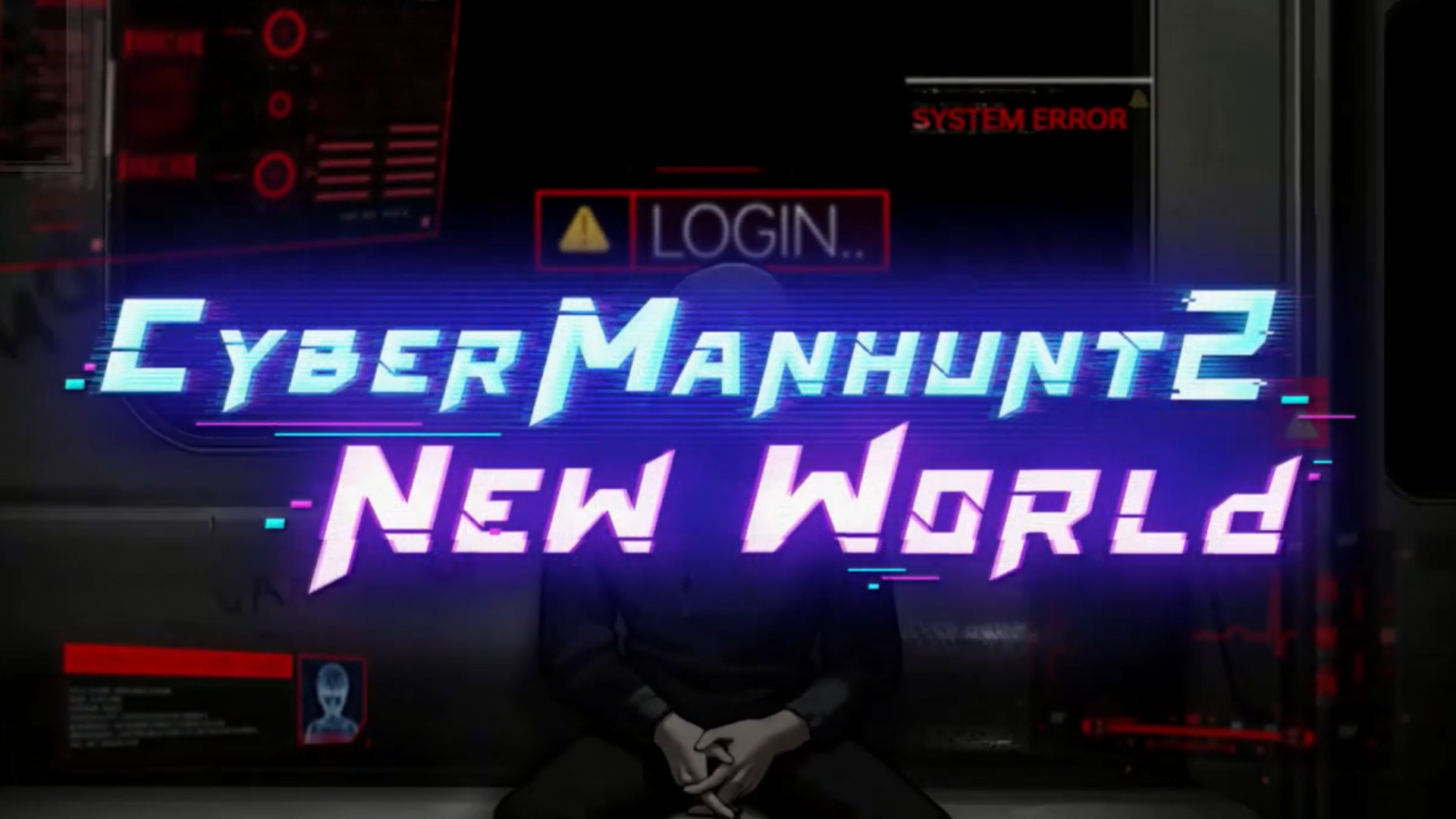
Title: Cyber Manhunt 2: New World
Developer: Aluba Studio
Publisher: Spiral Up Games
Release Date: May 9. 2024
Platform: PC
Reviewed on: PC
Price: $9.99
I stumbled across this game during Steam’s Next Fest in February. The premise sounded interesting so I downloaded the demo. It was after I had played through that I discovered that this was a sequel and that there was a whole other game to explore.
Luckily for me, it happened to be on sale and I dove into the original game. The story was intriguing and the mini-game style mechanics had me engrossed for hours. I hit the end of the game and I wondered what was ahead in the story.
The thing is, I still don’t fully have this answer. Cyber Manhunt 2: New World is in Early Access. It only has the first three chapters with a promise of two more and the finale likely next year. But there is a lot to explore despite not having the full picture yet.
Is it worth jumping into the game now?
I recommend playing the original Cyber Manhunt first. It establishes the world and the stakes; starting with the sequel will spoil some of the first game’s twists.
Plot Synopsis
You are an AI revived by the Titan Corporation to assist their CIO Ashley Clayson. She enlists your help in solving a series of cases that are given to her by the board at Titan. The cases are distinct and complex in their own right.

The Titan Corporation is located in the country of Aluba. It has nine different states/districts. This doesn’t come into play a whole lot but it’s useful background information to know. Aluba is a country that has more lax privacy restrictions than others. For instance, the Titan Corporation has an entire database filled with everyone’s personal information.

That information comes in handy when you’re working on these cases.
First, there is an attack in the lobby of Titan’s headquarters. The board knows the who and the how but they want to know why. That’s your job. Why did their former employee do it?
From there, you investigate the illegal selling of proprietary Titan tech. Then, the third chapter introduces a mysterious suicide that may be more than it appears.
What happens from there and how these are connected, that we will find out when the full game releases.
Analysis
Gameplay
As an AI assistant, you are recruited to help Ashley Clayson investigate cases on behalf of the Titan Corporation board. Within each case, you dig deep into the personal lives of your suspects and victims.
As an AI, you investigate via the electronic world: websites and hard drives, and all the secrets to be found in the digital ecosystem. You explore the game via a desktop interface. For example: Perhaps there’s a hidden post that you have to hack into “Toothbook” for. Or maybe you get word of a hidden message board that might contain some information.
Mostly, you’re staring at screens and windows — the computer that is your world.
But where do you start getting this information? How do you piece together these clues?
Within the game play of Cyber Manhunt 2, you are given a variety of tools. Some of these are for information gathering. Others provide mini-game style activities you have to overcome to get what you need.
There is your web browser to do a simple web search. The game generically limits your options. For example, you search “Toothbook,” or other in-game sites, to find what you need. Clues are highlighted in red. You add them to your case file as you work.

Another tool in your arsenal is the database. The country of Aluba has a database of all of its citizens. Once you have enough information, you can gain a whole profile on that person. One of my favorite changes between the games was here. It gave you more pieces that you could use, making the process a bit easier. In the original game, you had to either have their house number OR their date of birth. Now you can have about a dozen different pieces of information.
The database gives you enough information to then generate this person’s password. That will give you access to their DMs as well as their emails. Those might hold clues that you would have otherwise missed. This is a bit more intuitive than in the previous game. Rather than manually typing the information, it takes everything out of your case file and fills it in. It’s not a lot of time saved but I loved the touch. You are a powerful AI: no typing for you.

Each piece builds on itself. If you’re a perfectionist, you need to get all of the pieces available in each chapter in order to get the Steam achievement for the chapter. But if you aren’t set on that, you can solve the chapters without all of the clues.
Before you head into the first chapter, there’s a small introduction that you can turn on a tutorial. It will walk you through each tool and how to use it. It’s very useful for newbies and it was a good refresher for me — it also highlights the changes between games.
Aluba didn’t rewrite the book between games and that’s something I appreciate. They made a few simple changes to their existing infrastructure that improved performance.

As a whole, the puzzles are at times extremely complex. For example, you must break into someone’s phone. You have to find the pass code. It gives you a hint and you have to decipher the hint. It took me a few tries (you are on a timer) to finally find all of the pieces I needed to solve it. Other times, it’s an offhand comment you saw somewhere that ends up being a vital piece — the game is clever that way.
Story Mechanics
At the current stage of development for this game, this was the hardest section to write. At this time, I see how it ties into the first game in places. But I have not hit the point where I can see how they all tie together. That will likely come in chapter four or five as we near the finale.
Each case, however, is a complete story. They are well done. The developers weave layers of motive, gossip, and tiny bits of the world of Aluba to tell their tales. As they also build on the narrative from the first game, I believe that if there is more from the franchise we will continue to get a world that’s fleshed out and developed.
The game ends on a cliffhanger, but it’s a great exit. I already wish I could find out how the story ends. The cliffhanger involves a game-changing twist affecting the world, and I’m dying to see it play out.

The first case is an indirect continuation of the previous game. As part of an investigation, you uncovered that an employee was doing their job incorrectly. As a result that employee was demoted. Several months later, in the first case, you see the aftermath of the event when the disgruntled employee attacks the Titan Corporation lobby.
While you might think that my description gives away the ending, but you’ll quickly uncover that this story goes much deeper. What happened behind the scenes between games? What drove him to this act? Did he act alone?
This story centers around the effects of cyberbullying in the workplace. It is also a cautionary tale about mental health in times of crisis.

In the second case, a chip is inserted — the game goes properly sci-fi here with chips that are implanted in the brain. They are created by Titan, they are new, and they are very much proprietary tech. A woman catches an illicit sale and reports it. The goal of the second case is to verify if it happened and see if we can locate the potentially missing chip.
What you find is a ring of people who encourage others to get out of debt. What does this have to do with the missing chip? It’s up to you to find out.
Like the first, this case does a dive into an issue that is being debated in the world today – predatory loan sharks. It’s a dive into how someone can fall into the trap and what they might do to try and get out.

As we come to the end of the early access build of the game, we have a case that, for once, doesn’t seem directly connected to Titan. Instead, Ashley asks you to help a friend who she believes has been framed for murder. An up-and-coming entrepreneur was found dead of apparent suicide. Did Ashley’s friend drive him there?

As we reach the conclusion of this case, we end up meeting Van, the antagonist of the previous game. Van is a complex character whose role only seems to be expanding. Every time you think you know what his M.O. is, it shifts.
And the conclusion of the first game is no different. How you take that information and what you do with it as you proceed in part two is one of the biggest questions I have.
Final Score
One of the biggest challenges of reviewing a game in early access is that, without a conclusion, you don’t have a full picture. Cyber Manhunt 2: New World managed to approach this issue that both helps resolve this issue yet leave me excited for a follow up piece when we get the second part.
Cyber Manhunt 2 presents you with three full cases. I spent about 6-8 hours of playtime solving them. If the conclusion of the second game is anything like the first, I expect to double that to play the full game from start to finish.
If you’re wondering, is it worth buying the game while only three cases are accessible? In my opinion, yes. Is $9.99 an appropriate price for 6-8 hours of playtime? In my opinion, yes. Is this game already worth playing? In my opinion, yes.
I think it’s a game that different people can experience slightly differently. You’re going to get to the same point in the end, but developing a system for how you pick through the case is part of the fun.

Like the first game, Cyber Manhunt 2 has a good story. It kept me engaged the whole time. It was well paced, laid out in ways I could follow, and allowed you to investigate in your own way.
What’s more, this game examines social issues that are extremely relevant in today’s world such as: cyber-bullying, workplace bullying, predatory lenders, AI, privacy, and more. It does it in such a way that it’s engaging and maps out how scenarios play out. It doesn’t fearmonger or accuse, it tells a story with these elements.
Aluba Studio also did an excellent job at improving the first game. There were little things in the processes that annoyed me in the first Cyber Manhunt, and those elements are streamlined. With the notice that part of the reason we don’t have the full game is they are seeking player feedback. In my opinion, this proves to me that the team behind this game cares about their players and values their opinions.
You can’t put stars on that.
Featured Image: Spiral Up Games

Leave a Reply