
Title: Dreamscaper
Developer: Afterburner Studios
Publisher: Indie.io, Maple Whispering Limited
Release Date: August 5, 2021
Platforms: Microsoft Windows, Nintendo Switch
Reviewed on: PC (via Steam)
Price: $24.99 (Digital)
I played Dreamscaper back in the early access period on Steam, and saw as it developed into what it is today. It first caught my eye for two main reasons. The first being my longtime interest in roguelites, enjoying the ability to approach similar scenarios in different ways. The second being my childhood interest in lucid dreaming, the idea that you can control your dreams if you’re aware that you’re in one. The game tackles both in some fascinating ways, and works well as both a narrative and a gameplay experience.
Plot Synopsis
Cassidy, the protagonist of Dreamscaper, has recently moved from her hometown of Backhill to the city of Red Haven. Between holding down a job, making connections with the people around her, and trying to work through some of her own issues, life isn’t exactly easy. This isn’t helped by the fact that she can’t get a good night’s sleep, as every night she has to explore her dreams, while fighting monsters and representations of her underlying issues and past.

Image Credit: Afterburner Studios
As the game progresses, you learn more about what Cassidy’s been through that led her to this point, while meeting and forging bonds with people that are going through their own struggles in life. The story of the game isn’t complex, it feels rather simple at times. But the story leans into the emotional side of the characters and their personalities. It feels very earnest and cozy, and getting to know these characters through coffee and vinyl records is a nice change of pace from more action-oriented stories.
Analysis
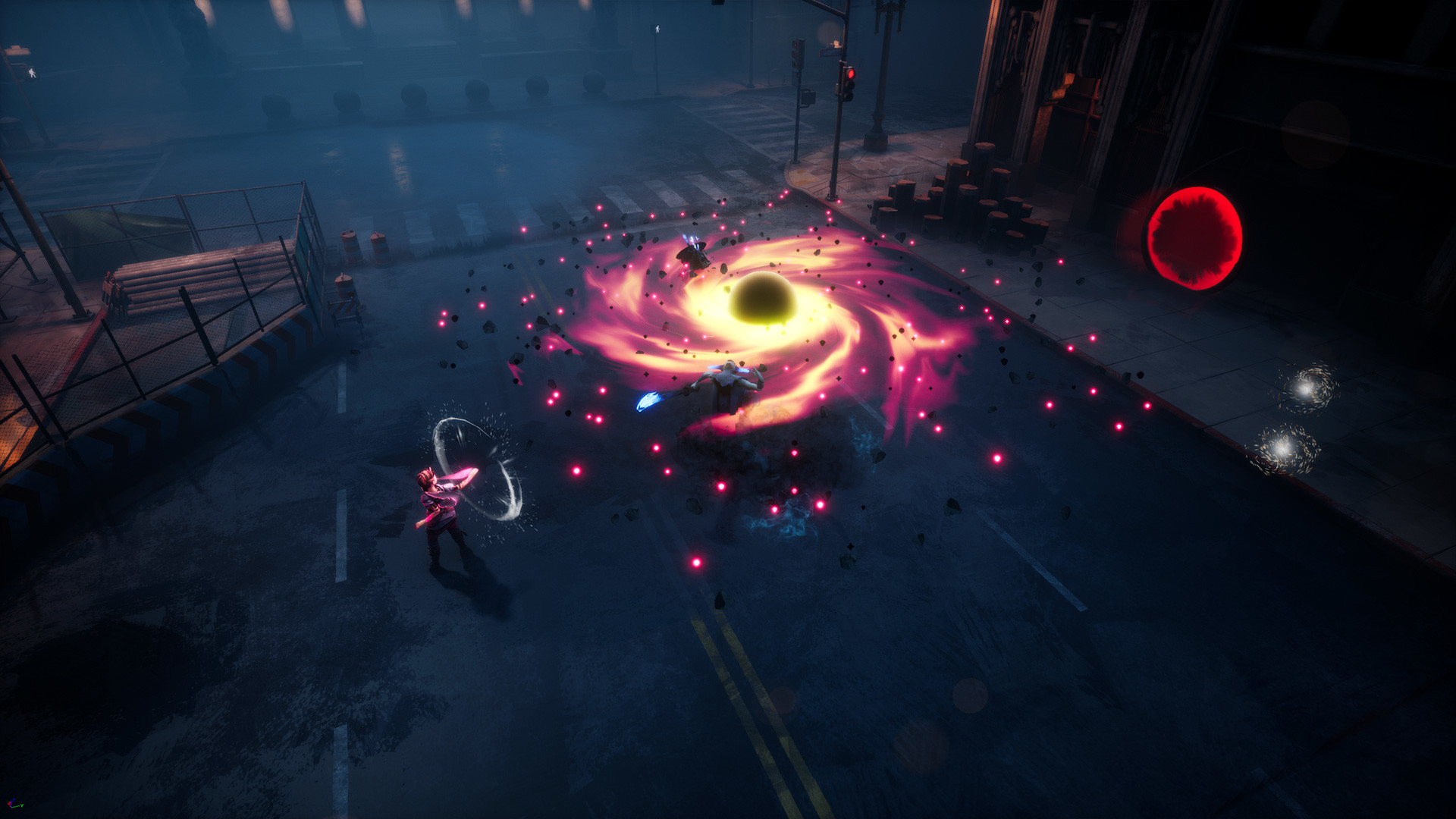
Dreamscaper is a 3D Action-Roguelite with a top down view, that blends social mechanics and combat. The gameplay is split into two general phases. The first, during the day time, is when you can prepare for the night ahead. This involves improving your bonds with your friends for possible stat bonuses, sketching out ideas for new weapons or equipment, meditating on what you’ve learned, and so on.

Image Credit: Afterburner Studios
The bulk of Dreamscaper is in the rougelite portion of the game, when you go to sleep at night. You explore a layer of your dream, coming across different enemy encounters, treasure rooms, and secrets, followed by a boss. If I had to make a direct comparison to other games in the genre, I would say that Dreamscaper is a hybrid between The Binding of Isaac and Dead Cells, substituting the grotesque for the dreamlike. The map layout and exploration is similar to that of Isaac, with keys and bombs being very important to searching each floor.
The Dead Cells comparison comes from the wide variety of weapons and tools you have at your disposal. Every melee weapon has a unique moveset, the ranged weapons are wide and varied, shields can modify your defensive options, and your chosen shoes can all give you different types of dodges. On top of that, you can carry up to two “lucid attacks” that function how active items may in another game: an immediate effect on a time-based cooldown. These can range from temporary buffs to powerful area attacks, or rapid fire projectiles.

Image Credit: Afterburner Studios
Any of the above can also spawn with random modifiers, and they aren’t gated by rarity. A function of the game that I greatly enjoy is that you can start each run with a custom loadout. This is nice both for gameplay preference, and because of the mastery mechanic. The more you use a certain equipment, the higher your mastery with it gets. And when it reaches 100%, that item gains a permanent boon. This could be anything from improved damage, additional projectiles, a faster cooldown, or a wider parry window on a shield.
There’s also a “perfect window” that rewards good timing, allowing your attacks to come out faster and do more damage if you attack as your character flashes white after an animation. Notably, you also get that flash when your character finishes a dodge; good usage of this mechanic can allow you to cancel the recovery, and get right back into the action.
The difficulty is also customizable. Having a “Lucid Mode” in the options menu that makes you stronger every time you die, as well as the ability to crank up the challenge if the game isn’t hard enough for your liking.
One last thing I’d like to comment on is the atmosphere. The game has this incredible dreamlike tone to it, and the nature of the game lends itself to interesting items. They’re all drawn from facets of childhood, imagination, or as references to popular media. They come with a little comment from Cassidy too, and even as you battle through waves of monsters it continues to feel cozy. There’s something comforting about defeating your fears using the same slingshot that got you into trouble as kid.

Image Credit: Afterburner Studios
Final Score
The gameplay of Dreamscaper feels good and has tons of variety to it, with each item having something special that can matter more than raw statistics. The enemies and bosses are the right mix between challenging and fair, the difficulty is customizable, and the tone of the game is soft and dreamlike in a way that I don’t seen done often. There’s tons of content to explore, but that’s where the game stumbles a bit.
Many of the enemy types are repeated across each level with slight variations in color and moveset, with those areas themselves suffering from the same issue. Repetition is an area that the Roguelike genre struggles with as a whole, but it’s worth mentioning here. Room layouts are different, but the set dressing is largely the same town, city, and forest, but in different color schemes and levels of disrepair. Which is a real shame, as dreams can lend themselves to some wonderfully unique aesthetics. In Dreamscaper, these are present, but only in generic rooms across each level like the shop, puzzle rooms, or health recovery rooms. The story can also be a touch hit-or-miss, with the cozier atmosphere meaning that you only hear about major events after the fact.
For these reasons, I give Dreamscaper four stars, very close to 4.5. Even with my criticisms, I feel comfortable recommending this game to any Roguelite fans for the gameplay. The story is simple and works well. If nothing else, it’s definitely worth picking up on sale.
Featured Image: Afterburner Studios
The Boss Rush Podcast – A Podcast About Video Games
The Boss Rush Podcast is the flagship podcast of The Boss Rush Network and Boss Rush Media. Each week, hosts Corey Dirrig, Stephanie Klimov, LeRon Dawkins, and Pat Klein come together with their friends, colleagues, and fellow creators to talk about their week in video games, discuss industry topics, conduct interviews, answer listener questions, and more. New episodes every Monday. Get each episode one week early and more perks over on the Boss Rush Network Patreon page.
This feed also includes Boss Rush Spotlight podcasts and Boss Rush Video Game Book Club. Get both shows early on Patreon.
Email the Show: podcast.bossrush@gmail.com
Listen to The Boss Rush Podcast:
Apple Podcasts | Spotify | Anchor | YouTube
Follow and Connect:
X (Formerly Twitter) | Instagram | Threads | Facebook | LinkedIn
Join Our Community:
Discord | Facebook | LinkedIn

Leave a Reply