
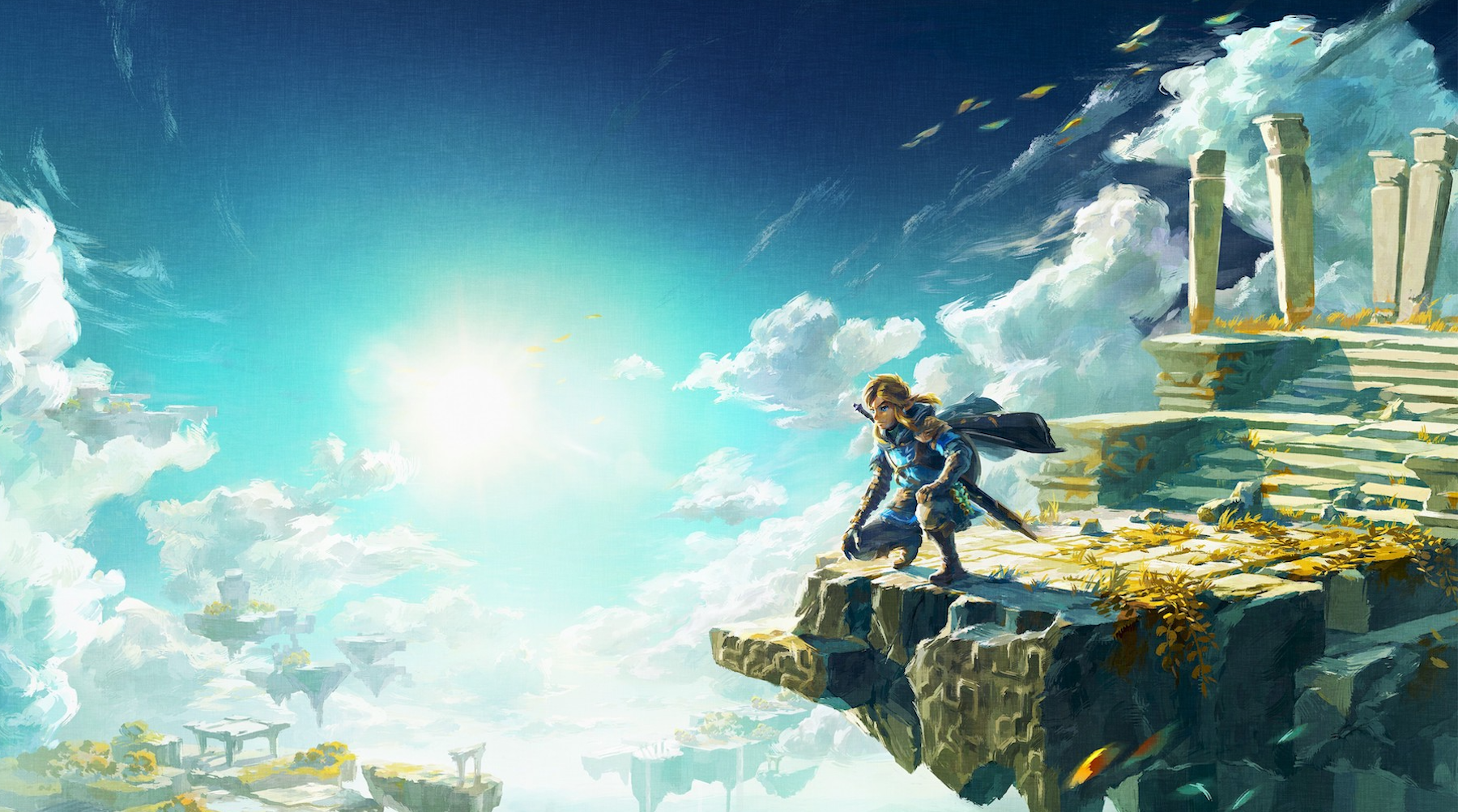
May 12, 2025 marks the two year anniversary of Tears of the Kingdom. As the highly anticipated sequel to the critically acclaimed Breath of the Wild, Tears of the Kingdom was under immense pressure to succeed. Many fans of the 2017 juggernaut were excited for the open-world experience and player freedom Tears of the Kingdom promised would return, and its high sales seemed to reflect this.
But as time has gone on, some of the reception towards Tears of the Kingdom has soured. There are aspects of the game, from its story to its gameplay, that cannot be ignored. Taken on its own, Tears of the Kingdom is a good game. It might even be a great game. The Zonai abilities encourage total freedom and creativity in new ways, and players are very much in control of their experience and progression as they explore the game’s massive open world map.
But this isn’t just any game. This is an installment of The Legend of Zelda, and as far as Zelda games and sequels go, it falls flat.
What Makes a Video Game Sequel Good
In order to understand Tears of the Kingdom’s failings as a sequel, it’s essential to analyze what makes other video game sequels successful. Video game sequels loved by critics and fans alike, such as The Witcher 3, Mass Effect 2, Halo 2, Portal 2, Borderlands 2, Kingdom Hearts II, and many more, all have something in common: they enhance the story, challenge the characters, and tighten the gameplay without changing the core DNA of the experience.
An expansive and complementary story
The best video game sequels know when to expand on the story. The story doesn’t ignore what came before; instead, it recontextualizes those experiences. It challenges the characters in new ways, either by confronting them with the consequences of what came before, or dropping them in a new, unfamiliar world. These careful and thoughtful story additions support the narrative, characters, and the setting and worldbuilding.
For example, Borderlands 2’s narrative significantly adds to the barebones story of the first game. The story is a continuation of what came before, fleshing out the old cast of characters while introducing new Vault Hunters and a new villain, Handsome Jack. The story expands on the nature of the Sirens and the Vaults in compelling and interesting ways. It’s an extension of its predecessor, while also deepening the lore. The locations from the first game are destroyed, and the characters have lost their homes and businesses. When a map from the first game appears again, its appearance and navigation are fundamentally transformed.
Majora’s Mask is a direct sequel to Ocarina of Time. Link has saved Hyrule in both the past and future. Now that he’s returned home, he leaves in search of his fairy companion, Navi, ending up in a parallel world in the process. From there, Link is caught in a three-day cycle to save Termina. The story doesn’t ignore what came before; it is spurred on by the split timelines, and Link has to utilize his previous time travel knowledge and experience to save Termina. Many character models and assets appear again, all of them reimagined or altered by the new context. Exploring this new world is a new experience.

Compelling cast of characters (new or returning)
Video game sequels either bring back returning characters while introducing new ones, or introducing a new cast altogether. In both cases, the cast of characters should be well-written and fully realized characters. If characters from a previous game reappears, the sequel should explore how they’ve grown or changed.
Mass Effect 2 features a cast of new and returning characters that Commander Shephard can recruit and take on missions. The cast is incredibly well-written and fleshed out, thanks to the expansive dialogue tree options players have. The game is a great exploration of blending new and recurring characters while furthering their development. Shepard’s relationships with the returning party members, Garrus and Tali, are radically altered by where the characters have been between the two games. Liara is distant, working far away from Shepard as she fulfills a completely new role. You can never go back to the way things were.
In Oracle of Ages and Oracle of Seasons, these sequels to A Link to the Past introduce a new cast of characters across both entries. The hero is the only constant from the previous game; the rest of the cast is unique and interesting, with their own motivations, goals, and arcs. The moments spent with Impa and Zelda only emphasize the distance Link has traveled, a stark difference between Labrynna, Holodrum, and Hyrule. When Link isn’t recognized, it is a natural consequence of his travels into new lands.

Streamlined and inventive gameplay
Video game sequels can streamline and adjust gameplay directly in response to feedback on the first game. This allows developers to enhance the product and experience significantly, whether it’s quality-of-life changes like balancing difficulty, tightening combat, or improving the UI.
Sequels such as Kingdom Hearts II hone the gameplay experience dramatically. Kingdom Hearts II’s combat system is streamlined, featuring fast and fluid animations, responsive controls, and Quick Time events for dramatic flair. These were major improvements to the clunky platforming and slower combat system from the first game.
A Link Between Worlds is a sequel that uses the same overworld map as A Link to the Past and familiar items, but completely transforms the gameplay and puzzles. The Wall Merging mechanic completely changes the mobility and types of puzzles that can be implemented. It doesn’t change the core experience of the top-down Zelda experience, but it enhances the experience. It’s also worth noting that the game is non-linear due to the Item Shop, where Link can rent items as he wishes, though story progression is not impacted by this.

Rich settings and thoughtful worldbuilding
Some video game sequels may take place in a new setting, while others occur in the same setting but make smart changes to the landscape. Either way, it should actively add to the storytelling, tone, and aesthetic of the game and incentivize players to explore and immerse themselves. The worldbuilding complements the setting and storytelling.
For example, Portal 2 takes place in the Aperture Science Enrichment Center from the first game. While the location is the same, the presentation is dramatically different. Overgrown with shrubbery and tree roots, panels decaying and stained, it’s clear that a significant amount of time has passed. The location transforms so it’s almost unrecognizable to players and adds to the intrigue of the story.
Link’s Awakening takes place on Koholint Island, a mysterious place whose origins and very nature is unclear. It is a sequel to A Link to the Past, and yet the game is defined by its incredibly unique setting and thoughtful worldbuilding. As players progress through each dungeon, they discover more about the island and its true nature. The worldbuilding and setting is woven together to create a rich and memorable world to explore. These games are both excellent examples of taking the setting, either old or new, and transforming the experience for players.

Why Tears of the Kingdom Does Not Deliver its Promise as a Sequel
Tears of the Kingdom, at a glance, may resemble some of these other Zelda sequels with the way it reuses the overworld map and assets. Where these other sequels make a concerted effort to bring something new to the table each time, though, Tears of the Kingdom doesn’t do enough, and it shows.
Non-expansive and contradictory story
Tears of the Kingdom doesn’t acknowledge the past, and nearly every single plot point and world-building element (such as the Zonai and Hyrule’s origins) is somehow incongruous not just with Breath of the Wild, but the Zelda timeline as a whole.
Breath of the Wild begins with Link waking up in the Shrine of Resurrection. Players are in the dark about what happened to him and how he ended up there. The Great Plateau tutorial introduces players to both the gameplay and the state of the world, as a ghostly figure catches Link up on what he missed. Following the tutorial, players are open to progress the story as they wish. They can confront Calamity Ganon immediately, or explore Hyrule and tame the Divine Beasts. It’s through these optional quests that players can learn what happened 100 years ago, though that does mean that the bulk of the story is not required and could be missable.
Not only is critical context and the core of the story lost, these memories can be unlocked by the player in any order. Without any guideposts, thanks to the game’s open-ended approach, it’s possible for players to learn the story out of sequence, leading to a disjointed and muddled presentation. Luckily, what Breath of the Wild lacked in a linear story, it made up for through telling a compelling and emotional story that was intrinsically tied to the setting. The mistakes of the past directly impact the present, and it added to the worldbuilding and expansive quality of Hyrule.
Tears of the Kingdom does not have this luxury. It continues the trend of burying the story in favor of the open-world experience. The choice to lock the story behind unlockable, missable cutscenes amplifies this tenfold. The story is barebones and lacks forward momentum. It becomes immediately clear that the Princess Zelda we keep seeing across Hyrule is not truly her and there is something more sinister at work, and yet the “mystery” is drawn out to an absurd degree because the story refuses to evolve. Each time a new Sage is awakened, they recount the same story and message of warning with little to no variation.

Nintendo couldn’t anticipate the order in which a player could complete each dungeon, so every story beat is treated as if it is the player’s first. It illustrates that Nintendo is not willing to sacrifice any player freedom for the story. Instead of telling a compelling and meaningful narrative with stakes and urgency, they are obsessed with ensuring that players can do whatever they want, and it’s a major problem. This is not a problem other open-world games have because the story is still linear. They are not so free and open-ended that they can no longer convey the story they want to tell.
The Witcher 3 is a sprawling open world adventure, with significant player choice, but it has a driving narrative and main story to complete. Players may explore the world as much as they wish, but they can’t progress the story out of sequence. This means players get the best of both worlds: they have the freedom to explore and progress on their terms, while enjoying a meaningful story with high stakes and excellent writing.
An underutilized and uneven cast of characters
The cast of characters is arguably the greatest strength of Tears of the Kingdom. It blends the cast of old and new characters quite well overall, even if the writing is uneven. New characters like Rauru and Sonia are delegated almost purely to flashbacks, and lack depth. They desperately needed more screen time in order for their stories to land. On top of that, Rauru’s role in the story is identical to King Rhoam in Breath of the Wild. Without any variation, it holds back the writing and opportunities for meaningful character arcs.
The character arcs for Sidon and Riju are not nearly as compelling. Without the Champions to anchor those connections and raise the stakes, they are purely side characters you help overcome a perilous situation before moving on. There is no meaningful growth or through line to the Champions they once knew or respected. Not only is it essentially a repeat of what happened before, but in some cases, it’s as if they’re meeting him for the first time. Despite being the hero who saved the world from the Calamity just a few years prior, Link is unrecognizable. Tears of the Kingdom presents no consequences for what Link and the player did last time, and the inconsistencies pile up. It makes it hard to believe that we are in the same Hyrule as before.
Zelda’s characterization is one of the most compelling aspects of Breath of the Wild. Starting out as resentful and entitled, she grows and finds acceptance in her role. She has real and very interesting flaws. It is one of my favorite things about the first game. Luckily, Tears of the Kingdom doesn’t undo her character arc, though the game holding her at arm’s length yet again is frustrating. More importantly, the lore around dragons, and the ultimate reveal that she is the Light Dragon in the sky, present some very uncomfortable questions and implications about the other dragons that I suspect were unintended.
Breath of the Wild reimagines Ganon as a malice, a corruption and miasma so deeply lost in rage that he lost his individuality. In previous Zelda games, only one version of him is present at a time and serves as the main antagonist. Yet, based on what happens in Tears of the Kingdom, both Ganon and Ganondorf appear to exist simultaneously. There’s Ganon, who became the Malice and resulted in the Great Calamity in Breath of the Wild; then there’s Ganondorf, who has been sealed away deep within the castle basement for thousands of years, concurrent to the events in Breath of the Wild. There is no acknowledgement of the passage of time or even his very nature and essence as these two beings. It’s not even clear if these versions of him are supposed to be the same or not.
Stagnant and clunky gameplay
Tears of the Kingdom is built on the foundation of Breath of the Wild without fixing its flaws, such as the unwieldy and counterintuitive menu UI. The buttons for interacting with the environment, running, and jumping were awkwardly mapped. Inventory management was a nightmare, with no meaningful way to filter or sort items. This was especially problematic in combat, as you were expected to scroll through all of your equipment with the D-pad. Tears of the Kingdom did nothing to address these issues, and it’s made worse with the sheer amount of items a player can have, between the food, resources, and Zonai Devices.

Much like Breath of the Wild, Tears of the Kingdom is bloated with Shrines. The overabundance of these mini-dungeons feature a myriad of isolated puzzles that promise player freedom and creativity, but ironically do the opposite. In order to solve these puzzles, the majority of the solutions can be boiled down to using some iteration of Ultra-Hand and Fuse. Whether you’re building a vehicle to cross lava, or flying across a gap, or moving a boulder on top of a switch, you will be using most of your abilities in very specific ways constantly. The puzzles have lost their spark and intrigue, making the gameplay extremely formulaic and repetitive.
The draw of Tears of the Kingdom and Breath of the Wild – their attention to physics-rich environments and interaction – often serve as introductory levels in other games like Portal, Deus Ex, and Thief. The centerpiece puzzles that these two games pride themselves on are the equivalent of tutorials in other games. Games like Portal increase the difficulty and challenge of puzzles for the players as they progress, but Tears of the Kingdom does not. The puzzle design is flat and boring, magnified when there are hundreds of Shrines to complete.
The dungeons in Tears of Kingdom are not sufficient fixes for the Shrines, either. Nintendo marketed Tears of the Kingdom as a return to form, featuring the traditional dungeons fans were accustomed to. This wasn’t exactly true. After all, they still miss the core of what makes dungeons in the Zelda series memorable. They have little to no theming, no unique items, and all mechanically function the same way, tasking the player with activating five terminals to progress. Not only are they shorter than classic dungeons, they don’t take a whole lot longer to beat than the Divine Beasts did. Playing alongside the Sages is neat, and reminiscent of earlier entries like The Wind Waker. But imagine if the dungeons weren’t only extended Shrines, but full-fledged dungeons that said something about the story, the worldbuilding, or even the Sages themselves?
The gameplay loop of building and constructing anything the player can think of is a major source of contention. Some players absolutely love it, while others are largely disinterested. It is worth highlighting the creative and unique things players have built in Breath of the Wild and Tears of the Kingdom. They are genuinely impressive and remarkable, and something I could never do. It is a testament to the game’s engineering and construction that players have this much freedom. But do we tie a game’s merit to just its engineering and ignore the other elements like the story, characters, and gameplay that make playing video games such a unique and special experience?
Empty setting and shallow worldbuilding
The overworld map of Hyrule is the same. Though it is peppered with new Shrines, the presentation is remarkably stagnant from its predecessor. Because the map is the same, there is less reason for players to traverse and explore. The rewards for exploration, Korok Seeds and Shrines, were already subpar in Breath of the Wild, but the joy of exploring a new Hyrule made it worth it.
In Tears of the Kingdom, the rewards are still largely the same, and the landscape isn’t changed enough even with the new Sky and Depths. What reason do I have to climb the same mountain again in Tears of the Kingdom if the reward isn’t that much different? The urge I had to explore and uncover each new region in Breath of the Wild is simply gone in Tears of the Kingdom. Even in games like A Link Between Worlds that recycle old maps, the rewards, characters, and context is changed enough that it’s still worth doing.

The Sky and Depths regions are not enough to enrich the exploration. The rewards are not very appealing. The puzzles associated with both of these areas quickly become repetitive and uninspired. There aren’t any settlements or prominent characters to breathe life into them. They lack further mystery or intrigue to invite players to return, or get absorbed in these new places. They don’t contribute to the story or worldbuilding, because there is so little to see and engage with. What do the spherical islands in the Sky really say about the Zonai and their culture, other than existing as a puzzle for players to solve? Why explore the Depths, when it is nothing but a sprawling expanse of decayed trees, shrubbery, and darkness that exists for players to mine Zonaite? They are an afterthought.
The worldbuilding in Tears of the Kingdom is shallow and minimalistic, and does not consider what came before. The Divine Beasts, machinations that were absolutely critical to the story in Breath of the Wild and served as the game’s biggest set pieces, are completely absent from Tears of the Kingdom. This omission is especially glaring considering that these machines were more than just set pieces. They symbolized both the Sheikah’s incredible feats of engineering and their hubris, serving an important role in both the story and worldbuilding. Outside of missable, unimportant dialogue that vaguely referenced them at best, they are not mentioned in a meaningful way. It’s frustrating because this could have been easily solved if the story or characters took the time to address it.

Director Hidemaro Fujibayashi’s response to the sudden and unexplained disappearance of the Divine Beasts is cheap at best and lazy at worst:
“They disappeared after the Calamity was defeated (sealed). All of the people of Hyrule also witnessed this, but there is no one who knows the mechanism or reason why they disappeared, and it is considered a mystery. It is believed that since the Calamity disappeared, they also disappeared as their role had been fulfilled.
“It is, anyway, commonplace for mysterious events and strange phenomena to occur in Hyrule. Thus, people have simply assumed the reason behind the disappearance to likely be related to ancient Sheikah technology and it seems there is no one who has tried to explore the matter further. The main civilizations in Breath of the Wild and Tears of the Kingdom are completely different, so we thought about the game based on concepts that match each of these civilizations.”
It reinforces the notion that Nintendo simply didn’t care about continuity between the two games, and it doesn’t stop there. Tears of the Kingdom supposedly takes place a few years after Breath of the Wild, and yet many of the towns and communities are still in ruins. Why wasn’t Hyrule Castle Town rebuilt during that time? To me, this shows a lack of attention to detail and an excess of reused assets that negatively impact the story and characters. You mean to tell me that Princess Zelda would not have devoted herself to rebuilding this community and everything they lost? That she would be fine letting it sit in ruins?
Instead of giving us an opportunity to see how the world is rebuilding and how it’s changed, the game does very little with this set-up. The world remains empty. While this was a criticism of Breath of the Wild, it also serviced the story. After the devastation Calamity Ganon had caused, it made sense that the world was so desolate. But in Tears of the Kingdom, this same kind of emptiness at a time when Hyrule is at peace is unacceptable. It makes the game feel both isolated from, and unaffected by, its predecessor.
There are plenty of Tears of the Kingdom enthusiasts who have put together elaborate theories to explain each of these anomalies, such as separate timelines, but that’s just it: these are theories created because the answers were not clearly conveyed in the game’s storytelling or dialogue. This doesn’t change the fact that there are major inconsistencies with the world’s origins that seem to balk in the face of everything that came before it.

Why Its Impact as a Sequel Matters for the Zelda Series
The Legend of Zelda’s legacy was defined by its perfect blend of challenging puzzles in memorably themed dungeons, action-packed gameplay, meaningful exploration, and a riveting story. Each game holds a sense of wonder and adventure that is present even within a linear storyline. Breath of the Wild significantly changed this perfect balance, but not in a way where the series lost its identity or felt completely unrecognizable. It was still a Zelda game, and its differences were novel, innovative, and even exciting. It had the advantage of novelty on its side.
For Tears of the Kingdom, however, the novelty has worn off. It too closely resembles its predecessor and doesn’t do enough to change the formula or innovate in a meaningful way. It shares the same problems that Breath of the Wild has, but they’re magnified now that the rose-tinted glasses are off. Tears of the Kingdom eschews an expansive and complementary story, a compelling cast of characters (new or returning), streamlined and inventive gameplay, and a rich setting with thoughtful worldbuilding in favor of a build-your-own-adventure game that is only Zelda by name.
It’s a shame because Tears of the Kingdom was uniquely positioned to fully explore the consequences of the previous game’s story in a way we hadn’t seen before. We could have witnessed and directly supported Hyrule’s restoration efforts. Many of the environmental storytelling and mysteries, elements that added to the appeal of Breath of the Wild’s expansive world, could have been answered.
I hoped that Tears of the Kingdom would represent both the enduring legacy of the Zelda series and the bold, new direction Breath of the Wild presented. Tears of the Kingdom didn’t need to sacrifice nuanced storytelling for open-world exploration. It didn’t need to sacrifice excellent dungeon design for player freedom. Tears of the Kingdom could have been a sequel that masterfully blended the old and new formula to make something truly special. And that is perhaps the most disappointing thing of all.
Featured image: Nintendo
Boss Rush Podcast – A Podcast about Video Games

The Boss Rush Podcast – A Podcast about Video Games – is the flagship show of the Boss Rush Network and Boss Rush Media. Each week, hosts Corey Dirrig and LeRon Dawkins are joined by friends, fellow creators, indie developers, and industry veterans to discuss the latest in the world of video games, including news, rumors, new releases, and what they’ve been playing. They also answer listener questions, debate important industry topics and Boss Rush Banter discussion points, and feature a rotating weekly segment. New episodes post every Monday.
Follow and Connect with Boss Rush Podcast on Social Media
X/Twitter + Bluesky + Instagram + Threads + YouTube
Listen to Boss Rush Podcast on Podcast Services
Apple Podcasts + Spotify + Goodpods + Amazon + More Links
Thank you for supporting Boss Rush Podcast and the Boss Rush Network
Thank you for watching or listening to The Boss Rush Podcast. If you’re watching this episode on YouTube, hit the Subscribe button, Like the video, and hit the notification bell so you don’t miss an episode! If you’re listening on Apple Podcasts or Spotify, consider leaving us a rating and a review as it helps with discoverability and growth. Support Boss Rush on Patreon for exclusive content, early access and audio versions of shows, become a Patreon Producer, and more. Visit our website for all of our content including reviews, news, daily Boss Rush Banter discussion topics, listicles, features, and more. However you support us, it means so much to us. Thank you for your continued support of the Boss Rush Podcast and the Boss Rush Network.

Leave a Reply