
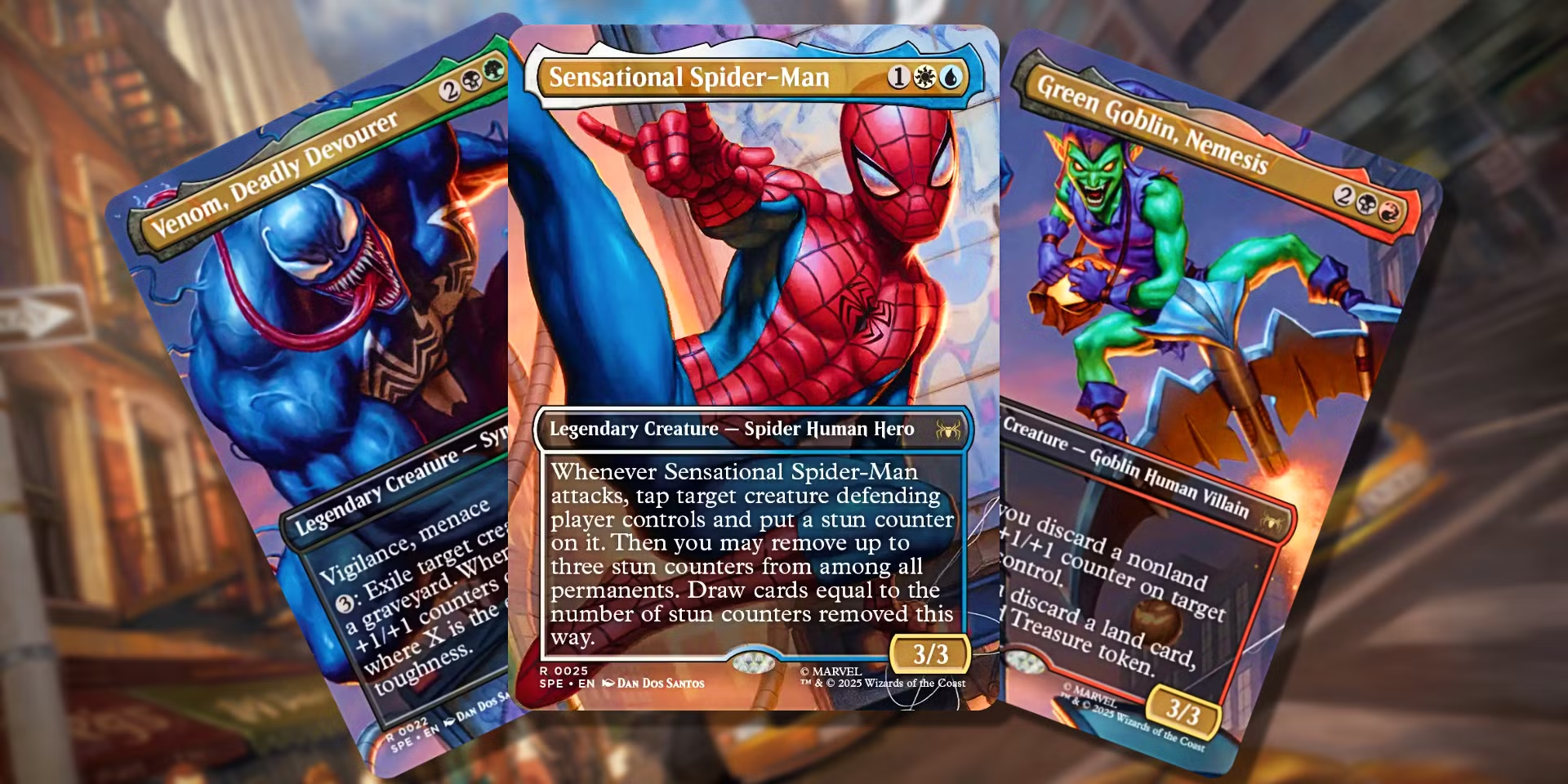
When I was a fiscally irresponsible teenager, I spent a significant amount of money on Magic the Gathering cards. Back then, every new expansion felt like it introduced or elaborated on a fascinating new world: one full of evocative gods, monsters, and spells. Though sets like Amonkhet, Kaldaesh, or Throne of Eldraine certainly weren’t perfect, they all felt like the thematic experience that I was looking for. In recent years, Magic the Gathering has turned to incorporating external franchises, such as Assassin’s Creed, Fallout, or Spiderman. These sets, on account of being external, are usually imperfect fits for the game thematically. The latest set, Spiderman, feels the most removed of them all.
But why does it matter if a world doesn’t fit a game’s themes? Because the world of Spiderman is already well established, the cards must follow a top-down, or story-first design style. Magic the Gathering‘s storytelling toolkit is ill-prepared to handle single-character narratives in a familiar world. In fact, it is designed to do the complete opposite – show a world that is vast, full of the magical and unfamiliar. One of those tools is just the number of cards in a standard set, which usually ranges from the high 100s to low 300s. Coming up with that many interesting and relevant things to show for a story set primarily New York is a challenge. Another storytelling tool Magic the Gathering has is its color pie. Each color in the game represents a different set of values and philosophies, in addition to restricting the mechanics of the game. Spiderman, as part of the superhero genre, is more oriented toward a linear sense of morality – hero, villain, or anti-hero. The Spiderman set tries to accommodate this by adding Hero and Villain creature types to those cards.
These problems are not just philosophical; they become immediately obvious in the cards. When characters like Mary Jane Watson are made legendary creatures on account of her narrative importance, while ignoring the fact that she is just a regular person, it cheapens the title of legendary. I’m confused why the card Supportive Parents, which depicts Miles Morales’s mother and father, they have a power and toughness of 3, which makes them strong enough to kill about a third of the villains and Spiderman variants in the set. It feels out of place to call cards like Bagel and Shmear or Hot Dog Stand an artifact, as these are just mundane objects from our own world. This points to a core problem of Spiderman in Magic: since the world is our own, and the set focuses on a singular character, every card must relate directly to that character. Worldbuilding has little utility, since most people have a decent idea of what New York looks like, at least compared to their understanding of Dominaria or Ixalan.


Image Credit: Wizards of the Coast
This leads to the second problem, which is the set scraping the bottom of the narrative barrel to find more Spiderman-related things to include. There are over thirty different Spiderman variants. Some of them depict the same version of Spiderman multiple times. Spiderman, Brooklyn Visionary, and Ultimate Spiderman both depict the Miles Morales version of the character. On the topic of the Spiderverse, the set includes numerous joke iterations of Spiderman, including many one-off joke versions such as Spider Ham, Spiders-Man and Spider Rex. The inclusion of so many frivolous and redundant Spider-people makes me numb to the character in a set meant to celebrate him.


Image Credit: Wizards of the Coast
External franchises have become an established part of the game’s ecosystem over the past few years, to my disappointment. But I hope that Wizards of the Coast will be more responsible with the ones that they choose to include in the future. I hope, against all odds, that they’ll weigh the narrative and thematic compatibility of these properties against the gargantuan financial incentives that they no doubt have.
What about you? Are you excited to see Spiderman in your commander pod? Share your reactions below or join the conversation on the Boss Rush Discord.
Featured Image: Wizards of the Coast
Boss Rush Podcast – A Podcast about Video Games

The Boss Rush Podcast – A Podcast about Video Games – is the flagship show of the Boss Rush Network and Boss Rush Media. Each week, hosts Corey Dirrig and LeRon Dawkins are joined by friends, fellow creators, indie developers, and industry veterans to discuss the latest in the world of video games, including news, rumors, new releases, and what they’ve been playing. They also answer listener questions, debate important industry topics and Boss Rush Banter discussion points, and feature a rotating weekly segment. New episodes post every Monday.
Follow and Connect with Boss Rush Podcast on Social Media
X/Twitter + Bluesky + Instagram + Threads + YouTube
Listen to Boss Rush Podcast on Podcast Services
Apple Podcasts + Spotify + Goodpods + Amazon + More Links
Thank you for supporting Boss Rush Podcast and the Boss Rush Network
Thank you for watching or listening to The Boss Rush Podcast. If you’re watching this episode on YouTube, hit the Subscribe button, Like the video, and hit the notification bell so you don’t miss an episode! If you’re listening on Apple Podcasts or Spotify, consider leaving us a rating and a review as it helps with discoverability and growth. Support Boss Rush on Patreon for exclusive content, early access and audio versions of shows, become a Patreon Producer, and more. Visit our website for all of our content including reviews, news, daily Boss Rush Banter discussion topics, listicles, features, and more. However you support us, it means so much to us. Thank you for your continued support of the Boss Rush Podcast and the Boss Rush Network.

Leave a Reply