
The following article is a guest post collaboration between Boss Rush Network and Søren Kamper
of SWTORStrategies / Star Wars: Gamers.
Star Wars games have a funny way of turning every new announcement into a memory test. A trailer drops, a remake gets rumored, a studio says the words “single-player Star Wars,” and suddenly a whole generation of players mentally crawls back into the same old dusty cockpit. X-Wing. TIE Fighter. Jedi Knight. Knights of the Old Republic. Republic Commando. Shadows of
the Empire. Battlefront. The Force Unleashed. That one level you loved. That one boss you still hate. That one game you insist was better than everyone remembers, usually with the confidence of someone defending a family member in court.
Boss Rush Network has already asked whether the past is the future of Star Wars games, and honestly, that question still feels like the right place to start. Because the more Star Wars gaming moves forward, the more it seems to circle back to the same old lesson.
The best Star Wars games were never just adaptations.
They were invitations.
They did not simply ask, “Would you like to see Star Wars?” They asked, “Where do you want to stand inside this galaxy?”
That is a much more powerful question.
The Old Games Were Not One Thing

When people talk about the LucasArts era, nostalgia can sometimes flatten everything into one golden blob of childhood memory. That is understandable. Nostalgia is not exactly known for its careful filing system.
But the magic of those older Star Wars games was not that they all felt the same. It was that they absolutely did not.
X-Wing and TIE Fighter gave players the cockpit fantasy. Not the “look at a cool space battle” fantasy, but the “reroute shields, lock S-foils, panic because a missile tone just ruined your evening” fantasy. You were not watching the Battle of Yavin from a safe distance. You were inside the machine, trying to survive long enough to become useful.
Dark Forces and Jedi Knight took Star Wars somewhere else entirely. Suddenly the galaxy was corridors, blasters, secrets, Force powers, and lightsaber duels that felt clumsy in the exact way many of us remember as perfect. Those games gave players a kind of physical freedom that Star Wars on film could only suggest.
Knights of the Old Republic went even deeper. It did not just ask what weapon you wanted. It asked who you were. What did you believe? Who did you trust? How far would you go? Could you resist the dark side, or were you mostly just pretending until the dialogue wheel gave you permission to be a monster?
Republic Commando proved Star Wars could work without making the player a Jedi, a Skywalker-adjacent hero, or the most important robed person in the room. It was dirtier, tighter, more tactical. You were not saving the galaxy by glowing dramatically. You were trying to keep your squad alive.
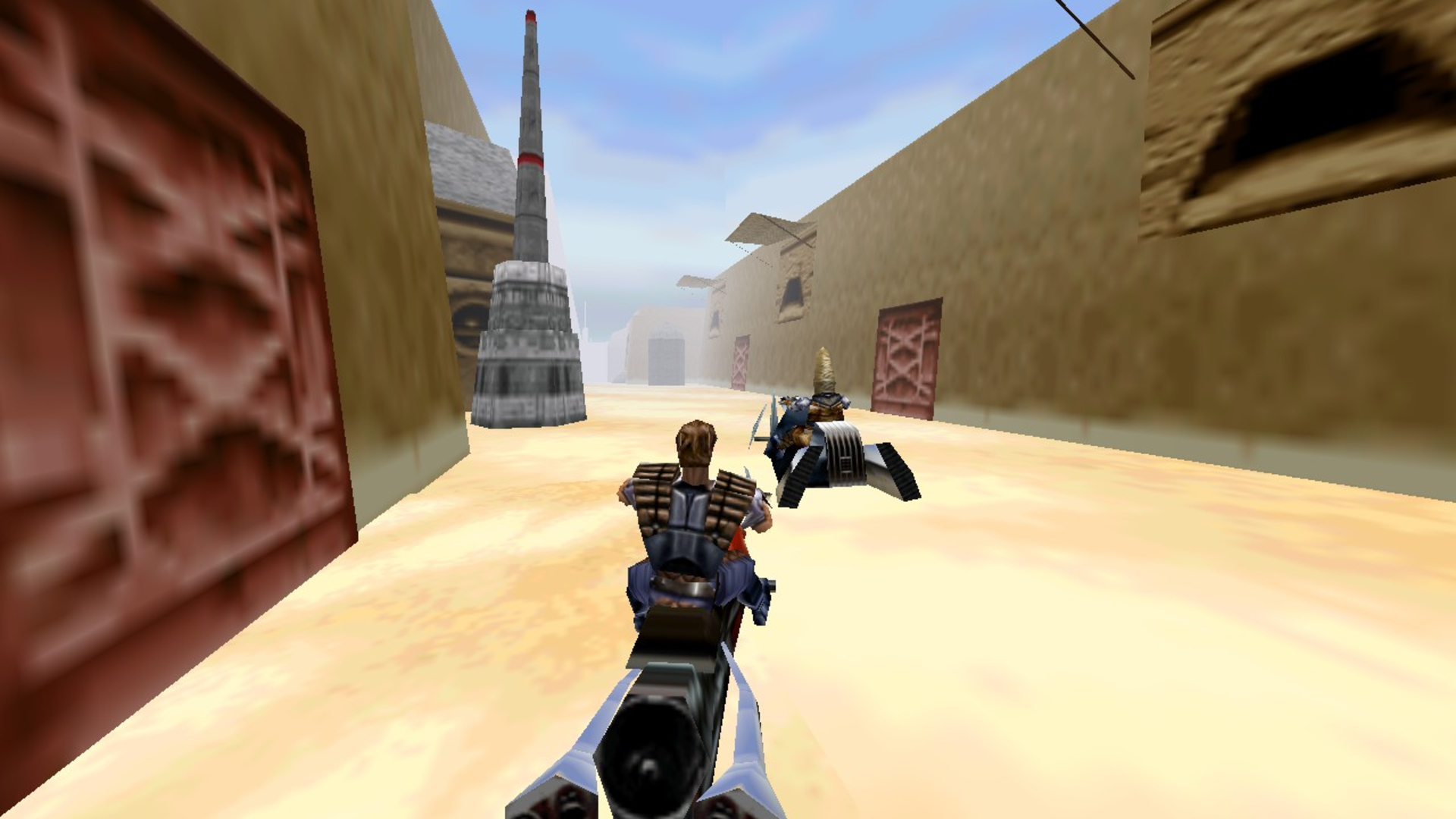
Even Shadows of the Empire, a game held together by ambition, weirdness, and the raw confidence of the Nintendo 64 era, understood the appeal of being near the big story without being swallowed by it. Dash Rendar was not Luke Skywalker. That was the point. He was the action figure you invented extra adventures for after the movie ended.
That is also why the “best Star Wars video game” debate never really dies. It is not just about which game aged the best, or which one had the cleanest mechanics. It is about which fantasy grabbed you first and refused to let go.
That is the real legacy worth remembering. Star Wars games were allowed to change genre, change perspective, and chase completely different fantasies.
The Future Should Not Copy the Past
The easy version of this argument would be: “Bring back all the old games.”
And sure, yes, obviously. Put TIE Fighter on modern platforms with proper support and watch a certain corner of the internet behave like someone just restored the Jedi Order.
But copying the past is not the same as learning from it.
The lesson of classic Star Wars gaming is not that every new game should be a remake, remaster, reboot, or spiritual apology letter. The lesson is that Star Wars works best in games when it lets players inhabit a specific role.
Boss Rush Network has also spent time talking about how Star Wars Jedi: Fallen Order works as a jack of all trades, and that makes sense. Fallen Order and Survivor work because they understand their role. They are not just “Star Wars action games.” They are games about being a Jedi survivor in a galaxy where that identity is dangerous, lonely, and constantly tested. Cal Kestis works because the gameplay and the character fantasy are pointed in the same direction.
Star Wars: Squadrons understood it too. It did not need to be everything. It needed to make the cockpit feel like the whole universe for a while. That is enough when the fantasy is focused.
Star Wars Outlaws is more divisive, but its core idea is still the right one: the scoundrel fantasy matters. Smugglers, thieves, gamblers, syndicates, bad decisions, and very questionable friendships are as much a part of Star Wars as Jedi temples and ominous hooded men whispering about destiny.
And now Star Wars Zero Company is heading toward another corner of the galaxy: tactics, command, squad building, and Clone Wars-era strategy. Whether it lands or not, the idea itself is exciting because it remembers that Star Wars does not have to live in one genre forever.
That is what the future should take from the past. Not “make the old thing again,” but “find the fantasy and commit to it.”
Star Wars Is a Genre Machine

Part of the fun of looking back is realizing just how many shapes Star Wars games have already taken. SWTORStrategies has kept a running Star Wars games archive for exactly that reason, and scrolling through it feels less like reading a release list and more like watching the franchise try on every costume in the wardrobe.
Flight sim. RPG. Shooter. MMO. RTS. Racer. Arcade game. Mobile battler. Pinball table. Lego comedy machine. Motion-control experiment. Card game. Tactical squad shooter. Canceled dream project that fans still talk about like it owes them money.
That variety is not a weakness. It is the whole advantage.
Star Wars can be a war story. A heist. A western. A samurai myth. A spy thriller. A political tragedy. A Saturday morning cartoon. A toy box. A haunted family drama with laser swords and terrible parenting. Games are the perfect place to explore all of that because games do not just show us a galaxy. They let us work there.
That is why the safest future for Star Wars games may actually be the weirdest one.
Give us the rebel spy game.
Give us the pod-racing revival, cowards.
Give us the underworld management game where half the challenge is not getting betrayed by a Rodian with a financial plan.
Give us the Imperial officer story where winning every mission makes you feel worse.
Give us the droid repair game. Give us the bounty hunting sim. Give us the political strategy game set in the New Republic. Give us the small, strange, character-focused Star Wars game that sounds impossible until someone finally makes it, and we all pretend we believed in it from the start.
The galaxy is too big to keep handing players the same robe, the same saber, and the same destiny speech.
The Past Still Has Something to Teach
The past is still the future of Star Wars games, but not because the past was perfect.
It was not. Some of those games were messy. Some aged beautifully. Some aged like blue milk left in a Tatooine garage. Some are better remembered than replayed. Some are still brilliant. Some deserve remasters. Some deserve a respectful nod and then maybe a quiet nap.
But the best of them understood the most important thing: Star Wars is not one fantasy.
It is many.
For some players, Star Wars is the hum of a lightsaber in a dark hallway. For others, it is a cockpit full of warning lights. For others, it is a party of companions arguing on a ship while the player slowly becomes either a hero, a villain, or a problem with dialogue options. For others, it is a squad of clone commandos moving room to room, or a smuggler trying to get paid before the whole galaxy catches fire again.
That is why fans keep bringing up the old names. We are not only asking for the games back. We are asking for that range of possibility back.
The future of Star Wars gaming does not need to worship the past. It just needs to remember why the past worked.
Pick a fantasy. Build around it. Trust the player to care about a corner of the galaxy that is not always the center of the saga. Let Star Wars be strange, specific, playful, tactical, dramatic, messy, and personal.
That is where these games have always been most alive.
So what about you? Which Star Wars game fantasy deserves the next big shot: Jedi, pilot, smuggler, commando, bounty hunter, strategist, racer, spy, droid mechanic, or something much weirder?
Join the conversation in the comments below or over on the Boss Rush Network Discord, Facebook, and Twitter. For more Star Wars content keep an eye on SWTORStrategies and Boss Rush Network.
Featured Image: LucasArts (via Steam)

Leave a Reply