
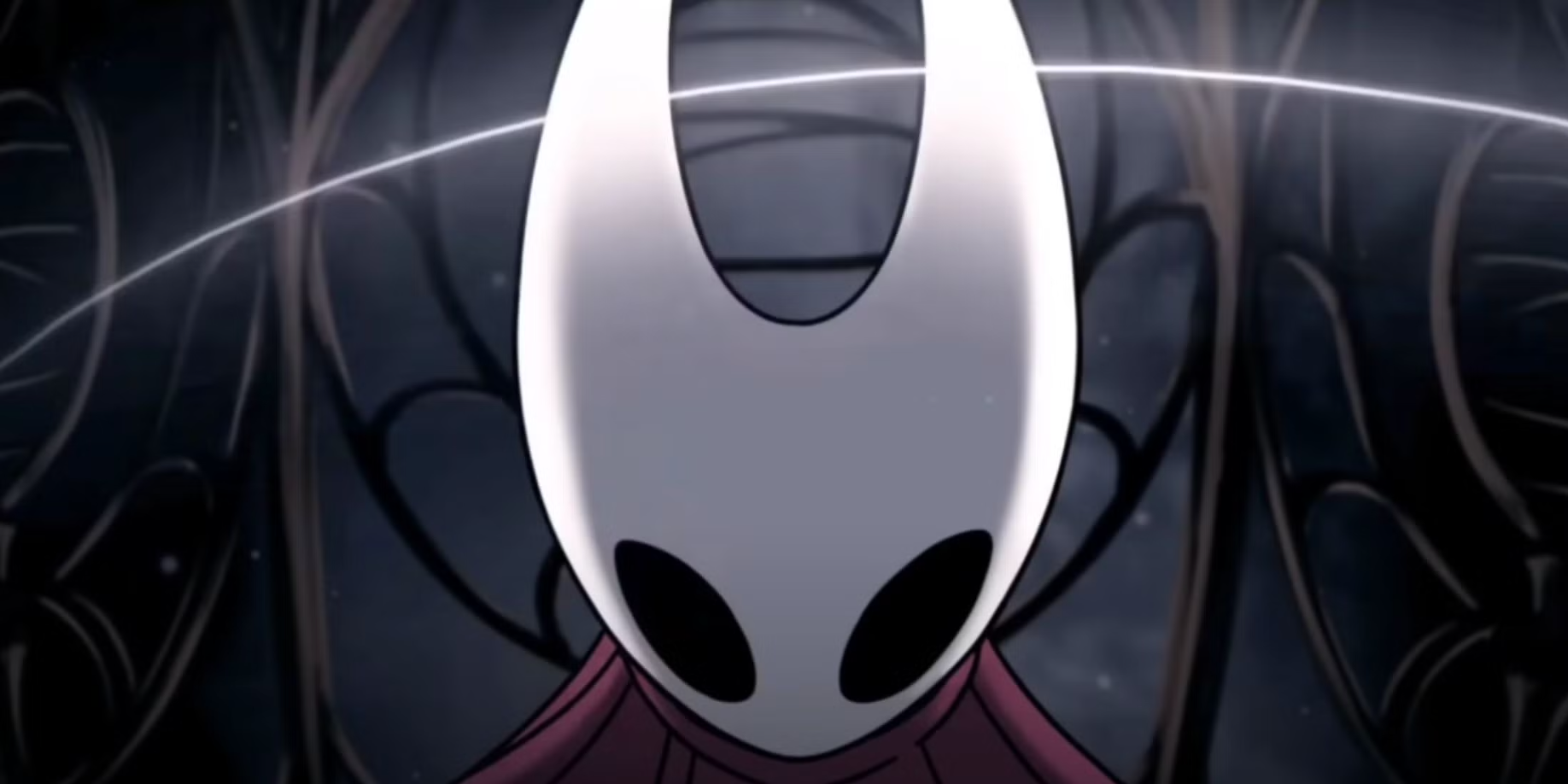
As you most undoubtedly know by now, one of the most anticipated games of all time is releasing today, and at a very affordable price point to boot. After an over six year wait, developer and publisher Team Cherry announced during GamesCom just two weeks ago that their largely anticipated sequel Hollow Knight: Silksong would be arriving on September 4, and at a steal of only $20 USD. Gamers everywhere rejoiced. Christmas had come early. But just as players are crying tears of joy, indie developers are the ones feeling the pain.
Hollow Knight: Silksong is the followup to 2017’s acclaimed metroidvania Hollow Knight. The game casts players as Hornet, a former princess of the insect kingdom Hallownest, and follows her on her quest in the new land of Pharloom, a world posing brand new threats unlike gamers have ever faced before.
Initially conceived as DLC to Hollow Knight, the game’s scope expanded as such that it shifted into its own standalone title. Silksong was first announced on February 14, 2019, and has since become infamous for having sporadic updates across its development. Even still, anticipation for the game has reached astronomical numbers, having around 5.2 million Steam users add it to their wishlist in August 2025, becoming by far the most wishlisted game in Steam history. Silksong also won the Unity Award for Most Anticipated Game in both 2021 and 2024. That’s quite the feat.
It seems appropriate then that a title that is known for having such infrequent announcements then has its price and release date revealed just two weeks in advance of its debut. At a time when game development is at an all time high, and numerous high profile titles are releasing at $70 USD or more, it’s shocking to say the least that Hollow Knight: SIlksong carries the price tag of only $20. Numerous fans have expressed–likely with a sigh of relief–that they’d gladly pay three times as much because of the quality it promises. No one would fault Team Cherry, given the lengthy development time, high anticipation, and hotly competitive market, if they charged much more. Instead, they are making their game so much more appealing with that bargain of a price.
For gamers, this is a win-win. The game comes sooner than expected, and at a price you just cannot ignore. Yet for indie developers, all of this can feel like an all out attack.
First, the surprise release date has left many developers scrambling. Game development is a lengthy process, and having a smooth launch is just one of the many steps in (hopefully) finding success in such a demanding market. Publishers meticulously plan for the perfect release date, ensuring that their games arrive at that perfect sweet spot to attract the most customers. Even after months of preparation, a game’s launch could still falter due to any one of a host of circumstances. The unexpected release of Hollow Knight: Silksong is just the kind of storm publishers don’t want to weather.
After the Gamescom announcement, numerous noteworthy titles subsequently have had their release dates shifted so as to avoid direct competition with Team Cherry’s juggernaut of a game. For instance, tactical RPG Demonschool by publisher Ysbryd Games moved its release from September 3 to November 19, giving a wide birth to Silksong to dominate the sales charts. Developer Necrosoft Games even wrote on social media that “[d]ropping the GTA of indie games with 2 weeks notice makes everyone freak out.”
Cozy crafting sim Little Witch in the Woods was to leave PC early access on what is now Silksong’s release date, but now it’s been moved by 11 days to September 15. In an official statement, publisher Sunny Side Up states that, although “Silksong is a game we look up to with awe as developers,” they also “fear that launching Little Witch in the Woods on the same day would not only dishearten our dedicated team but also disappoint our devoted audience.” To further hammer the point home, they shared on social media an official artwork of the game’s protagonist laying on the floor, tears streaming down her face, her broom and potions broken on the laminate, with the shadow of Silksong’s Hornet towering over her menacingly. Regardless of how much adoration they have towards Silksong, the developer undoubtedly feels threatened by its presence.

Clover Pit, the rogue-lite slot machine title by developer Panik Arcade-admitted on Steam that the game was being delayed from September 3 to September 26 specifically to avoid Silksong’s arrival, stating “[w]e poured our hearts into our little game so of course we want to give it the best possible shot.”
Bennett Foddy’s quriky walking-sim puzzler Baby Steps used a trailer to announce its release date change, as Silksong’s Hornet again makes an appearance, this time to directly interrupt Baby Steps’s protagonist from progressing, causing him to take a tumble into a sand dune.
All this is to say that games–big and small–are all wanting to steer clear of Silksong’s arrival, as Team Cherry’s game will surely gobble up both gamers’ money and attention spans. It’s all really unfortunate, to be honest. So many developers look up to Team Cherry and the incredible success of Hollow Knight, with it being one of only a few proven examples that titles made from small teams, on light budgets, and coming from the humblest of origins can break into the mainstream.
Yet at the same time, the game no longer has the feeling of being an indie title: it’s front page news, it’s on everybody’s lips, and is soon to be on everyone’s screens. That draws attention away from its indie brethren, so much so that they have to make last minute accommodations for the big fish in the pond. It’s eat or be eaten in the gaming industry, and hitting stores at the same time as Silksong is a guaranteed way to end up fish food.
While delaying a game by two weeks or so may not seem like much, that can be devastating for a small time developer. There’s no doubt that most all teams are relying on their games releasing on time in order to pay their developers, and for the smallest of teams, another two weeks without pay means drastic adjusting.
The $20 price tag is perhaps what’s most damaging to indie developers, however. Again, game development is increasing in size every single day. Gamers demand better quality, more impressive graphics, longer playtimes, new features, and access to the game on multiple devices, and all of that requires bigger teams, longer development times, and lots-and-lots of moolah.
Even AAA developers have struggled in recent years to keep up with this kind of demand. It’s telling when even the gaming giant Nintendo has to make the newest title in arguably its biggest franchise launching on its latest console a full $80 USD. While unlikely, a $100 price tag isn’t outside of the realm of possibility for perhaps the single most anticipated game in history with Rockstar’s Grand Theft Auto VI. Even Microsoft earlier this year stated that all first party titles would be increasing to $80, before extreme fan backlash made them walk back those remarks.
Regardless if you are for or against the increase in video game prices, the fact of the matter is that their price increase is a reality. Again, development costs are getting higher, and the price for games are at their lowest point as a whole when adjusted for inflation. While consumers may not like ponying up more for their digital entertainment fix, many studios are rejoicing when huge companies like Nintendo, Microsoft, and Rockstar speak about raising prices, because that gives them leeway to charge more, and in turn bring in more profit for their hard work.
The indie space though is a different beast altogether, and perhaps even more unforgiving. While indie games are most certainly cheaper to produce, they are being developed by teams of far smaller size. Unlike AAA game development, most anyone can also get invested in making an indie game; indeed, even Hollow Knight and Silksong were created by only three individuals. This has led to thousands of new titles being released each year, ranging from masterpieces to complete shovel ware, with customers finding it difficult to discern which are of what quality.
Because of their perceived smaller size, most all indie developers cannot hope to find success in charging $50 or more for their games, even if their quality and depth should match (or even exceed) than that of AAA publishers; they simply do not have the exposure, the renown, the experience, or the pedigree that companies like Capcom, 2K, Square Enix, or EA have. All indie devs inherently start off at a handicap.
Team Cherry thus has thrown yet another wrench into the indie development scheme. Hollow Knight: Silksong is a game that has been in development for at least seven long, arduous years, and because of its high standing, it most likely has had more money and time invested into it than your typical indie title. The fact that Team Cherry will charge a mere $20 for a game of this magnitude sets a precedent: if Silksong can succeed at just $20, then why can’t an even smaller game, created by even fewer people, and made in even less time charge less? What’s good for the goose is good for the gander, right?
The answer is because Team Cherry can afford to undercut their competition, as they know it is going to sell bookoos based on it being the most wishlisted game on Steam. Sure, many would buy it at $30, or $40, or even $50, but that $20 price tag is enough to encourage impulse buying from many who are simply interested and on the fence. This pairs extremely well with their sudden release date. Players don’t have much time to debate against it, and are swept up in the hype train before they know it. It’s an ingenious move, to be sure, and not entirely unlike the strategies companies like Wal-Mart and Amazon have used to dominate their rivals into submission on their rise to the top: if you sell enough at a lower price, customers will have no incentive to spend money elsewhere.
This is a precedent that can have lasting harm on the indie game scene. Major titles like Silksong set standards, and any developer that wants to challenge that $20 price point, regardless if they are justified or not, are going to come out looking greedy to most customers. Again, if $20 is good enough for Silksong, then it’s good enough for everybody else. That’s the perception, anyway. The fact of the matter is every game is different. Every developer is different. Each game is going to carry different costs, will sell different amounts, and earnings are going to be split in different ways. There really shouldn’t be a “one price fits all” model in gaming, even with AAA titles, but that’s a topic for another day.
It remains to be seen just how lasting of an impact this will have on the industry. What I do know is that the cost to make games is unlikely to go down anytime soon, which means that it will become even more difficult to turn a profit in this industry. With the lack of developers making profit, more studios will inevitably shut down, which means less-and-less games will be arriving every year. With Hollow Knight: Silksong making $20 a new standard, it is very likely that some developers will inadvertently close as they simply cannot keep up with the Joneses. And in that regard, gamers everywhere lose.
Boss Rush Podcast – A Podcast about Video Games

The Boss Rush Podcast is the flagship show of Boss Rush Media and The Boss Rush Network. Each week, hosts Corey Dirrig, LeRon Dawkins, Stephanie Klimov, and Pat Klein, as well as their friends, fellow creators, developers, and industry veterans, share their gaming experiences. They discuss what they’ve been playing, explore rotating segments, debate the Boss Rush Banter topic of the week, answer community write-ins, and more. Patreon subscribers at any tier enjoy exclusive access to the Boss Rush Podcast Patreon Show twice a month along with other perks and extras.
Follow and Connect with Boss Rush Podcast on Social Media
X/Twitter + Bluesky + Instagram + Threads + YouTube
Listen to Boss Rush Podcast on Podcast Services
Apple Podcasts + Spotify + Goodpods + Amazon + More Links
Thank you for supporting Boss Rush Podcast and the Boss Rush Network
Thank you for watching or listening to The Boss Rush Podcast. If you’re watching this episode on YouTube, hit the Subscribe button, Like the video, and hit the notification bell so you don’t miss an episode! If you’re listening on Apple Podcasts or Spotify, consider leaving us a rating and a review as it helps with discoverability and growth. Support Boss Rush on Patreon for exclusive content, early access and audio versions of shows, become a Patreon Producer, and more. Visit our website for all of our content including reviews, news, daily Boss Rush Banter discussion topics, listicles, features, and more. However you support us, it means so much to us. Thank you for your continued support of the Boss Rush Podcast and the Boss Rush Network.

Leave a Reply