
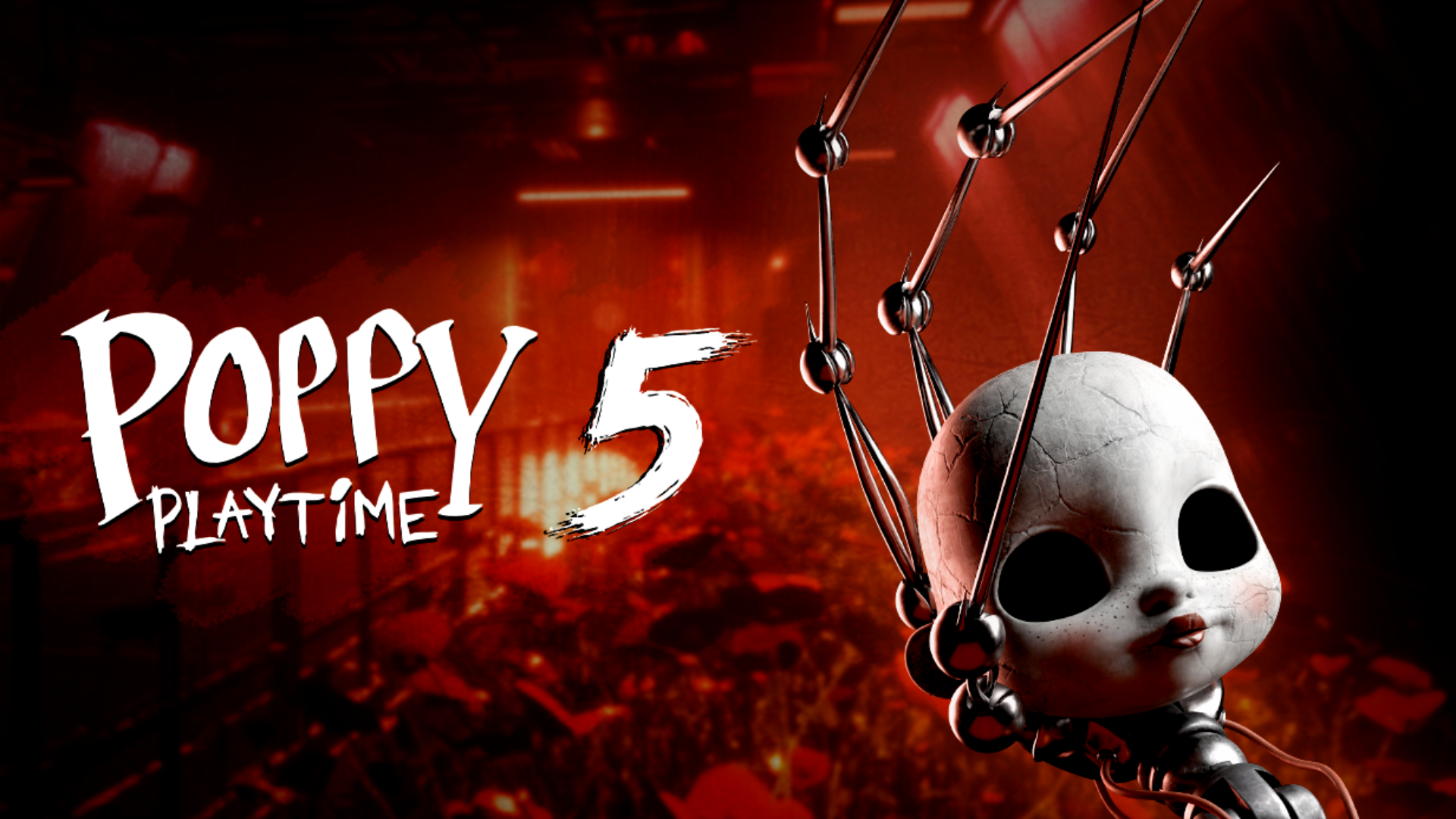
Developer: Mob Entertainment
Publisher: Mob Entertainment
Release Date: 2026
Platforms: PC
Reviewed On: PC
Price: $19.00 (USD), (£)16.75 UK
Ever since the first chapter, Poppy Playtime has fascinated me because it blends childhood nostalgia with genuinely unsettling horror in a way few indie games manage to pull off. With Chapter 5, Broken Things, the series feels darker and more desperate than ever, pushing players deeper into the nightmare of Playtime Co. while finally bringing the story closer to The Prototype itself.
Overview
For a series built on mystery, Poppy Playtime Chapter 5: Broken Things arrives carrying enormous expectations. After years of lore teases, horrifying experiments, and unanswered questions surrounding Playtime Co., this latest chapter attempts to push the franchise into darker and more emotionally driven territory. The result is an ambitious horror experience that succeeds most when it focuses on atmosphere and storytelling, even if uneven pacing and familiar gameplay issues occasionally hold it back.
From the opening moments, Broken Things feels different from previous chapters. The factory no longer resembles a twisted toy store filled with dangerous mascots. Instead, it feels lifeless, decayed, and emotionally exhausted. Hallways flicker with failing lights, machinery groans in the distance, and abandoned play areas look more tragic than whimsical. Mob Entertainment leans heavily into psychological horror this time around, creating a constant sense of dread rather than relying purely on loud jump scares.
That slower, more oppressive tone works in the game’s favor. Broken Things spends far more time building tension than previous entries, allowing environments and sound design to carry entire sections without needing constant monster encounters. Even when players are simply exploring empty corridors, there is an uncomfortable feeling that something terrible is waiting nearby.
Narratively, this chapter delivers some of the franchise’s biggest reveals while exploring themes of manipulation, trauma, and identity more directly than before. Several moments attempt to humanize the monsters trapped inside Playtime Co., reframing them less as simple horror antagonists and more as victims of horrific experimentation. While the story occasionally falls back on cryptic dialogue and intentionally vague exposition, the emotional weight behind many scenes helps elevate the writing beyond what fans may expect from a mascot-horror game.
Gameplay & Mechanics

The core gameplay loop remains familiar. Players explore the factory, solve environmental puzzles, uncover hidden lore, and survive encounters with increasingly disturbing enemies. The GrabPack mechanics return once again, with several new puzzle variations that feel more creative and integrated into the environment compared to earlier chapters.
Some puzzle sections genuinely stand out. The game does a solid job making players interact with unstable machinery, broken electrical systems, and dangerous factory equipment in ways that feel immersive rather than repetitive. Several sequences successfully combine puzzle-solving with horror tension, forcing players to think quickly as danger closes in.
However, the gameplay experience becomes significantly more frustrating when using a controller.
Movement frequently feels awkward during high-pressure sequences, especially during chase scenes where precision and reaction time matter most. Sprinting in particular became one of the biggest frustrations throughout the experience. Certain encounters demand fast movement and quick directional changes, but the sprint mechanics often feel inconsistent or overly sensitive on the controller. Instead of creating tension naturally, some sections became frustrating simply because movement never felt fully reliable. I found myself playing sprint chases multiple times due to my controller not letting me run fast enough.
The game’s length amplifies that frustration. Broken Things contains several slower exploration and puzzle-heavy sections that can begin to drag, especially once the story’s major twists are already known beforehand. While the atmosphere remains strong throughout, the pacing occasionally struggles to maintain momentum during extended gameplay sessions.
There are still several genuinely effective horror moments scattered throughout the chapter. Enemy encounters feel more cinematic this time around, and Mob Entertainment deserves credit for relying less on cheap jump scares and more on psychological tension. Several late-game sequences stand out as some of the strongest horror set pieces the franchise has delivered so far.
Story & Atmosphere

Where Broken Things truly succeeds is in atmosphere.
The factory no longer feels like a creepy toy store designed purely for horror spectacle. Instead, it feels emotionally broken. Every room tells part of a larger story through environmental details, damaged toys, abandoned workspaces, and decaying machinery. The world itself constantly reinforces the feeling that Playtime Co. was built on suffering long before everything collapsed.
Lighting and sound design carry much of the horror experience. Flickering emergency lights, distant metallic noises, and distorted toy voices create a constant feeling of discomfort, even during moments where nothing is actively chasing the player. The game understands that tension is often more effective than nonstop scares.
Narratively, Chapter 5 pushes deeper into themes of manipulation, trauma, and identity. Several revelations attempt to humanize the creatures inside the factory, reframing them less as monsters and more as victims trapped inside horrifying circumstances. The emotional angle gives the chapter more depth than previous entries, even if some dialogue still leans heavily into cryptic lore exposition.
Players heavily invested in the series mythology will likely appreciate how much story progression occurs here. At the same time, players already familiar with spoilers may find some slower narrative sections less impactful once the mystery factor disappears.
Enemy Design & Horror Presentation

The creature design remains one of the franchise’s strongest qualities, and Broken Things introduces some of the series’ most memorable and unsettling enemies yet.
One standout is Luna Lovebraids, whose design perfectly captures the chapter’s mix of childlike innocence and psychological horror. Rather than relying purely on grotesque visuals, Luna feels disturbing because of her presence and personality. Her movements, dialogue, and eerie calmness create tension long before the game fully reveals what she is capable of.
A huge part of why the character works so well comes down to the vocal performance. Luna Lovebraids is voiced by the same actress who played Daniela Dimitrescu in Resident Evil Village, and fans familiar with her work will likely recognize that same blend of charm, menace, and theatrical energy immediately. Her performance gives Luna a strangely charismatic quality that makes every interaction memorable.
As someone who genuinely adores her work, it was hard not to immediately gravitate toward Luna whenever she appeared on screen. The performance adds personality to the horror in a way that helps the character stand out among the franchise’s growing lineup of monsters. Even during tense sequences, there is an unsettling elegance to the delivery that makes Luna feel more psychologically intimidating than many of the game’s louder threats.
Mob Entertainment also deserves credit for showing restraint with the horror. Instead of constantly throwing enemies at the player, the game builds tension through atmosphere, sound design, and anticipation. Some of the chapter’s most effective moments happen before players even fully see the threat, allowing imagination and dread to do much of the work.
That slower approach ultimately helps the horror feel more mature and memorable than previous entries, even if some chase sequences become frustrating mechanically due to awkward sprint controls on the controller.
Final Score
Poppy Playtime Chapter 5: Broken Things is arguably the franchise’s most ambitious chapter yet. Mob Entertainment successfully pushes the series toward darker psychological horror while delivering stronger environmental storytelling and more emotional depth than previous installments.
At the same time, the experience is not without frustrations. Slower pacing, technical issues, and awkward controller mechanics—particularly sprinting during chase sequences—can make the game difficult to fully enjoy during extended sessions. For players already familiar with the game’s biggest twists and spoilers, some sections may feel more exhausting than suspenseful.
Still, when Broken Things focuses on atmosphere and horror presentation, it absolutely succeeds. The chapter contains some of the series’ strongest visuals, most unsettling environments, and emotionally charged moments to date.
Despite its flaws, Broken Things proves that Poppy Playtime continues evolving beyond simple mascot horror into something more ambitious and narrative driven. It delivers the franchise’s strongest atmosphere and most emotionally ambitious storytelling yet, even if frustrating controller mechanics and uneven pacing occasionally hold it back from greatness.
Boss Rush Network is proud to give Poppy Playtime Chapter 5: Broken Things four out of five stars.
Featured Image: Mob Entertainment

Leave a Reply