On Thursday, the solo developer behind The Mortuary Assistant, Brian Clarke, announced that his current project, Paranormal Activity: Threshold, has officially been cancelled. This came as a shock to the gaming community, especially the tight-knit fans that adore indie horror. As someone who personally played this demo and interviewed Brian only months before this announcement, I felt mixed emotion upon reading the news.
In a recent statement, Brian explains, “It became clear that the game needed more time to ensure it was the best it could possibly be…Sadly, Paramount did not agree to extend development.” Paranormal Activity is a movie franchise that is owned by Paramount, and they had an agreement with Brian and publisher DreadXP to produce an iteration of the series and place it in the hands of gamers. As a horror video game developer veteran, Brian Clarke was a clear candidate to take on this project.
See the full statement below:
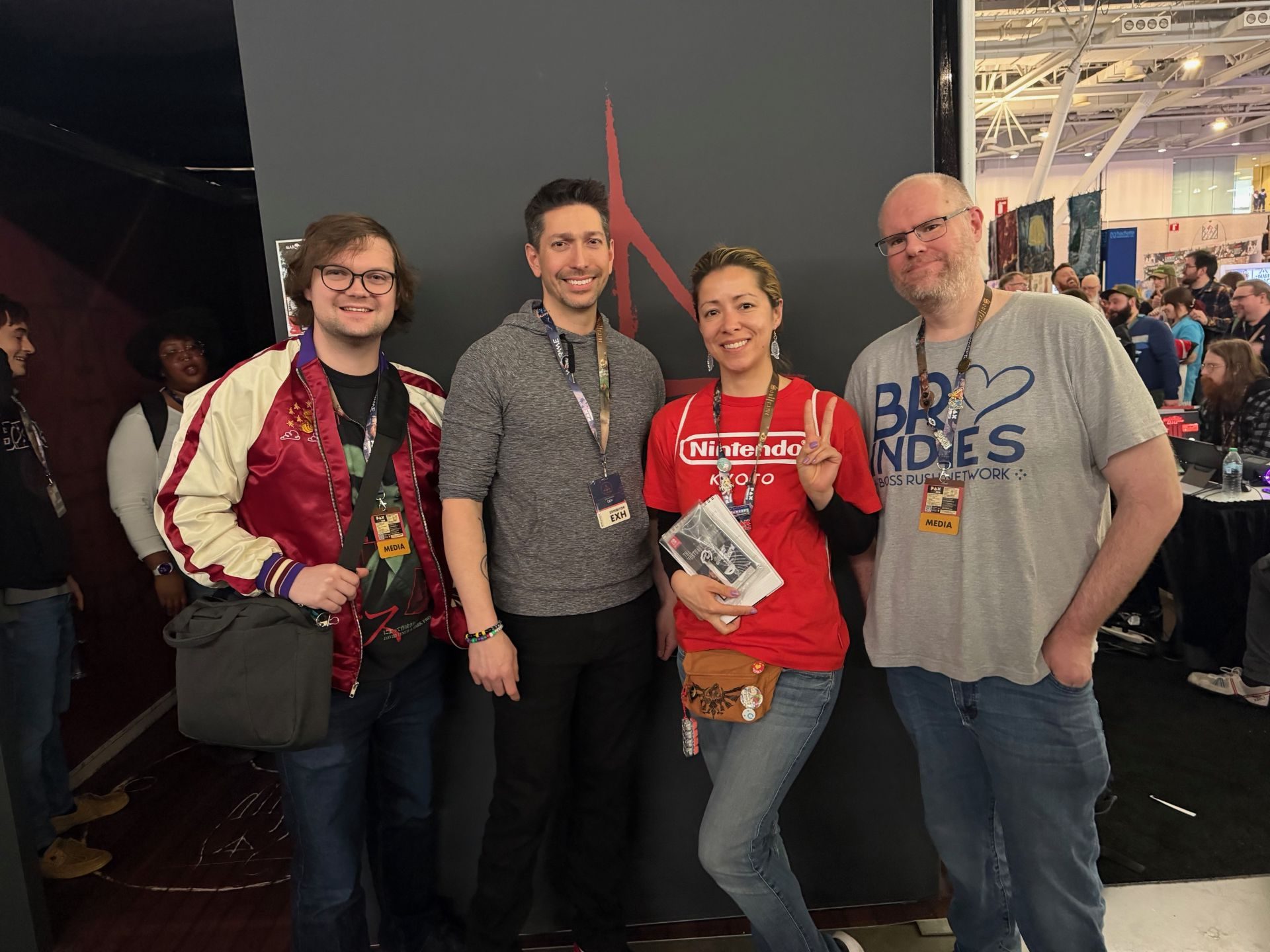
I played the demo for Paranormal Activity: Threshold and met Brian at PAX East 2026. I could see the DNA and evolution of Clarke’s prior projects in Threshold. The Mortuary Assistant’s premise surrounds demonic possession, and Paranormal Activity: Threshold also deals with demons and demonology. The Paranormal Activity: Threshold gameplay involved exploring a decapitated house, finding clues, manipulating occult items, and playing though recordings that took place in the past when a now deceased couple was still alive. You alternate between past and presen, all while a demonic presence grows stronger and stalks you. After solving a few puzzles and suffering a few scares, a mysterious portal opens, and the demo concludes. My full impressions of this demo and more are covered HERE, but in summary, the demo was a solid and promising start.
In speaking with Brian at PAX East, I could just feel the passion about his biggest project to date. He provided the backstory of working with Paramount, who at the time, granted him a generous level of flexibility, which allowed Brian to think freely and solidify some lore for the franchise. Yes, Brian was able to drum up and work with lore! With this major but exciting responsibility, Brian had told me that he wanted to lean in as much as possible on what Paranormal Activity is. There are seven movies, each with their own twists and focuses, and Brian wanted to include a little bit of everything and capture the essence of Paranormal Activity.
However, since then, it appears that more polished was needed, and this required more time. While we have no details about the terms of agreement or how the discussion went down, it is clear that Paramount had a deadline, and they refused to extend it, even for the sake of quality. And just like that, everything came to a screeching halt.
Since this announcement, a subset of the online community flooded in support of Brian and DreadXP. While we cannot reverse Paranormal Activity: Threshhold‘s fate, the reactions are proof that the players value quality. The public statement made clear that the time extension was to ensure polish, something that large companies often fail to acknowledge. It seems easier for them to push out products for profits’ sake and maybe toss in a patch in case things go really wrong.
As an avid gamer, it’s quite obvious the growing trend of poorly made games releasing too early. Then, patches are uploaded as an afterthought. Cyberpunk 2077 is the poster child for this, although it has made quite the comeback and has earned back its favor from fans. But not all games can be like Cyberpunk 2077. In fact, many people love to refer to Shigeru Miyamoto’s quote; however, research shows that the exact wording has been altered over the years. It is likely that he said, “A delayed game is eventually good, a bad game is bad forever“. Let’s look at some other examples:
Battlefield 4 was released back in 2013, and it was believe that EA, a large company, pushed the release in order to compete with Call of Duty: Ghosts. In a desperate attempt to secure market share in this genre, Battlefield 4 dropped with glitches and bugs that impacted the experience significantly. Prior to this, Electronic Arts had didn’t have the best reputation. As they grew in size, they acquired many studios for their IP and their management led to a more “assembly line” mentality. Some within the industry used to even refer to them as the “Evil Empire”; however, EA has more recently been working to improve this reputation. Battlefield 4 shows how a rush job to compete with another game in the same genre won’t guarantee success.
Pokémon Scarlet and Violet, developed by by Game Freak and published by Nintendo, is another example. The titles were rushed to make the holiday release schedule in November 2022. The games were widely criticized for poor optimization and significant glitches that were difficult to ignore. These were things that had to be addressed after the fact because of the pressure to release a game in time. This example particular is impactful because it’s a game in a franchise so large that perhaps executives could care less about quality upon release due to near-guaranteed success.
There is a laundry list of more games that were rushed to make a deadline. Often times, it’s for the sake of making money. While Clarke advocated for quality, it was up to Paramount as the owner of the Paranormal Activity IP as to whether they’d grant an extension.
According to Net Worth Spot, Paramount Picture’s net worth sits around $10 billion dollars. While there is no firm number about how many franchises they own, there are plenty of titles we all can recognize such as: Mission: Impossible, Transformers, A Quiet Place, Spongebob Squarepants, Teenage Mutant Ninja Turtles, Yellowstone, and NCIS. While produced by Blumhouse Productions, Paranormal Activity is distributed and owned by Paramount, so ultimately, they were the ones that essentially gave Brian two options: release the game on time as agreed upon or cancel the project. But it didn’t have to be that way.
Where is that third option to extend development? As mentioned at the top of this article, we do not know the fine details of this contract, so I can only speak topically about this, but there isn’t any clear reason why the third option shouldn’t have been considered. Paranormal Activity is far from Paramount Picture’s highest grossing IP. Mission: Impossible has generated over 3.5 billion dollars in the global box office whereas the Paranormal Activity movies did about one billion.
Could it be because they wanted to compete with other horror games? Perhaps, but there aren’t many horror video games in the immediate pipeline. Resident Evil Requiem and Reanimal already released. Silent Hill Townfall has a vague 2026 date, and Grave Seasons (yes, it’s part farming sim, but it’s still horrifically a great time!) will be in August. There’s a lack of competition, and history shows that horror games do not need to release on or around Halloween to be successful — Resident Evil Requiem released in February and have become Capcom’s fastest selling title in the series. Oh, and Brian’s own Mortuary Assistant that became wildly beloved in the gaming community? That released in August.

Therefore, when stepping back and considering various factors, it is difficult to justify the lack of flexibility on Paramount’s part. I fail to see the need to catch up to a competitor or a timeframe that would otherwise prove unsuccessful if unmet. There is, essentially, a lack of stakes, other than instant gratification on Paramount’s part. It is possible that Paramount is ignorant to the fact they partnered with one of the best developers for this project. DreadXP specializes in the horror genre, and Clarke has experience under his belt. Moreover, Brian went above and beyond to understand Paranormal Activity lore (or lack thereof) and went out of his way to generate lore that fans can latch onto.
Brian Clarke also recently streamed on Friday, May 8th, on Twitch to play Half-Life and chat with his fans. During these discussions, he expressed his desire step back and “disappear” for a while after the cancellation of Paranormal Activity: Threshold, in order to destress, and then return to making smaller things he’s passionate about. He reflected on the creative process and struggling with writer’s block, especially when under the pressure of a deadline from another company. In a sense, that feeling altered the value structure of what he was building. Brian is a developer that has left the AAA space and wants to maintain his value alignment, and like a proper class act, he did not say anything negative regarding Paramount, or anything negative at all. Brian hopes for a return to form and not go through the creative process just “to make the next thing”. During the entire stream, Brian was nothing but positive and upbeat. Once again, an outstanding show of character and integrity.
In the end, this article’s intent is to act as a reflective piece on video game development. The industry has ballooned in good and bad ways. Like other forms of art, rush jobs rarely product quality content, and while that isn’t a hot take, the challenge is convincing large companies to be the better person. Large corporations look at the bottom line, as it is fair since they are running a business; however, focusing on the bottom-line results in a shift in attention away from quality. They think, if people still watch/consume/purchase mediocrity, why spend more time and expenses to make this show/move/ game better?
This is a call to loudly support and stand by independent developers and publishers like Brian Clarke and Dread XP. Let’s this decision cast light on the true heroes in the gaming and even entertainment industry.
What are your thoughts on the cancellation of Paranormal Activity: Threshold? Should Paramount have granted Clarke time to make it the best it can be? How do you feel represents the current state of the video game industry? Please share your thoughts with us on our Boss Rush Facebook Group or our Boss Rush Discord.
Boss Rush Podcast – A Podcast about Video Games

The Boss Rush Podcast – A Podcast about Video Games – is the flagship show of the Boss Rush Network and Boss Rush Media. Each week, hosts Corey Dirrig and LeRon Dawkins are joined by friends, fellow creators, indie developers, and industry veterans to discuss the latest in the world of video games, including news, rumors, new releases, and what they’ve been playing. They also answer listener questions, debate important industry topics and Boss Rush Banter discussion points, and feature a rotating weekly segment. New episodes post every Monday.
Follow and Connect with Boss Rush Podcast on Social Media
X/Twitter + Bluesky + Instagram + Threads + YouTube
Listen to Boss Rush Podcast on Podcast Services
Apple Podcasts + Spotify + Goodpods + Amazon + More Links
Thank you for supporting Boss Rush Podcast and the Boss Rush Network
Thank you for watching or listening to The Boss Rush Podcast. If you’re watching this episode on YouTube, hit the Subscribe button, Like the video, and hit the notification bell so you don’t miss an episode! If you’re listening on Apple Podcasts or Spotify, consider leaving us a rating and a review as it helps with discoverability and growth. Support Boss Rush on Patreon for exclusive content, early access and audio versions of shows, become a Patreon Producer, and more. Visit our website for all of our content including reviews, news, daily Boss Rush Banter discussion topics, listicles, features, and more. However you support us, it means so much to us. Thank you for your continued support of the Boss Rush Podcast and the Boss Rush Network.
News Sources: CBR, Known Your Meme , Tweak Town, Wikipedia, Net Worth Spot, The Numbers, The Numbers 2,

Leave a Reply