Title: Backrooms
Director: Kane Parsons
Studio: A24
Release Date: May 29th, 2026
SYNOPSIS
The concept of Backrooms has a layered history. Unless you’re an avid fan that has followed this phenomenon for years, it’s hard to properly identify what Backrooms actually is. The concept first began as creepypasta: an image that circulated on various message boards from 2011 to 2018. Then, it appeared on 4chan’s paranormal board requesting images that felt…off. Where did this image come from exactly? Turns out, the location was only a recent discovery, and it was of a former furniture store in Wisconsin.
Jump forward to 2022 and Kane Parsons, yes, the same individual who directed the 2026 film, Backrooms, posted a found-footage style short horror adaptation on YouTube. The short films expanded into a series and exploded in popularity. And lastly, video game adaptations were made and played by streamers such as Markiplier.
The bit of history can be appreciated, but not required, when viewing the 2026 full-featured film; however, it provides a level of context that this psychological horror was born from a single photo.
Backrooms released May 29th, 2026 in the United States to mostly positive news. It surpassed financial expectations, making $81.5 million USD during opening weekend and securing the number one spot. Director Parsons also became the youngest director with a movie that debuted at number one.
The movie takes place in the 1990s and primarily focuses on a man named Clark who owns a struggling furniture store. While he is a business owner, it becomes clear that this was not his dream, and he’s experienced losses that has turned him to drinking. He regularly sees therapist, Mary Kline, who attempts to cope with her past traumas.
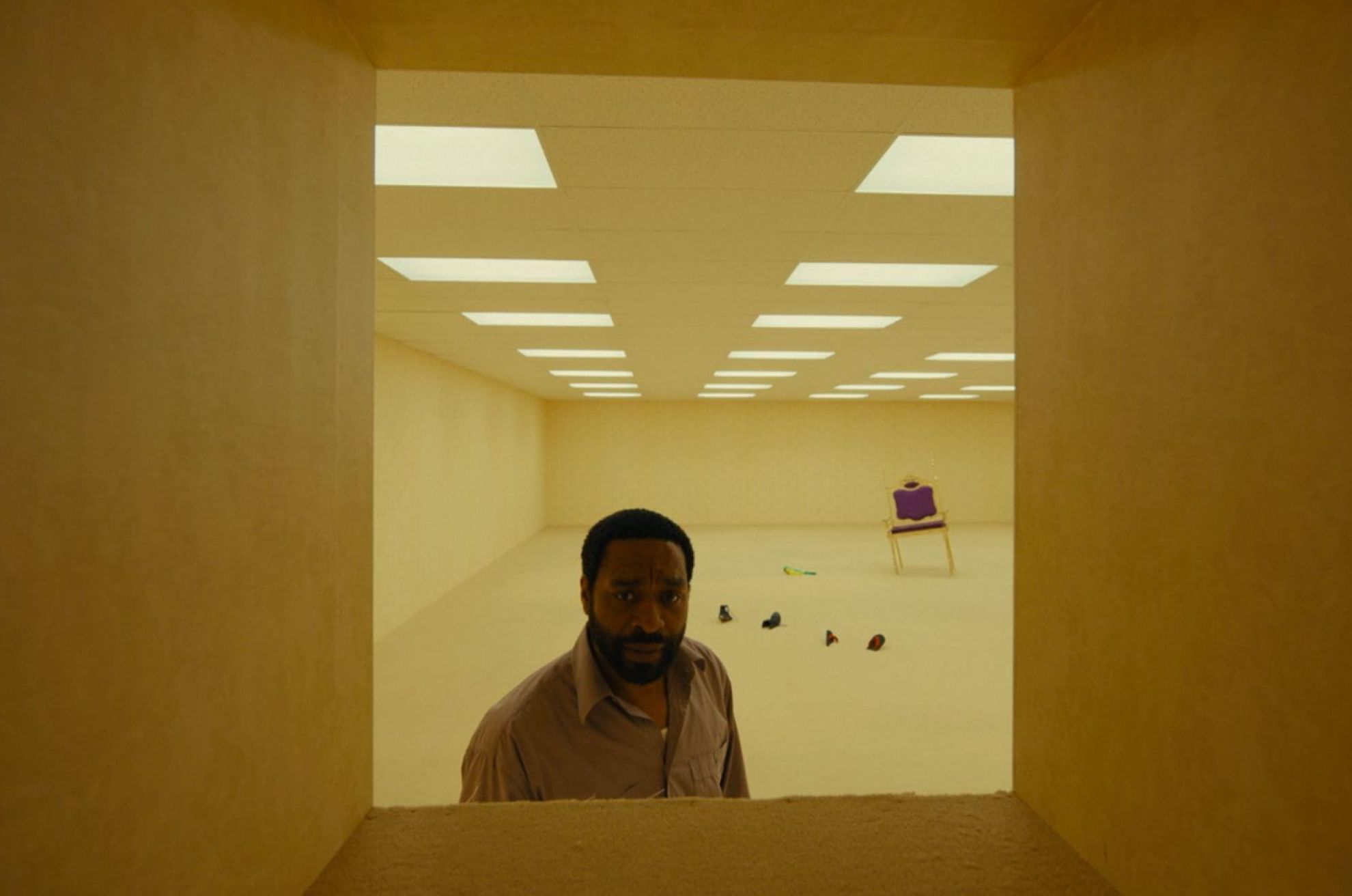
What seemed like another day became extraordinary when Clark hired an electrician to troubleshoot his large electricity bills. The flights flicker on and off in a bizarre manner. Upon further exploration, they both notice an odd switch in the distribution board. Later on, Clark encounters these irregularities again, but this time, he observes light seeping between a crack in the wall. When he reaches out to examine the crack, Clark passes through the wall and enters a realm of passageways and halls that have a similar aesthetic as his store…and yet, the placement of furniture and other items that don’t belong (like a stop sign) tells us that something is very wrong.

After exploring the mysterious phenomenon, Clark shares his discovery with Mary, only to be met with skepticism. The plot picks up speed as Clark asks his employees, Kat and Bobby, to help him explore and research the area further. The trio explore even deeper into “The Backrooms”, only to encounter a monstrosity that you can’t quite make out.
Sometime later, Mary looks for Clark. The furniture store is not open for business, unlocked, and unattended. This leads to her discovery of these Backrooms, and who she encounters and the horrific sequence of events that follow end up in a in a bizarre twist that leaves your mind reeling long after the credits roll.

ANALYSIS
Sound and Art Direction
The art direction in the cinematography and sound design is the meat and potatoes of Backrooms. It provided the movie with a solid foundation of which to build horror from, and I believe Parsons let the theme of “something’s just not quite right” do all the footwork. One could argue that the use of restraint really enhanced the sense of dread: each item, from the plain yellow walls to stacks of furniture, can be considered normal in any other situation; however, when assembled in a way that is slightly off such as the angle or depth, it can trigger a sense of discomfort in the human brain.
Backrooms was shot with deliberate angles, focusing on the vast, liminal space. It also turns on a dime and creates numerous claustrophobic scenes that draws you into the tight space along with the character. The sound design complimented the theme and tone of the movie. It came off intentionally jagged and disjointed, like the world is stitched together from mismatched audio scraps that never quite belong. It further enhances that sense of wrongness, and at times, mimics a heartbeat as tensions rise.

Writing and Story
You may have heard many people describe the pacing of Backrooms as a slow burn, and I would agree. It starts with some found footage and character building. We spend a lot of time with Clark in the first three-quarters of the movie before it shifts to the secondary character, Mary. Although the pace is slower in the beginning, it feels intentional, and the “slightly off” feeling is consistent throughout. Clarks interaction with his therapist Mary feels uncomfortable, and Clark’s mundane post-divorce life is the perfect catalyst to launch viewers into a setting that is not completely defined and sparks our curiosity.
The dialogue varies throughout the film. In fact, there is little to no dialogue in many parts where Clark and/or Mary are exploring The Backrooms (aside from key, pivotal scenes). I appreciated this, as this pulls you, the viewer, into the discovery process with the characters. There is also a strong focus on their facial expressions and quickened breaths.
Essentially, Backrooms shows, not tells.
The way this movie is written serves more as a guide. Yes, this is Clark and Mary’s story, but the liminal, off-putting settling feels like it could haunt any one of us. The twist near the end, which I’ll avoid for spoiler’s sake, gives just enough explanation for you to drum up your own theories on how The Backrooms exists and functions. I could tell the story was effective because after the movie, everyone was passionately debating what the ending meant. Backrooms expanded on the original concept without writing themselves into a ridiculous corner.
The characters were also well drawn up. Clark is an everyday man who struggles with drinking, divorce, and a broken dream. He is relatable, even if we don’t have all his specific issues. Mary is a bit more of an enigma; however, despite her outwardly sterile behavior as a therapist, we have brief moments of her past dealing with a mentally ill mother and losing her childhood home which…seemed to carry some heavy emotion. So, while both protagonists may be different in personality, they both have deep seeded issues that present as a common denominator as they attempt to survive the unsettling and endless maze. Bobby and Kat, while minor characters, were realistically drawn out and well-acted.
FINAL SCORE
Backrooms is an impressive expansion from its humble beginnings in online forums as a singular photo. All it took was the creative mind in the form of a young Kane Parsons to flesh out the lore and provide an experience that can leave anyone unsettled.
The primary audience is the loyal Gen Z fanbase that has followed Backrooms, including the YouTube shorts. However, you do not need to be an existing fan or expert on lore to enjoy the film. The idea is twisting a liminal space, warping something–a memory or person–we vaguely remember, and placing the protagonists through a maze-like experience somehow illicit a sense on discomfort, unease, and even terror. The “monster” presented in Backrooms was also done with impressive restraint until the end, and its physical manifestation helps viewers theorize the purpose of this space.
Backrooms is, honestly, is a film of high-quality. Yes, the budget was kept simple, and there were no blockbuster level stars; however, this only shows that good writing, sound, and cinematography is the core of an enjoyable and rich experience. As a form of art, the movie leaves enough to interpretation, and I think Backrooms did an impressive job.
My only caveat is one I issue in any review. The movie may not be for everyone. For those that require fast pacing or more direct in-your-face horror may not have the patience to appreciate the slow burn and sense of terror Backrooms provides, and that’s okay. If you are not one of those people, then I highly recommend this movie with zero hesitation.
Sources: People, Wikipedia, IMDB
Featured Image Source: IMDB



Leave a Reply