
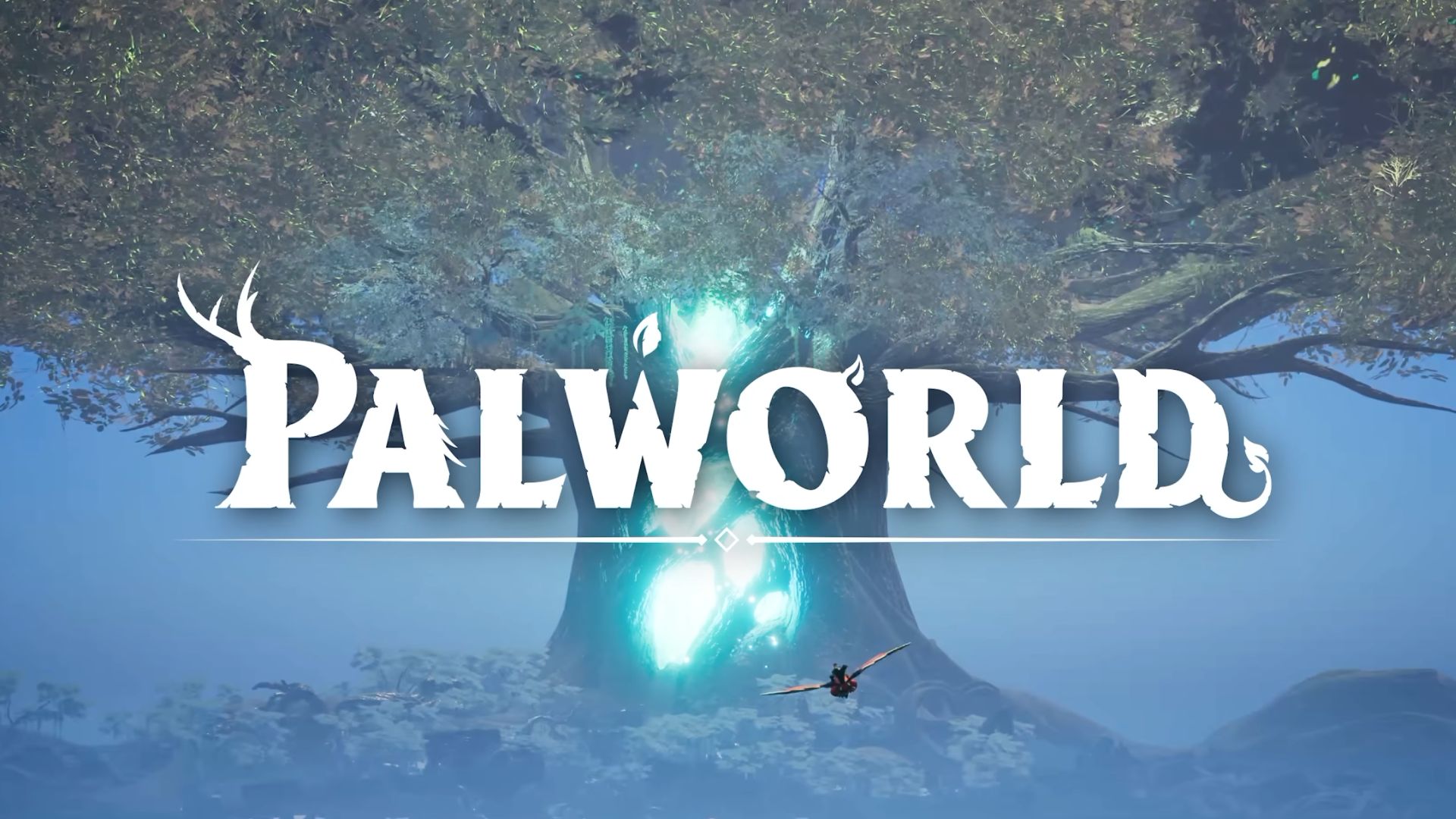
GAME REVIEW: Palworld Version 1.0
Developer: Pocketpair
Publisher: Pocketpair
Release Date: July 10
Reviewed On: PC
Price: $29.99
I have been playing Palworld since it first released in early access and accumulated up to 180 hours of gameplay. It’s an open-world survival game that focuses on creature collection. I liken it to ARK: Survival as they share many gameplay aspects with each other.
I was counting down the days for the release of Version 1.0. I expected a lot, but I wasn’t expecting as much as I received. The full release of the game blew me away, and I’m now at 330 hours of the game since.
Story
I was always a bit intrigued by Palworld’s story. The journals left behind spoke of a world in ruins, and I remember a lot of theories going around the experimentation of Pals and their connection to the human race. I was curious where the developers would go with the story, and I wasn’t disappointed.

A large part of Palworld’s storyline is the effect humans have on the natural environment, particularly on Pals. With 1.0’s expansion and completion of the main storyline, this theme was heavily emphasized in a great way. The main storyline pushes players to see how humans and their actions have led to the destitution of society. Greed and destruction runs rampant in the world with very little actual sense of unity.
The disparity of information given about the final boss in the main storyline and the journal entries surrounding them only emphasizes this message. What could have been a world of unity is destroyed because of human fear and greed. It suddenly makes sense why the key spheres given by the towers are named after sins.
I was pleasantly surprised with the storyline of the game despite how little of an actual part it plays in the game. The story is very much a background part of the game. It’s not the main aspect but it certainly helps highlight the game and set themes the developers want players to see in the world.
Graphics and Accessibility
Palworld really found its style and stuck with it. It’s a bit simplistic in terms of lining or detailing but it is vibrant with color and a variety of shapes and silhouettes. Their style was actually perfect for their graphics. The graphics are bright with colors with a far enough render distance to entice exploration. I was quite surprised at the difference graphically between their latest early access and the 1.0 release. It took a big leap upwards in quality.

I also like how the game tries to help with some accessibility options. Some of it can be purely for player comfort but others can help players with less bodily freedom. For example, lucky Pals are a special Pal that appears in the world with a random chance. Their appearance is signalled by both a visual cue of a pillar of light and sparkles on an enlarged Pal as well as an audio cue of sparkling noises. It’s a great way for players to get a more rare Pal appearance that doesn’t wholly focus on one sense or the other.
Another accessibility option I enjoyed was the adjustment of the UI (User Interface). Parts of the UI can be hidden away to avoid distractions and even the text size can be changed (smaller or larger) to help the visually impaired. Furthermore, as someone with motion sickness, I am always a little hesitant with games utilizing 3D models and worlds as they are more prone to making me get sick. However, Palworld’s settings both allowed me to turn off the motion blur that often incites motion sickness as well as the camera shake. It made my experience with the game a lot better compared to other 3D world games.
I also liked the fact that the aiming cursor of the game could be color-changed and had an adjustable opacity for the cursor’s appearance in-game. This adjustment really helped me as I often lose sight of the cursor in the vibrant world of the game or simply can’t adjust to a white aim cursor. It’s why I struggle with a lot of FPS (first-person shooter) games as the white aim cursor often tends to disappear in my vision.
The biggest accessibility function of the game is the Custom World Settings. Players can adjust the difficulty of the game, not simply of combat, but capturing, breeding, base building, and so much more. A player’s experience in the game can be highly customized to be as easy or as difficult as they like. For example, I kept default settings for the main part of the game which limited the number of bases I could build and had normal drop and encounter rates. However, after completing the main storyline, I chose to take out structure deteriorating and egg incubation times to make it easier for me, as well as increasing the number of pals in a base.
There’s a setting that makes players drop the Pals in their team whenever they die, and I’ve even seen a tip on a loading screen that dropped Pals, if they can’t be found at the death location, were likely taken by a merchant and have to be purchased. There’s a hardcore mode of one life, one save. There’s a randomized Pal world that changes the locations of pals and ignores the level difficulty each area has in the vanilla settings.
These aren’t drastic or revolutionary adjustments in terms of accessibility but they did greatly factor in my own enjoyment of the game. I’ve had to give up on other big titles or 3D games simply because these settings weren’t in place for me to adjust in order to enjoy the game. It’s little things that go a long way in my opinion.
Gameplay
As I’ve noted before, the gameplay of Palworld is very similar to ARK: Survival. Players are dropped onto a map that has multiple islands and must survive on them. Players have health and hunger to manage but are free to traverse wherever they want. The only thing holding them back is how strong the creatures in the area are and if they can survive despite that.
Exploration
Palworld, to me, was largely a game about exploration and creature collection, though that played a large part in exploration. The easiest way to get EXP (experience points) in the game is to explore and find new areas where players find new pals to capture that then further increase the EXP gain.

There are little colors and lights that guide players to continue exploring such as random treasure chests that rank from regular chests to red, glowing chests. There are effigies placed around the world in nooks and corners that increase a player’s stats and gains in the world. There are dungeons that respawn with different pals and resources inside scattered across the map that entice players with guiding blue lights at a distance. Large towers can be seen at a distance with great loot that cause players to say, “Just one more.” The game is heavily influencing players to continue exploring and rewarding them for doing so.
I remember the first time I played the game and found the monuments of the Legendary Pals in the game. I was left astounded and curious if they were future Pals I could add to my roster. I remember first stepping into the World Tree, unknowing of what was to come and seeing a huge map in what I thought was the finale. I loved exploring the game, finding new pals, and opening different chests. The game wants players to explore its world.
How Pals Work
The creatures in Palworld are called Pals. They fall under nine different elements: fire, water, electric, earth, grass, ice, dragon, dark, and neutral. Players always have access to the type-advantage chart of these elements when going into the details of the Pal by selecting the Pal’s element.
Each Pal has their own Pal Skill which can range from helping in combat, making exploration easier, or even making things better at the base. It’s always a good idea to read each Pal Skill as they come with their own niches that make them suited for different things.
Alongside Pal Skills are Passive Skills. These Passives come from a pool which ranges from World Tree Skills to the Common Skills. World Tree Skills tend to have multiple effects (one positive and one negative) while also ensuring resources at the World Tree don’t disappear. Diamond Skills fall directly below and are just as strong with less deficits.
For example, the World Tree Skill Double-Edged Holy Sword increases Attack by 50% but also lowers Defense by 30%. In comparison, the Diamond Skill Demon God increases Attack by 30% and Defense by 5%. Not all Passive Skills have a positive effect. Some skills only lower a Pal’s stat or make them less suitable as a base Pal. Passives can make or break a Pal’s usefulness.
Pals also have IVs (Individual Values) for HP (Health Points), Attack, and Defense ranging from 0 to 100. It’s the potential of a Pal’s stat points. A Pal that has an Attack IV of 80 will have a lower Attack stat compared to a Pal with an Attack IV of 100. This isn’t super important in the early parts of the game, but as players level up and expand their roster, IVs begin to play a critical role in selecting certain Pals.
Base Building
Now Pals play more of a role in Palworld than simply being on an attack roster for the player. Players can build bases that can farm materials, grow food, make weapons, and so much more. Pals are the ones who man the base and make it function without the player intruding too much.
Each Pal comes with different Work Suitabilities that also come at different levels ranging from Level One to Level Ten as the highest level. This means that certain pals are better suited for watering crops or moving a mill that crushes up materials while others are better at mining for materials or crafting items in the game. There are twelve different Work Suitabilities: watering, kindling, planting, harvesting, generating electricity, handiwork, lumbering, mining, medicine production, cooling, transporting, and ranching.

Each one is necessary for running different aspects of the base. Some might be suitabilities that players never really touch since they don’t focus on that part of the game such as ranching or medicine production but others are particularly vital to success such as mining and handiwork.
Although the area in which bases can be built on is smaller than I would like, there is very little restriction of height in bases, so space is made upwards rather than outwards. Bases are the production hub, the place where players will always come back to and manage the pals they catch.
Pals can also be bred on bases through the breeding ranch. Breeding comes with its own elements of managing Passives, IVs, and different Pal combinations resulting in different Pal eggs. There’s even now a Mutation, an effect that randomly occurs while breeding that creates unique pals with particularly good Passives and IVs. It’s the bread and butter of the end-game gameplay for Palworld. It’s not overly complicated which makes it easy to learn but comes with a variety of Pal pairings which makes a first player’s experience exciting and a high-level player’s experience well-acquainted with breeding guides.

For those especially seeking a more relaxing experience of the game, there is even fishing in the game. Although it is easily manageable in the early parts of the game, it racks up in difficulty the further the player advances through Palworld. New gear, new bait, and even new pals are necessary to succeed in this minigame. It’s actually one of the best ways in the game to get good Passives on Pals and schematics for better gear.
For the gameplay, I never felt bored. There was always something I had to do, even when I’m at the end-game and simply min-maxing my pals and base. I need to catch this Pal. I need to make this material. I need to craft this item. I should try to find this thing. I’m never simply waiting in the game. There’s always something to do, something I want to conquer, something I want to see. Palworld has a great multitude of systems and gameplays that entertain their players even in the downtime of the game.
Final Score
Palworld falls under the category of an open-world survival and creature collecting game. In both of these categories, I would rate Palworld as five out of five stars. The survival of the player becomes rather manageable a little further down the game, but it becomes the survival of Pals on the base and surviving against aggressive high-level Pals in new areas. There are many different Pals in the game with some even coming in different elemental variants for players to see and capture. Many of the entries about the Pals are quite entertaining and add a bit of flavor text behind the personality and nature of Pals.
As a video game, I would still rate Palworld at five out of five stars. There isn’t really an aspect that I would call a lull in the game. The closest would be the main storyline that tends to fall on the wayside but even that has been polished and cleaned up in the 1.0 release. For anyone truly interested in that part of the game, it’s there and well-done. There’s music, cues, visual improvements, and a sense of mobility that is expected in a video game. It has the very essence that I think makes anything called a game – it entices people to play more.
Overall, Palworld stands at five stars out of five. It’s a game that I can see is clearly developed with a lot of care and attention. I enjoy how it really hones into what it’s good at and cleverly entices players to keep seeking more from the game whether that be from collecting Pals, exploring, or making that perfect base and workers. It’s a far cry from what the beginning of Palworld looked like, and I can even clearly see the differences and improvements made from the latest stage of early access compared to the full release. It’s a game that feels fun to players who want to explore and build. It fits its category well and found a way to build its niche out of the many other titles that fall in a similar genre.
What are your thoughts about Palworld? Have you tried its 1.0 release and what things do you wish to see in further updates? Share your thoughts with us in the comments below or in our Boss Rush Discord!
Featured Image Source: Pocketpair
Boss Rush Podcast – A Podcast about Video Games

The Boss Rush Podcast is the flagship show of Boss Rush Media and The Boss Rush Network. Each week, hosts Corey Dirrig, LeRon Dawkins, Stephanie Klimov, and Pat Klein, as well as their friends, fellow creators, developers, and industry veterans, share their gaming experiences. They discuss what they’ve been playing, explore rotating segments, debate the Boss Rush Banter topic of the week, answer community write-ins, and more. Patreon subscribers at any tier enjoy exclusive access to the Boss Rush Podcast Patreon Show twice a month along with other perks and extras.
Follow and Connect with Boss Rush Podcast on Social Media
X/Twitter + Bluesky + Instagram + Threads + YouTube
Listen to Boss Rush Podcast on Podcast Services
Apple Podcasts + Spotify + Goodpods + Amazon + More Links





Leave a Reply