
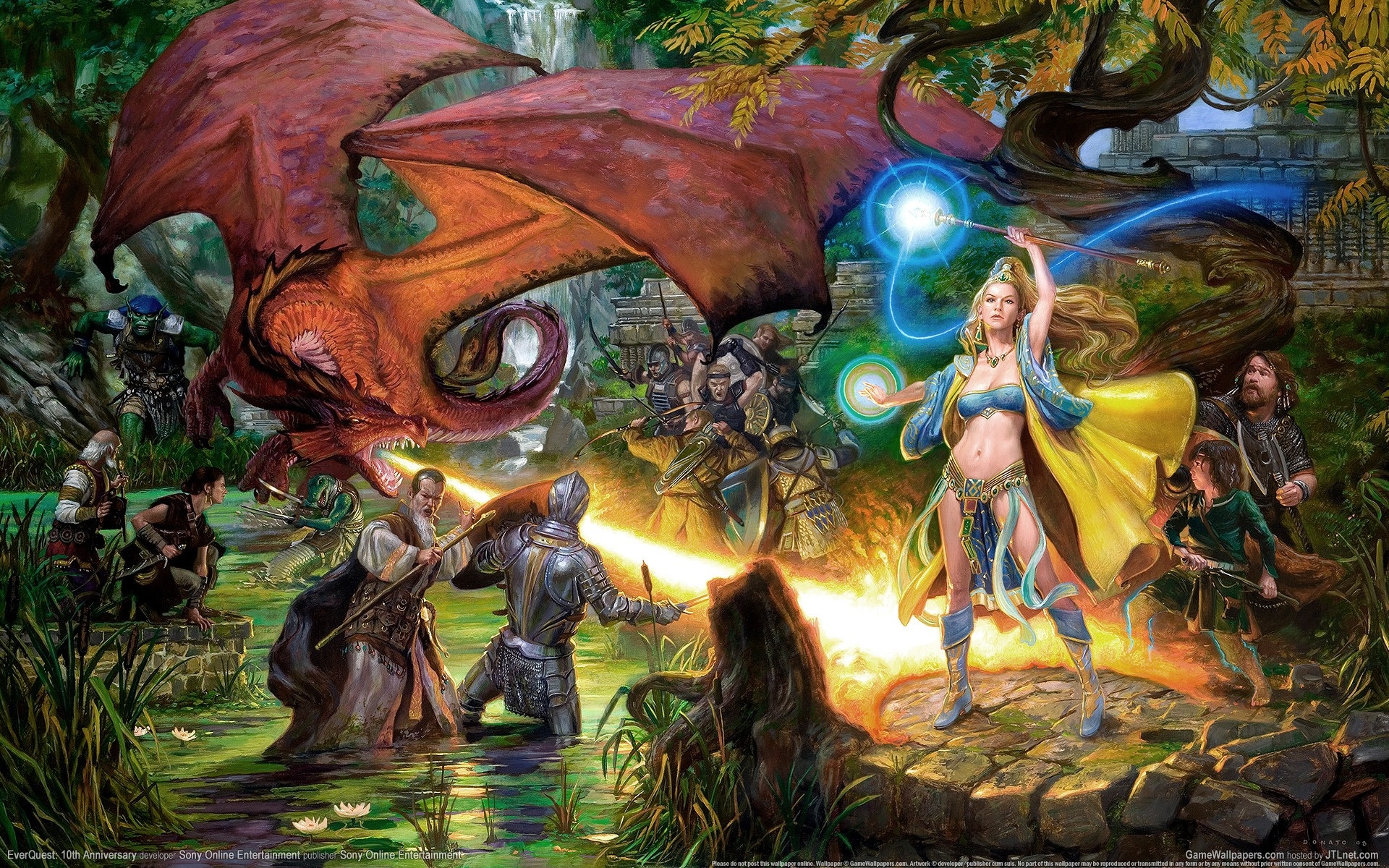
In the gaming landscape, it is commonly understood how painfully hardcore and dedicated MMORPG gamers are. In the early 2010s, it was impossible to escape horror stories about World of Warcraft and Everquest addicts ruining their lives chasing level ups. But these games have all but faded into cultural irrelevance, with even the so-called WoW-killer, Final Fantasy XIV, experiencing a sharp decline in subscribers in its latest expansion.
In trying to trace the root of the issue, I was made aware of the vast and often illegal world of MMO private servers. While I initially assumed these servers would be shoddy recreations using a stolen IP for people that don’t want to pay subscription fees, there is actually a much deeper culture beneath the surface.
The communities behind these servers very rarely host the modern, up-to-date versions of their respective games. Instead, versions as old as almost 30 years ago are recreated with all of the jank and inconvenience that was sanded down from years of player feedback. When I bit the bullet and played the officially endorsed Project 1999 for Everquest, it finally clicked why: friction.
Friction is a trendy term in the MMO community currently, referring to the resistance a video game provides against a player achieving their goals. An enemy before the end of a level, a long walk between quests, a complex system that makes you think about optimizing a build, or content requiring multiple players are all examples of friction in video games.
Modern MMOs like WoW and FFXIV practically penalize you for stopping to smell the roses. During gameplay, you are instantly teleported across the world with groups of players that are automatically formed and filled to do content that has less “boring” parts and more skinnerbox rewards. In stark contrast, Final Fantasy XI and Everquest can have hours of downtime as you search for a party, walk across the world by foot, or try to sell goods in a player driven economy.
What I didn’t realize during my time with WoW Classic, Project 1999, or FFXI, is just how addicting these moments of friction can be. When it takes a genuine time investment to make progress instead of having a constant stream of progress overflowing the reward center of your brain, each decision you make and each hurdle you climb seems monumental. And when I realized that being rewarded less will paradoxically make a game more fun, I started to look for these moments of friction in everything, and conversely where they have been removed.
Dark Souls is infamous for its boss runbacks, which were later removed in Elden Ring. Many older RPGs either didn’t feature fast travel or made it a costly and limited process, yet every open world game today seems to ship with instantaneous and free cross-map travel. Other examples include autosaves in Resident Evil, shared XP in Pokémon, free respecs in Cyberpunk 2077—the list goes on. These moments of careful and deliberate decision making that held meaningful consequences once seemed like chores, but their absence is felt strongly in retrospect.
So what games have the right amount of friction, and when does it stop being an annoyance and start adding to the experience? One great example is the 2019 cult hit reimagining Pathologic 2. While the original game was largely a walking simulator with traces of immersive sim elements, Pathologic 2 embraces a design philosophy that can only be described as “cruel”.

Everything from staving off hunger and exhaustion, doing your rounds as a doctor, to finishing any of your quests in the strictly enforced time limits is laden with friction. You rarely can simply buy food or weapons, instead having to barter your way up by trading useless junk to NPCs until you have what you want. Even though the game has difficulty sliders, I cannot imagine playing it in a way other than the developers intended. For a story about overcoming a seemingly herculean task, the pushback you receive every time you try to make progress hammers in the games themes and immerses you in its cruel and unforgiving world.
Friction shouldn’t be strictly conflated with difficulty, however. A great example of a fairly easy game that still has loads of friction is Grinding Gear Games’ ARPG masterpiece Path of Exile, best known for its incredibly daunting skill tree. In 2017, company co-founder Chris Wilson wrote a forum post called the Trade Manifesto, outlining a controversial design philosophy that is still argued about today. In it, he justifies the game having an obtuse and difficult to navigate player economy by explaining that the harder it is for two people to trade with each other, the more they will value their own items that they find while playing.

Image Credit: Grinding Gear Games and the Path of Building Community.
Though developers have caved to demands and simplified the trade system over the years, intentionally limiting players so that they are forced to think more about their decisions and how they engage with the game world is still the primary driving philosophy behind Path of Exile and its sequel. The crazy part is how well it all works, as the complex systems all work together to make a world that rewards you for putting in the time to learn optimal builds and routes without doing so much that the game becomes an exhausting chore.
Not every game should waste your time just for the sake of it, but friction can make the difference between getting immersed in your decisions in a world that feels alive and canceling your subscription because you don’t feel the stakes anymore. As we sacrifice more of our attention spans in the real world, we will continue feeling the need for convenience and instant gratification in our hobbies, but sometimes the thing we need most is to slow down and do something that isn’t immediately rewarding.
Do you have a strong opinion about convenience in video games? Did your favorite series lose its edge over the years? Head over to our Facebook or Discord to join the conversation!
Boss Rush Gamescast – A Gameplay Deep Dive Discussion Podcast & Part of Boss Rush Podcast Plus

Boss Rush Gamescast is the gameplay deep dive discussion podcast from Boss Rush Network. Every other week, a panel of hosts and friends from across the internet take a deeper dive into the games they’ve been playing, featuring light spoilers, fun segments, and great conversations. New episodes drop every other week as part of Boss Rush Podcast Plus, with Patreon members getting early access one week in advance.
Listen to Boss Rush Podcast Plus on Podcast Services
Apple Podcasts + Spotify + Amazon + More Links
Follow and Connect with Boss Rush Network
X/Twitter + Bluesky + Instagram + Threads + YouTube
Thank you for watching the Boss Rush Gamescast as part of Boss Rush Podcast Plus on The Boss Rush Network. If you enjoyed this discussion, please consider subscribing to the YouTube channel and leave a thumbs up on the video. Consider leaving the show a rating and a nice review on your favorite podcast service if you prefer to listen to us there. Your listenership and support means more than you know. New episodes post every other week. Patreon supporters and YouTube subscribers get each episode one week early access. Thanks for watching and listening and we will see you next time.
Featured image credit: Daybreak Game Company

Leave a Reply