
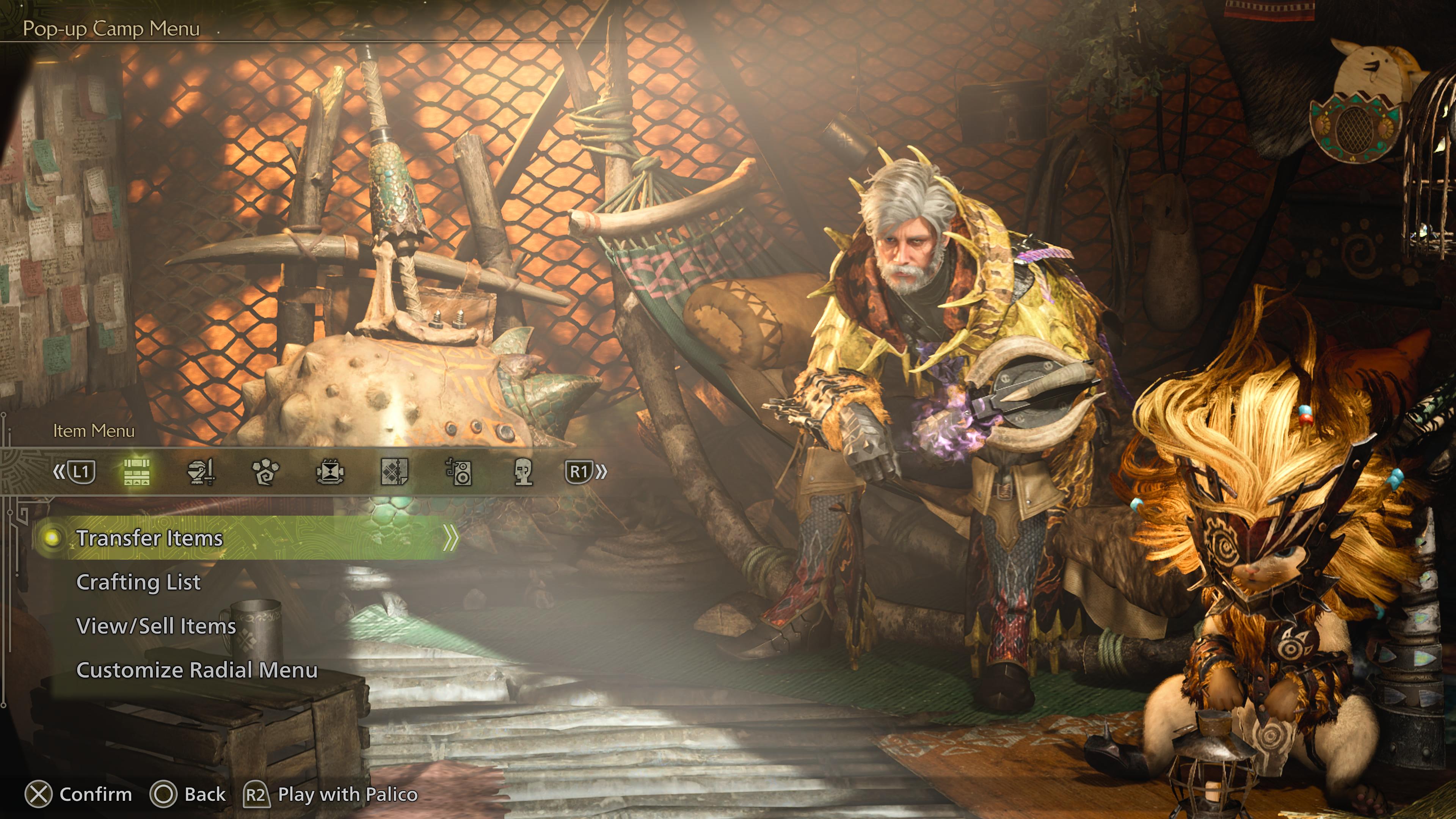
Jumping into a new video game can sometimes be daunting, especially when it involves learning a handful of dense systems and unique mechanics. While this can result in a few stress-ridden opening hours, the constant feeling of improvement as familiarity begins to sink in can feel incredibly rewarding. Over the years, developers have become quite adept at implementing an organic difficulty curve within their games, essentially starting the game out easy and progressively increasing the challenge as the experience continues. This can become problematic, however, when games are part of a long-running series where knowledge and skill in previous entries directly transfer into a fresh installment.

The newly released Monster Hunter Wilds is an interesting case as it doesn’t feel like the experience truly starts until you get past the first set of credits. For those unfamiliar with how the past few Monster Hunter entries have been structured, you essentially play a stripped down version of the game, called “Low Rank,” where each of your missions follow closely alongside the unfolding narrative. The monsters you hunt during this period tend to be on the easier side as the game is essentially easing you into the vast collection of systems present. After reaching a sort of climax within the story, you hit a credits sequence, and then find yourself within the “High Rank” portion of the game where the training wheels are effectively taken off.
This latter segment of the game is where the real meat of the experience lies as you gain the ability to fight each monster with their entire dynamic move sets intact. In addition, the variety of hunts you have available vastly increase and the progression systems all feel much more rewarding to engage with. There is still a narrative being woven at this point but it generally feels complementary to the core experience, that being the hunting of monsters, rather than the primary focus as it was during the opening hours.

While I understand that this approach is intended to ease new players into the experience, I couldn’t help but feel the tutorial-ladened “Low Rank” segment of the game was a bit of a slog as someone who has played several other entries in the Monster Hunter series. This portion took me roughly 15 hours to get through and while I wouldn’t go as far to say that I didn’t have fun, having my hand held so closely for such a long period of time became quite tiresome and occasionally even frustrating. I would have loved having the option to crank up the difficulty from the start of the game; however, due to the events of the narrative being directly tied to the “Low Rank” missions there isn’t an easy way for this to be done without a significant overhaul of the game’s structure.
This dilemma is why I believe the progression system within Monster Hunter Wilds is inherently flawed for returning players looking to seek a rewarding experience from the start. It would be one thing if this introductory period was only a few hours long, but the onboarding time far exceeds that. Perhaps this feeling is simply reflective of my own disdain for extended tutorials and intrusive handholding but I can’t imagine I’m alone in thinking that the opening hours of Wilds felt a bit underwhelming. Thankfully, reaching the full fledged experience after over a dozen hours is well worth the wait; I just wish I didn’t have to spend so much time with Wilds before it became a fulfilling experience.
What do you think? Do you like the way that Capcom handles progression in Monster Hunter Wilds? Did you find the difficulty curve to feel organic? Please share your thoughts with us on our Boss Rush Facebook Group or our Boss Rush Discord.
Featured Image: Capcom
Boss Rush Podcast – A Podcast about Video Games

The Boss Rush Podcast is the flagship show of Boss Rush Media and The Boss Rush Network. Each week, hosts Corey Dirrig, LeRon Dawkins, Stephanie Klimov, and Pat Klein, as well as their friends, fellow creators, developers, and industry veterans, share their gaming experiences. They discuss what they’ve been playing, explore rotating segments, debate the Boss Rush Banter topic of the week, answer community write-ins, and more. Patreon subscribers at any tier enjoy exclusive access to the Boss Rush Podcast Patreon Show twice a month along with other perks and extras.
Follow and Connect with Boss Rush Podcast on Social Media
X/Twitter + Bluesky + Instagram + Threads + YouTube
Listen to Boss Rush Podcast on Podcast Services
Apple Podcasts + Spotify + Goodpods + Amazon + More Links
Thank you for supporting Boss Rush Podcast and the Boss Rush Network
Thank you for watching or listening to The Boss Rush Podcast. If you’re watching this episode on YouTube, hit the Subscribe button, Like the video, and hit the notification bell so you don’t miss an episode! If you’re listening on Apple Podcasts or Spotify, consider leaving us a rating and a review as it helps with discoverability and growth. Support Boss Rush on Patreon for exclusive content, early access and audio versions of shows, become a Patreon Producer, and more. Visit our website for all of our content including reviews, news, daily Boss Rush Banter discussion topics, listicles, features, and more. However you support us, it means so much to us. Thank you for your continued support of the Boss Rush Podcast and the Boss Rush Network.



Leave a Reply