
Storytelling can be a mixed bag when it comes to video games.
On one hand, it can be mediocre, cliché, and serve as a loose thread to tie together gameplay, graphics, and performance. Gamers tend to forgive the lackluster storytelling if the other aspects are up to code.
Developers, however, can really make their game stand out when they put in the effort to tell a good story. While Ghost of Tsushima stood out on many other areas, its storytelling is above average.
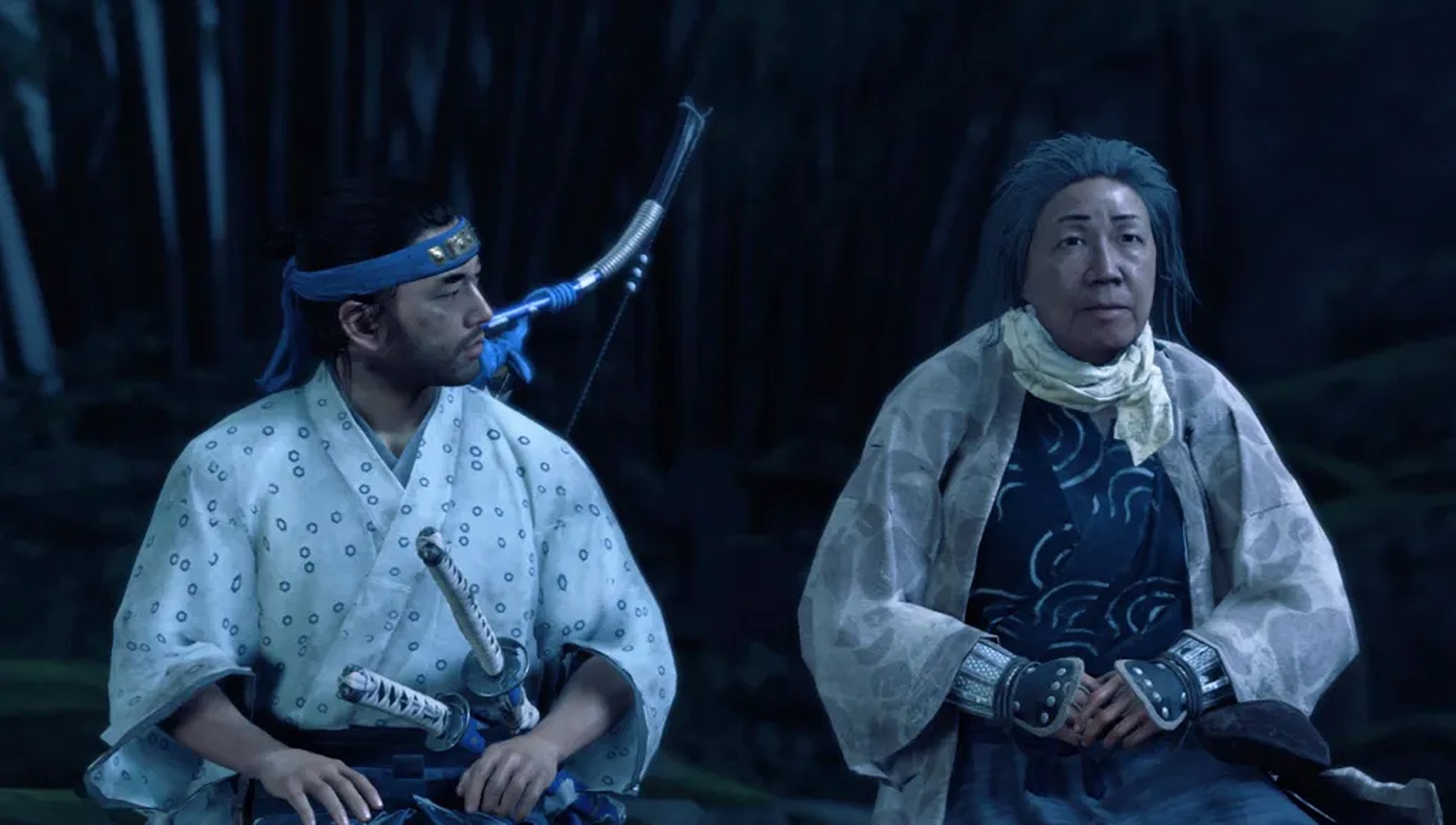
That said, there are moments where it really flexes its narrative abilities, particularly with the Yuriko side quests in Act 2.
These quests begin once Jin Sakai returns to his home town of Omi Village. He arrives to claim his late father’s armor when the elderly Yuriko, the caretaker of Clan Sakai’s estate, meets Jin and helps him craft various darts to use on the Mongol invaders.
There are three missions players can do, each one being available after the other. While players can leave and return to Yuriko, the best way to experience these missions is to do them in immediate succession.
In short, the missions consist of Jin accompanying Yuriko as she collect materials to help the young samurai. As the two progress, it becomes clear that Yuriko is not well, lapsing in and out of dementia-fueled episodes. It is through this narrative device that the player learns about Jin’s past, Yuriko’s love for the family, and other implied family secrets.
After I finished these quests, I was in awe. The beauty and subtlety of this story was unlike much else I’ve seen in a video game. It only took three missions for you to care about Yuriko, her values, and mourn her eventual death.
Furthermore, the lore she added did a fantastic job at deepening the world and adding to the complexity of Clan Sakai.

A good story doesn’t need to slam you in the face with a samurai sword. To me, good storytelling takes many forms including subtleness and nuance. It is this format that you take when listening to Yuriko.
Once of the strongest points of this story was when Yuriko confuses Jin for his father. Everything fell into place at this story beat as you can see how uncomfortable Jin is purely through his facial expressions and you can see the joy emanating out of Yuriko.
Jin has a lot of regret over his father’s death and struggles to live up to his name. That is what makes this exchange so powerful because Jin eventually just goes with it. It is here that there are implications of a romantic relationship between Jin’s father and Yuriko shortly after his mother passed away.
The emotion that these quests was masterfully used. The developers made it so that I wanted to ride with Yuriko and hear her stories for 10 missions. It captured the feeling of sitting with a grandparent and hearing their stories.
Layering that with the strongest points of the narrative being what isn’t said and you have a prime example of how to tell a story in a video game. It wasn’t a visual novel or anything like that. Rather, you it was story that used everything to get its point across.
Now, not all video game stories need to reach this level. Sometimes the simplicity of Mario games is good enough because the focus is elsewhere.
That said, it’s important to highlight when these moments do occur because it helps further support the idea that video games are art and deserve a conversation among other artistic masterpieces.
I am sure there are plenty of other games out there that do storytelling right. I just wanted to give Ghost of Tsushima its due and audibly hope to see more as Ghost of Yotei is right around the corner.
What about you? Did you enjoy the Yuriko side quests in Ghost of Tsushima? What video game stands out in your mind as the pinnacle of video game storytelling? Let us know in the comments below or head over to our Discord channel to join the conversation.
Featured Image: Sony Interactive Entertainment (via Love They Nerd)
Boss Rush Podcast – A Podcast about Video Games

The Boss Rush Podcast is the flagship show of Boss Rush Media and The Boss Rush Network. Each week, hosts Corey Dirrig, LeRon Dawkins, Stephanie Klimov, and Pat Klein, as well as their friends, fellow creators, developers, and industry veterans, share their gaming experiences. They discuss what they’ve been playing, explore rotating segments, debate the Boss Rush Banter topic of the week, answer community write-ins, and more. Patreon subscribers at any tier enjoy exclusive access to the Boss Rush Podcast Patreon Show twice a month along with other perks and extras.
Follow and Connect with Boss Rush Podcast on Social Media
X/Twitter + Bluesky + Instagram + Threads + YouTube
Listen to Boss Rush Podcast on Podcast Services
Apple Podcasts + Spotify + Goodpods + Amazon + More Links
Thank you for supporting Boss Rush Podcast and the Boss Rush Network
Thank you for watching or listening to The Boss Rush Podcast. If you’re watching this episode on YouTube, hit the Subscribe button, Like the video, and hit the notification bell so you don’t miss an episode! If you’re listening on Apple Podcasts or Spotify, consider leaving us a rating and a review as it helps with discoverability and growth. Support Boss Rush on Patreon for exclusive content, early access and audio versions of shows, become a Patreon Producer, and more. Visit our website for all of our content including reviews, news, daily Boss Rush Banter discussion topics, listicles, features, and more. However you support us, it means so much to us. Thank you for your continued support of the Boss Rush Podcast and the Boss Rush Network.




Leave a Reply