
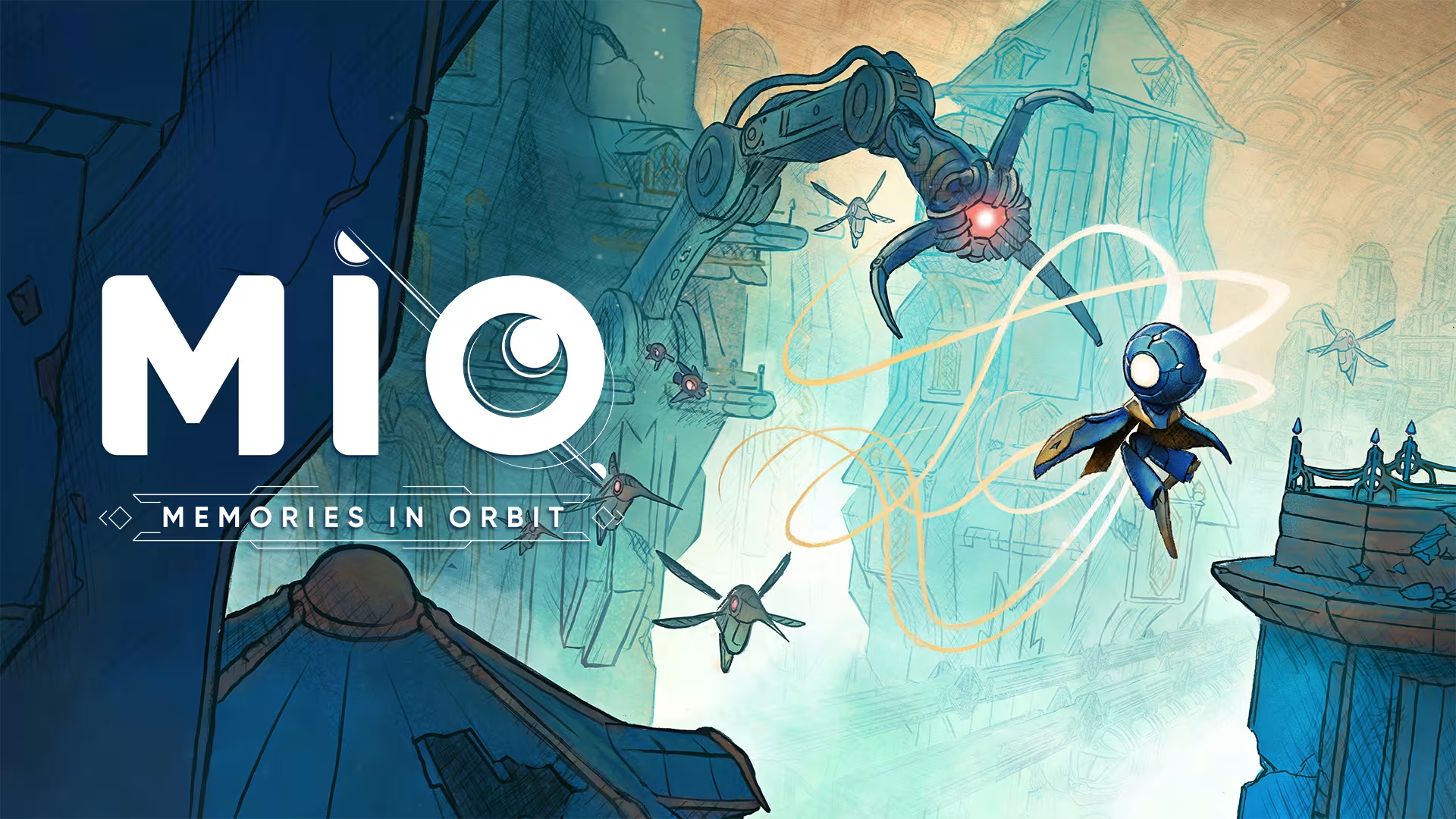
Title: MIO: Memories In Orbit
Developer: Douze Dixiemes
Publisher: Focus Entertainment
Release Date: January 20, 2026
Platforms: Nintendo Switch/Switch 2, PlayStation 5, Xbox Series X|S, Windows, Steam, Epic Games
Price: $19.99 (USD)
Author’s Note: Played and Purchased on Nintendo Switch 2
Space. Adventure. Remembrance. These words could describe any installment from the science fiction genre. The same would also apply to describing the newest indie game, MIO: Memories In Orbit. Originally planned for a 2025 release and showcased in a June 2024 Nintendo Direct, MIO: Memories In Orbit is developed by French developer Douze Dixiemes, who made the 2020 critically acclaimed, Shady Part Of Me. MIO: Memories In Orbit presents what does and doesn’t work in the modern Metroidvania genre. Does it pull it all together to make it a memorable experience, or does it leave an empty void after you play through it?
Synopsis
MIO: Memories In Orbit takes place aboard a spaceship named Vessel, which is drifting in space. You control a small robot named MIO, who wakes up to find the Vessel overrun by machines that have gone rogue, with no human life to be found. You meet Shii, who gives you the task to restore the Heart and bring the Voices back to keep the Heart going before it fades away. You’ll meet characters like Mel, a shop owner, and Samsk, a robotic centipede, who will add additional abilities to you.

The story is intriguing to the very end. You’ll fight bosses who will supply additional story moments before you reach the conclusion of the game. Without giving away the story, the game has two endings. How you get to it will be up to you.
Game Play
MIO: Memories In Orbit contains the common gameplay you’ll find in most Metroidvania games. You can only melee attack, you’ll start with the double jump ability, you can disappear to dodge attacks, you’ll crawl like a spider to move fast on the ground and in the background, you’ll use your hair to grapple, and you can glide in the air. There is no air dash, swimming, wall jumping, reflecting shots back to opponents, or ducking at all.

You’ll also come across modifiers. With these modifiers, they will make your attacks or abilities more powerful. It can also affect your health and your currency. You are given an allocation limit, which you can increase by purchasing upgrades or finding them. Some will give you more space to add, but come with a negative effect. It wants you to be aware of which ones to equip. You’ll also find old cores to help buy modifiers that you won’t find from exploring, so there isn’t any double owning a modifier. You cannot sell the modifiers, either.
Lastly, there are health container collections, or you can buy pieces from Mel. As exciting or concerning as this part is, there’s a problem with the method, but I will speak about it in a bit. If you are used to the health container collecting method, this game makes it very rare in this game.
Graphics

With its mixture of cel-shading, waterpaint, and 3D design, and colorful 2D landscape, MIO: Memories In Orbit has a great balance and usage of its graphics. For example, the icy areas present a cold but dreary zone with beautiful backgrounds that you can interact with at points. The boss battle areas do feel like Mega Man X in execution. With simple enemy designs and cool boss showcases, MIO does feel big since everything is taking place in a spaceship. The graphics aren’t anything special, but everything looks full, colorful, and easy to manage when moving around and adventuring.
Music and Sound
MIO excels in the music department. It’s one of the best soundtracks I have heard from an indie game in a while. Composed by Nicolas Guegan, MIO: Memories In Orbit produces a rich atmosphere with minimal arrangements, with added textures of vocals and beautiful and blended choral “ooh” and “aah”. The soundtrack mixes house and dance, hip-hop, R&B, original orchestral pieces, and a bit of smooth jazz, making it a head-nodding experience. It even plays a key part in boss fights. When you get halfway through the boss fight, the arrangement adds more instruments and can change the intensity of the battle. It’s such a pleasure to hear.
As for the sound, MIO’s attack sounds clear and powerful. There’s no lag with any sounds. Whether you’re using your spider movement, platform jumping, and landing, the impeccable sounds that come from them are just right. You’ll never tire of hearing the game. The voice acting is emotional and natural when the lines are delivered. It’s just pleasant to hear.
Final Score
As great as MIO: Memories In Orbit is, there are some bumpy moments you will encounter. There are story reasons on why your health points will be permanently blocked for story reasons. Without spoiling why, you must understand that the game was designed to do this, and there is no way to resolve it. There is also no quick dash on land and air. So you must learn enemy and boss patterns and placement. There are no other weapons, so your hair attack is the only thing you can use as a weapon. The red vines placed around will grab you if you get too close and take a health point away, so be aware of them in those areas. Lastly, not all boss fights give you an award or a new ability. As for the replay value, once you see both endings, there won’t be anything to come back to, and there isn’t a new game plus.
MIO: Memories In Orbit is a superb game for those who love metroidvanias and enjoy great music, tight controls, exploration in colorful and well-designed environments, and characters that’ll make you smile and feel emotional. With challenging bosses that aren’t frustrating or unfair, MIO: Memories In Orbit delivers a out of this world experience that you won’t forget.
Boss Rush Network awards MIO: Memories In Orbit four out of five stars.
Have you played MIO: Memories In Orbit? Does the game look interesting to you? Let us know in the comments below or join the conversation on Boss Rush Network’s Discord.
Featured Image: Douze Dixiemes/Focus Entertainment


Leave a Reply