
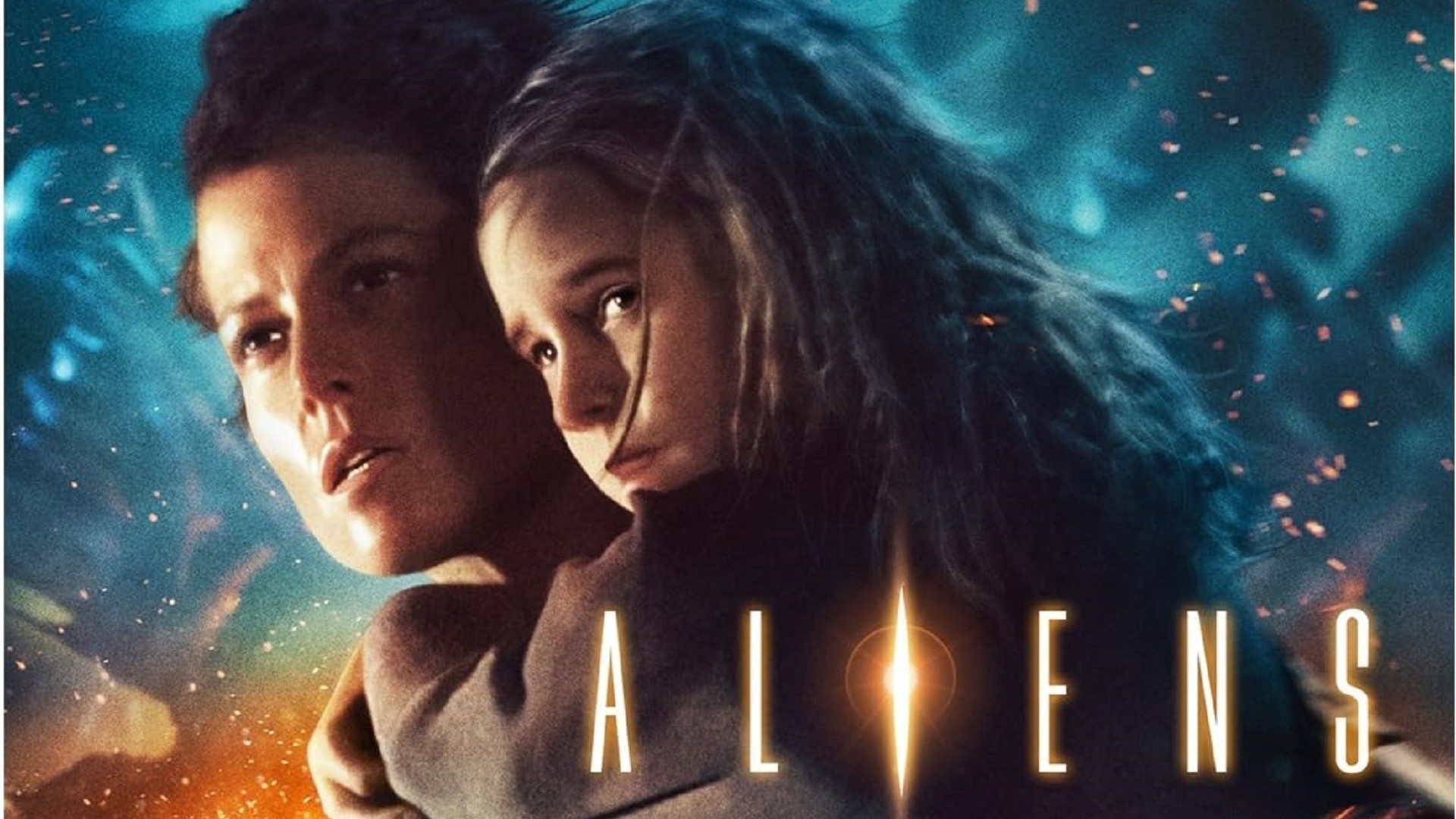
If you watch Disney’s recent 4K release of Aliens, you aren’t watching the movie as designed or released. You aren’t watching Adrian Biddle’s incredible, careful cinematography. You aren’t watching his style, his framing, or his color grading. His lighting techniques, revolutionary and often copied, are muted or de-emphasized.
The 4K release of Aliens commits many sins in common with Disney’s remasters and new editions of their catalogue. A waxy pallor appears regularly. Fine detail is occasionally lost. Faces are uncomfortably, artificially emphasized.
But it goes beyond that. Biddle’s depth of field is gone, replaced with a flat image. New minor details don’t feel like the revelation of the recent Lawrence of Arabia 4K, but invented detail from the digital processes (if these details are legitimate, they are presented so poorly, and with such waxiness, that they feel false — and that is all the more fatal). While the blu-ray edition was a little too blue, the new yellow tint is worse. The yellow tint is unmissable, and fails to achieve the goal of bringing Aliens back to its intended look. It simply feels like an overbearing filter.
Let me be clear, the problem is not using computer aids in restorations and new transfers. The Criterion Collection’s restorations and 4K releases are a necessary counterpoint, as they use significant computer aids. The Criterion restorations and 4K discs strive to perfectly recreate the vision of the original production team, and present an accurate portrait of the work of art as intended and as released.
The central problem is that this is not accurate to the original vision and release. Earlier forms of home media needed to make significant compromises: a movie shot on 35mm film would, even presented in letterbox, be forced down into smaller formats with less depth, less color, and less detail than was natively on the film itself.
4K is beautiful because it is the digital equivalent of 35mm film, and can accurately represent exactly what the original team designed and shot. A beautiful transfer, like the 4K Lawrence of Arabia, reveals exactly what the team did during production, and preserves a work of art for future generations. We have Lawrence of Arabia in a format equal to a 35mm print, easily available, and easily preserved. The true grandeur of the film is much less likely to be lost. 4K is a vital format for film preservation, and simply for enjoying watching movies.
The Aliens 4K is, even if you love it, not representative of the original film. This is not a transfer of the film itself. It has become its own separate piece of media. Even separate from the flaws it has in common with many Disney blu-rays and 4K releases, Aliens 4K does not preserve and does not present one of the most important films of its era in a way that shows why it was groundbreaking. As Adrian Biddle’s work is minimized, so too is the film that emerged from it.
Image Credit: 20th Century Studios
The Boss Rush Podcast – A Podcast About Video Games
The Boss Rush Podcast is the flagship podcast of The Boss Rush Network and Boss Rush Media. Each week, hosts Corey Dirrig, Stephanie Klimov, LeRon Dawkins, and Pat Klein come together with their friends, colleagues, and fellow creators to talk about their week in video games, discuss industry topics, conduct interviews, answer listener questions, and more. New episodes every Monday. Get each episode one week early and more perks over on the Boss Rush Network Patreon page.
This feed also includes Boss Rush Spotlight podcasts and Boss Rush Video Game Book Club. Get both shows early on Patreon.
Email the Show: podcast.bossrush@gmail.com
Listen to The Boss Rush Podcast:
Apple Podcasts | Spotify | Anchor | YouTube
Follow and Connect:
X (Formerly Twitter | Instagram | Threads | Facebook | LinkedIn
Join Our Community:
Discord | Facebook | LinkedIn






Leave a Reply